

ODDS 2024 – Innovate to Thrive
Nestled among seven hills overlooking the Tagus River, Portugal’s vibrant capital city Lisbon played host to the Optical & Digital Document Security™ (ODDS) 2024 conference (8-10 April). As well as providing a welcoming space for the ID, currency and secure document technical community to meet and share ideas, the conference once again proved to be the venue of choice for announcing several new security technologies.
Laying the groundwork
As with previous editions of ODDS, the seminars that preceded the two-day conference invited experts in the field to lead in-depth analyses of topical interest to the document security industry.
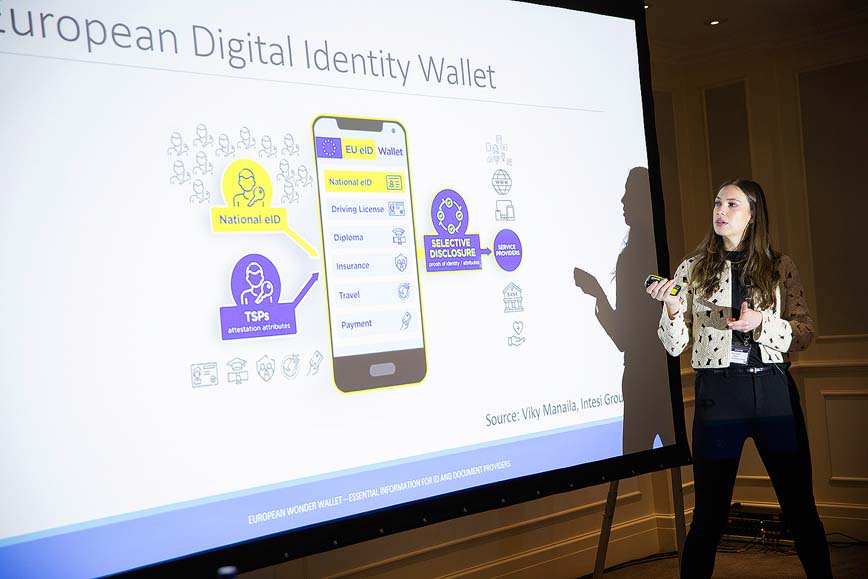
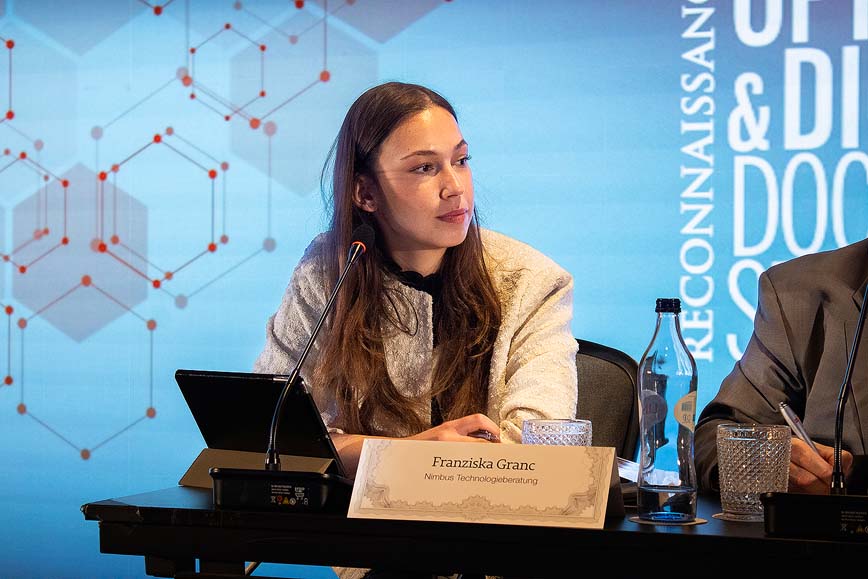
In the morning session, Franziska Granc and Arno Fiedler from Nimbus Technologies reviewed the work of the EU in setting out rules and structures for a European Digital Identity Wallet. The provision of the wallet will be mandatory for all member states and its acceptance as a means of identification and authorisation will become obligatory for all large online platforms such as Google, Amazon and Meta.
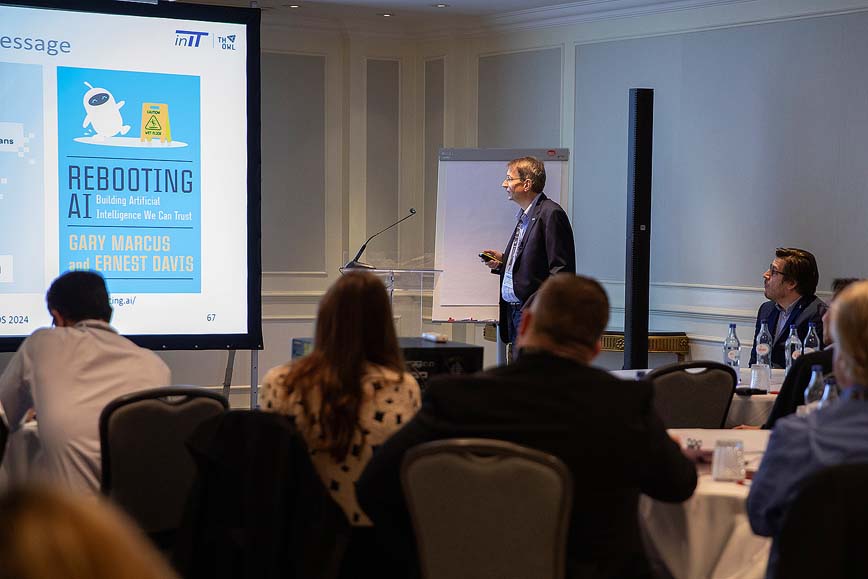
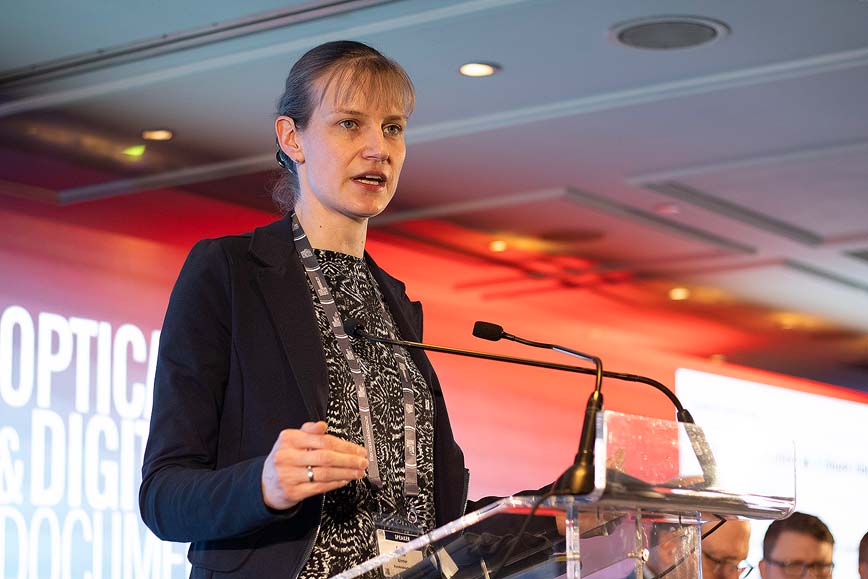
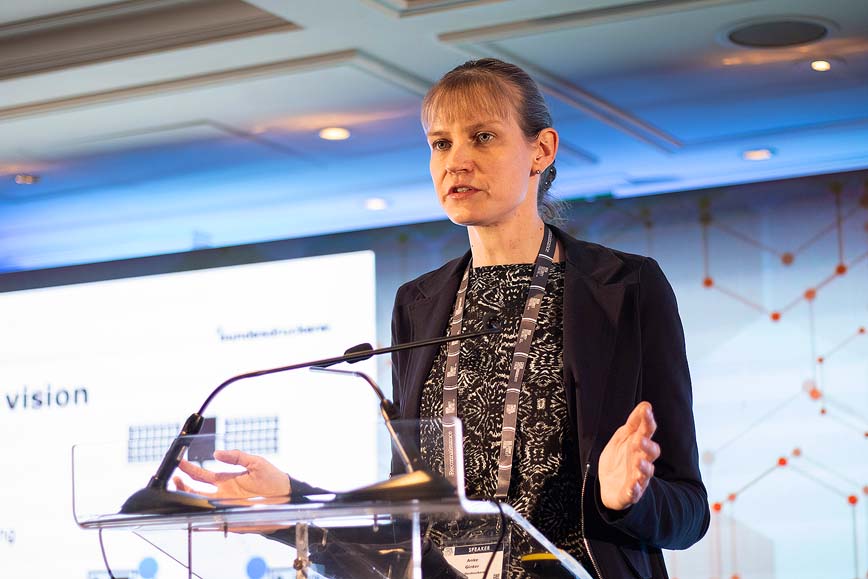
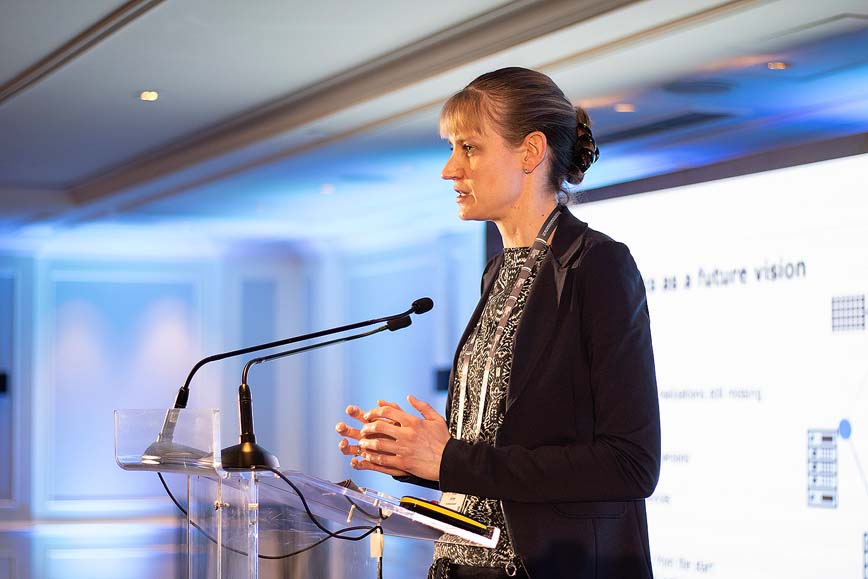
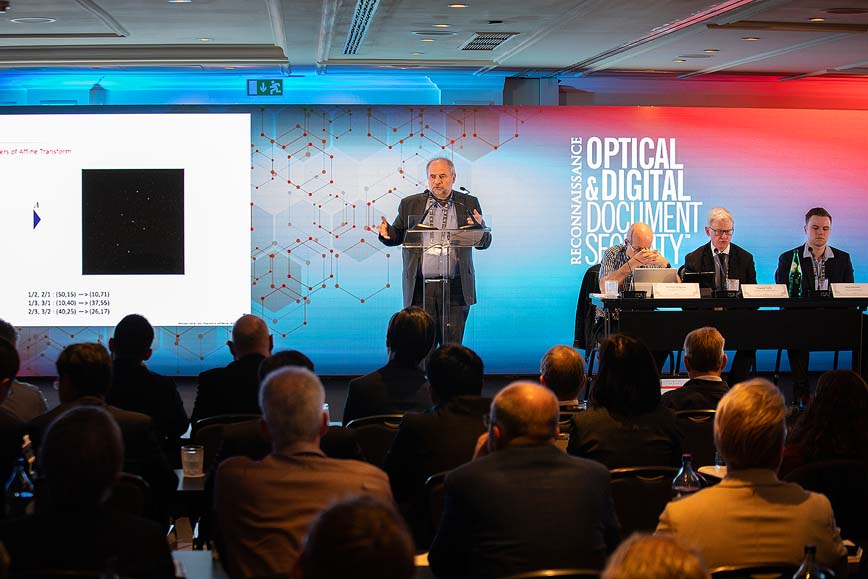
The afternoon seminar, on the potential impacts of AI and quantum computing (QC) was divided into three parts, hosted in turn by seminar leader Prof Dr Volker Lohweg (inIT-Institute Industrial IT) who gave a thought provoking overview of AI, Dr Anke Ginter (Bundesdruckerei, Germany) who explained the concepts behind QC, and Ian Lancaster (ODDS Programme Director) who pulled the threads together to consider the implications for optical and digital document security.

Access to the presentations is limited to ODDS 2024 attendees, please use the password which was provided by the [email protected]
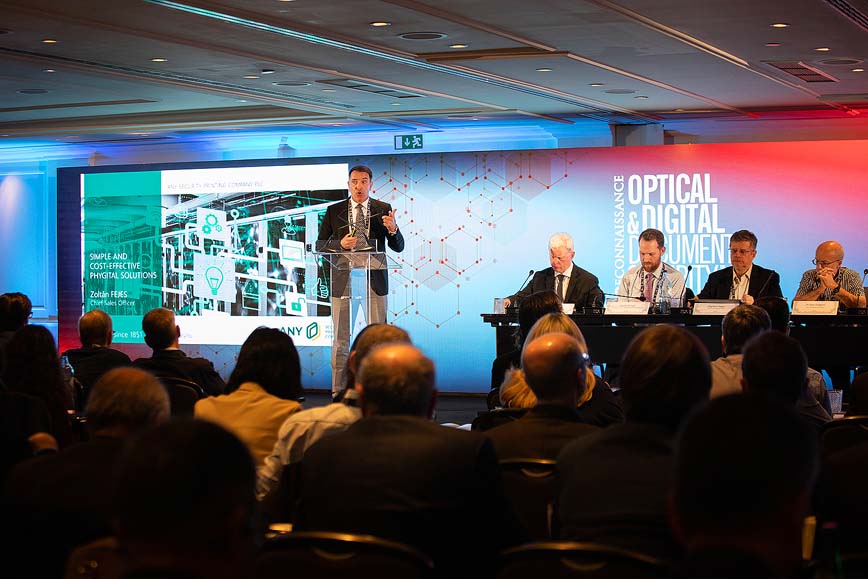
The ODDS seminars were very worthwhile, and were money well spent. They also laid the groundwork for the remainder of the conference.
AI and QC
Carrying over to the first day of the conference presentations, the risks posed by AI was also the theme explored in Jordan Brough’s (Homeland Security Investigations Forensic Laboratory, US) keynote address ‘AI-Driven Counterfeits: The Possibilities and How to Fight Them’. In his highly entertaining and informative address, Jordan explored how AI could be used to create convincing fakes and described strategies government issuers should be using to fortify their credentials against AI-enabled fraud.
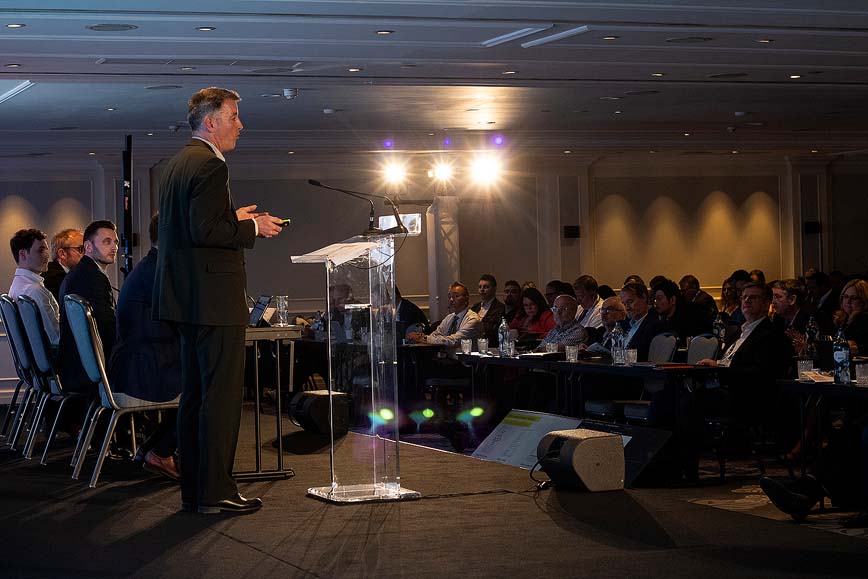
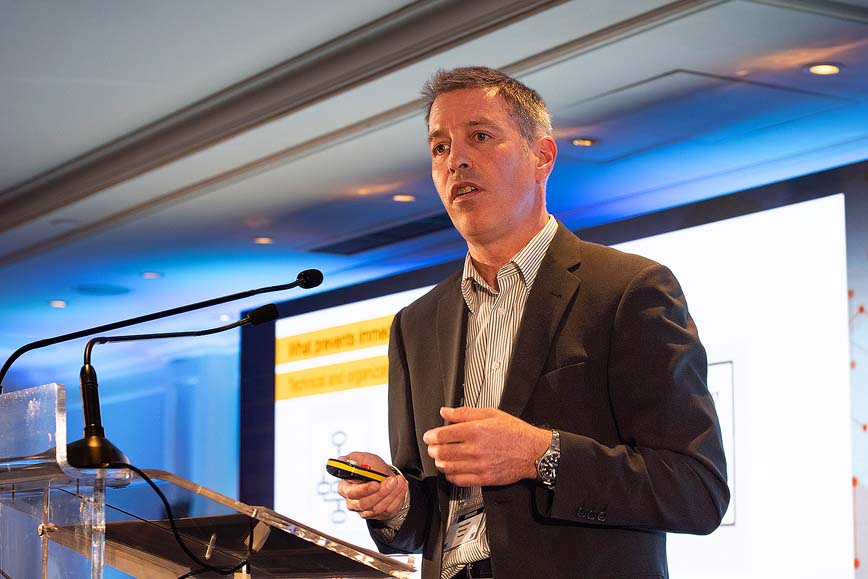
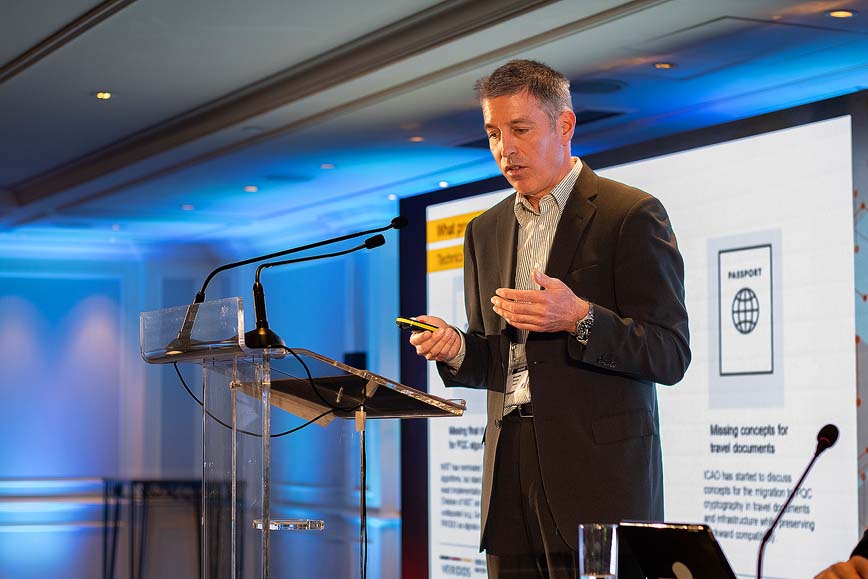
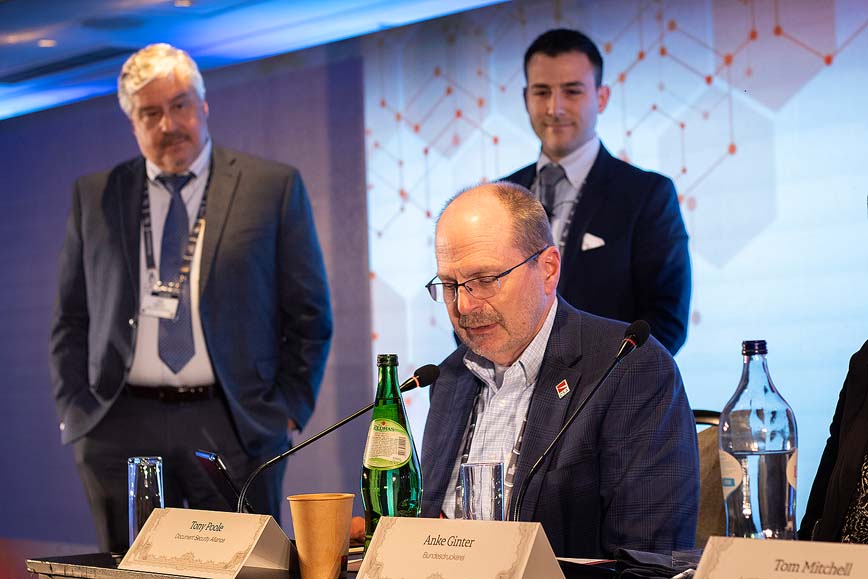
Anke Ginter followed up on her seminar presentation in her paper ‘Think Quantum – a New Perspective on Security’, giving insights into the importance of combining different quantum technologies on analogue and digital security products. Alexander Winnen (Veridos, Germany) picked up on this train of thought in his paper ‘Protecting IDs in the Quantum Computing Era’ where he explained the concrete steps that need to be taken to secure travel documents and their infrastructure.
Zbigniew Sagan (AT&T, France) in his paper ‘Artefactometry by Artificial Intelligence for Marked Objects’ set out how physical objects can be distinguished using characteristics similar to human biometrics. Through a deep learning-based method, the process can be easily adapted to diverse objects and manufacturing processes requiring only a few hundred samples for effective AI training.
It’s a brave person that tries to predict ‘What Will Passports Look Like in 20 years?’, but that is exactly what Renaud Laffont-Leenhart attempted to do in his paper exploring how AI will change the way we design and verify documents, and questioning whether documents will still be designed primarily for human inspection.
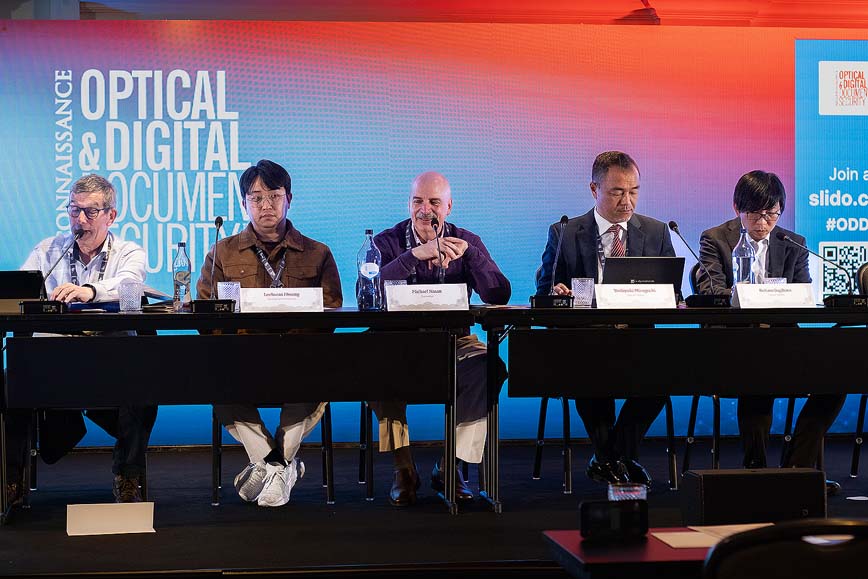
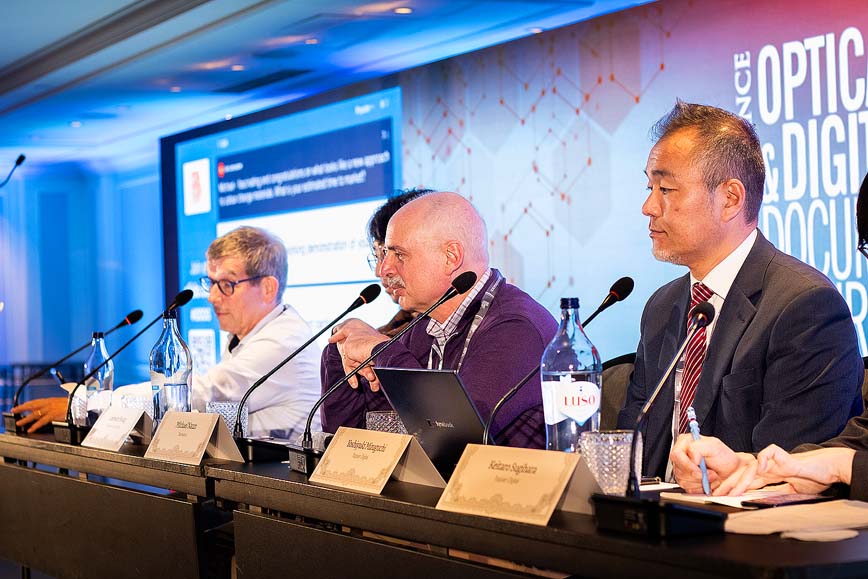
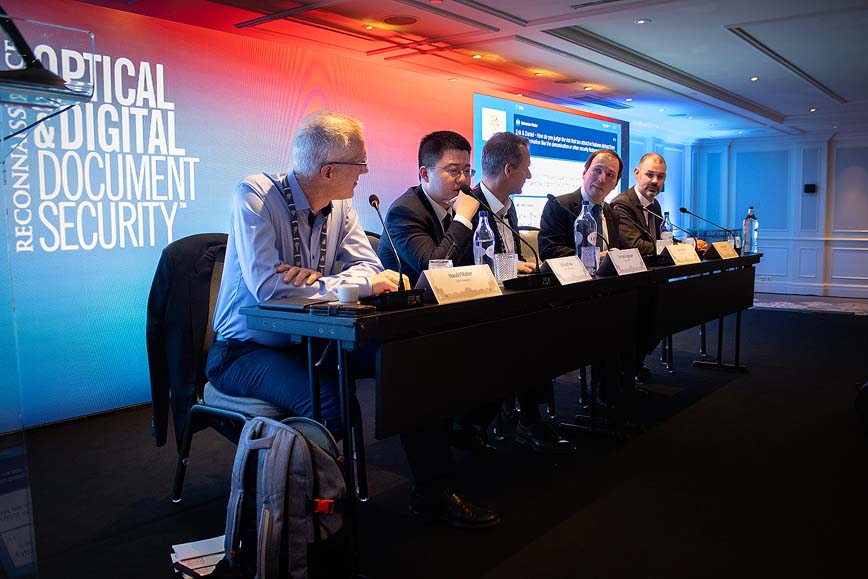
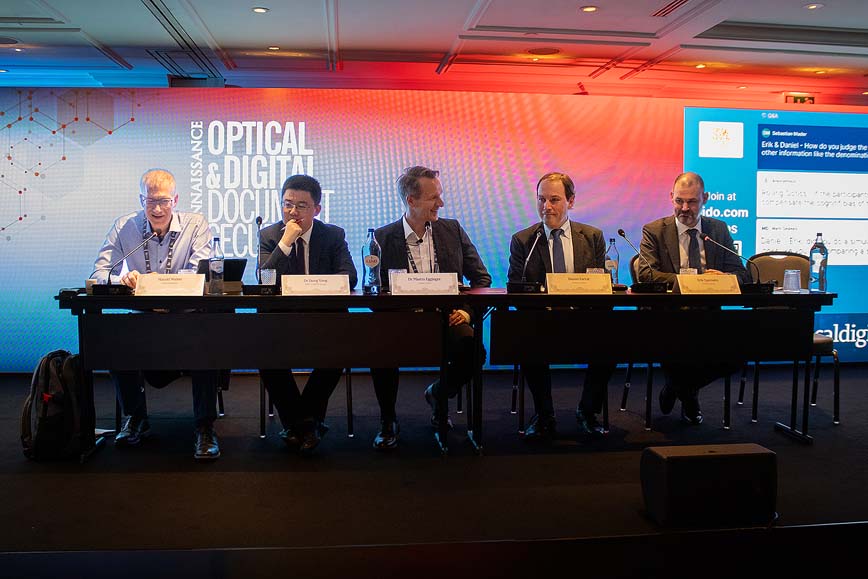
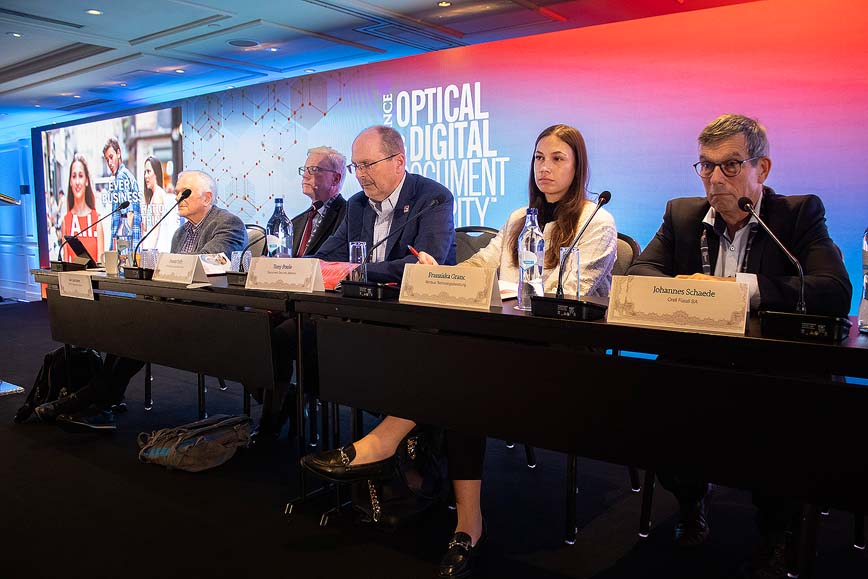
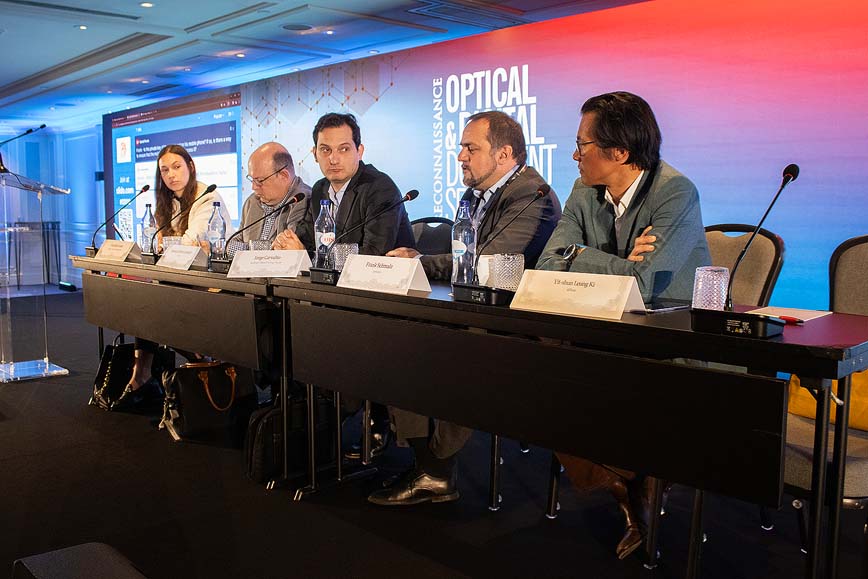
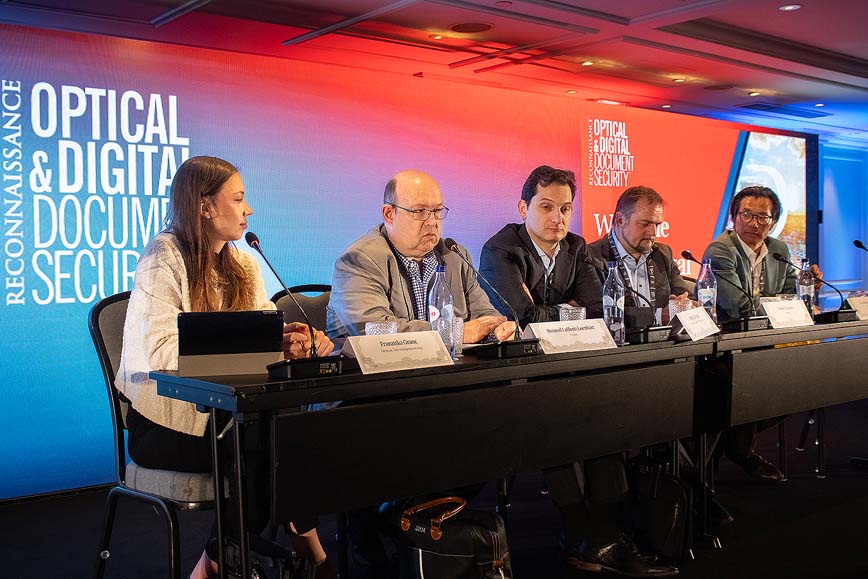
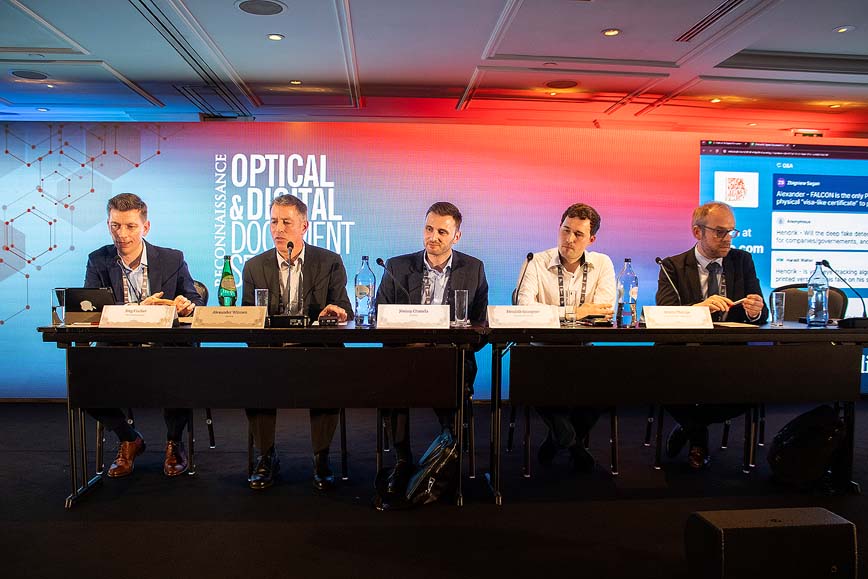
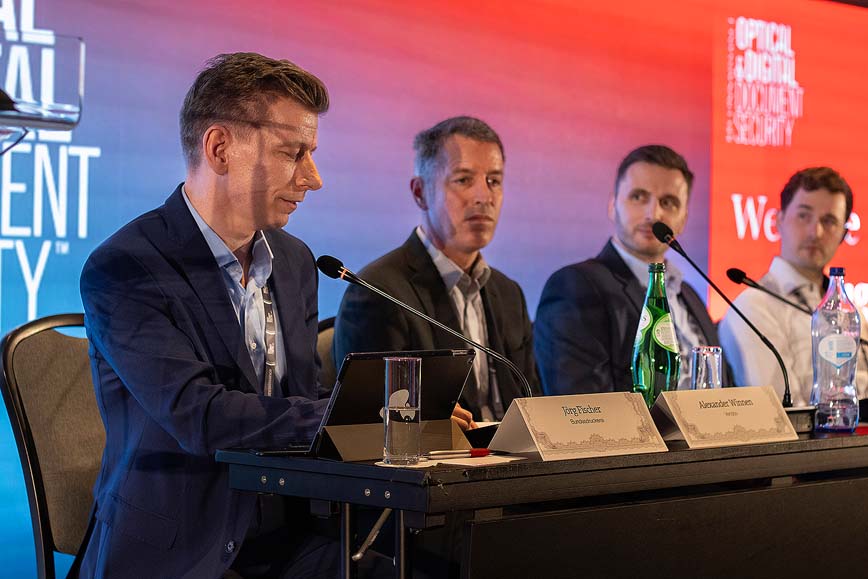
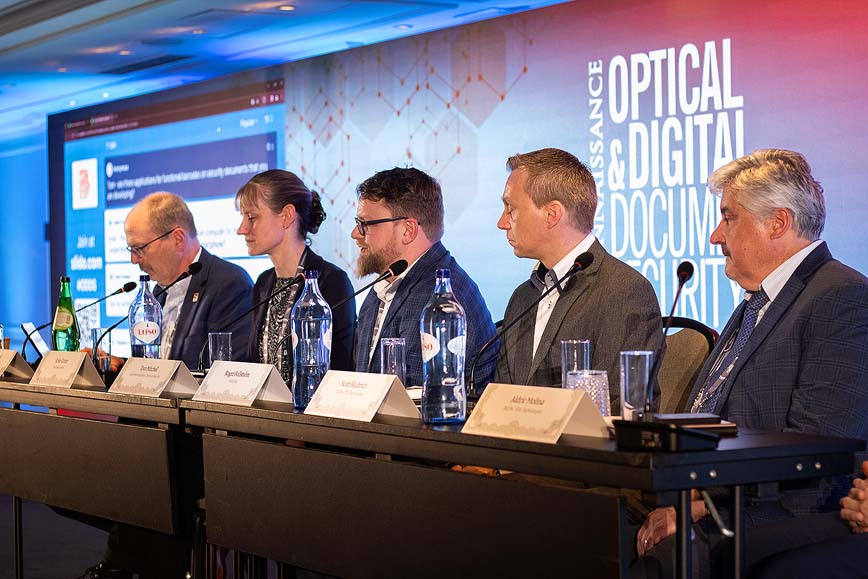
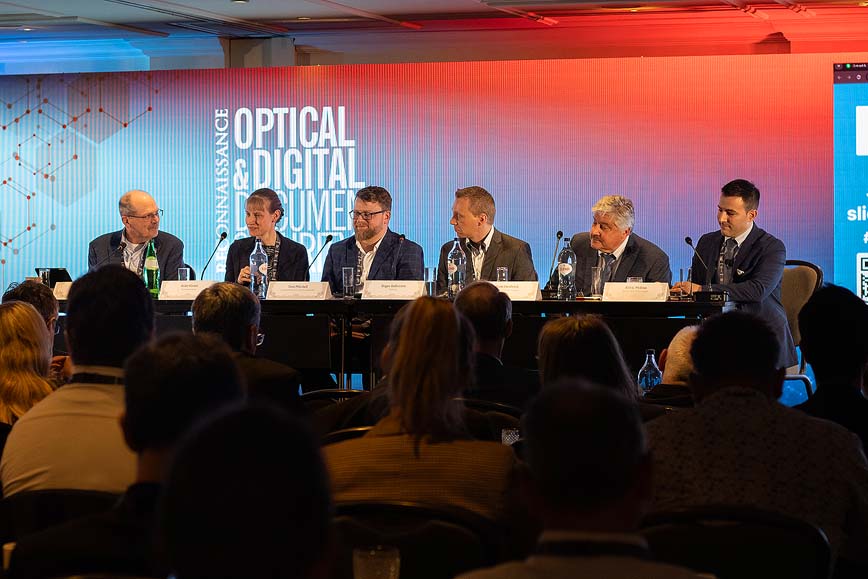
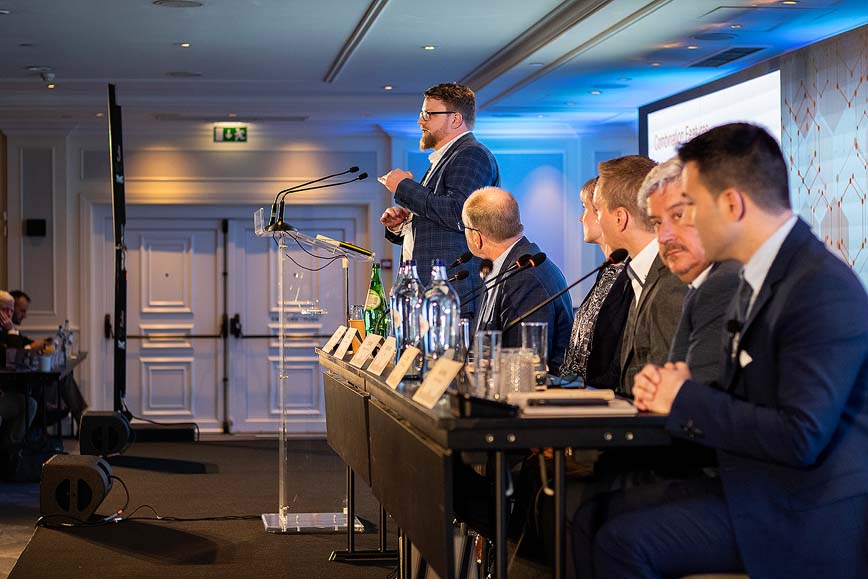
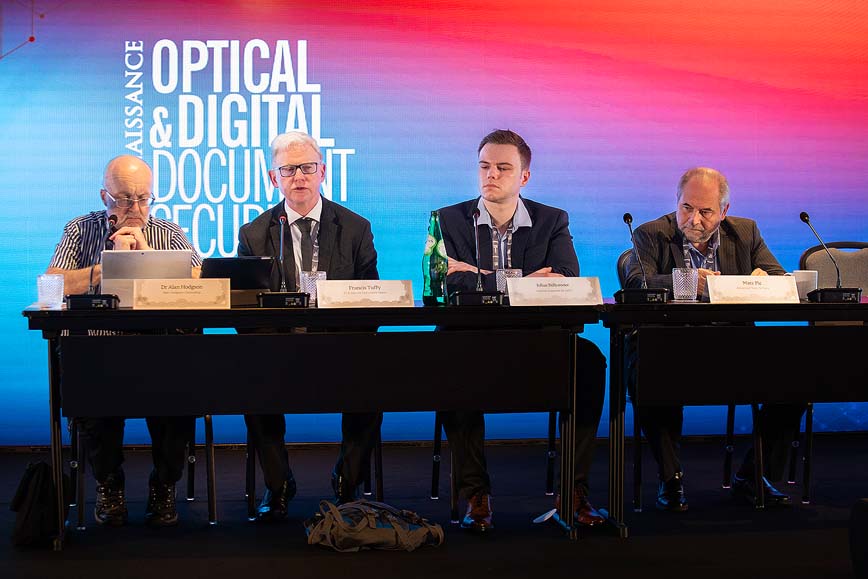
The panel discussion on Day 2 of the conference was also on the theme of ID document security in the face of AI and QC. Ian Lancaster did a good job of moderating the discussions which stimulated a lot of open debate amongst the panellists and audience.
Digital security
Whilst AI and QC received a fair amount of coverage, they were not the only topics to be explored at the conference.
Alan Hodgson’s (Alan Hodgson Consulting) paper described a project that is running in the UK which examines the potential for a Digital Product Passport to inadvertently disclose personal ID information. The premise explored was that seemingly ‘product only’ data can reveal personal data about users.
In his paper ‘Stealth Spectral Landmarks for Complex Objects’ Authentication’, Marc Pic (AT&T, France) described a new approach in object identification using a frequency-prepared signal. This allows integration of spectral landmarks into an object’s substructure, which have proved useful for text acquisition on curved surfaces and 3D digitisation.
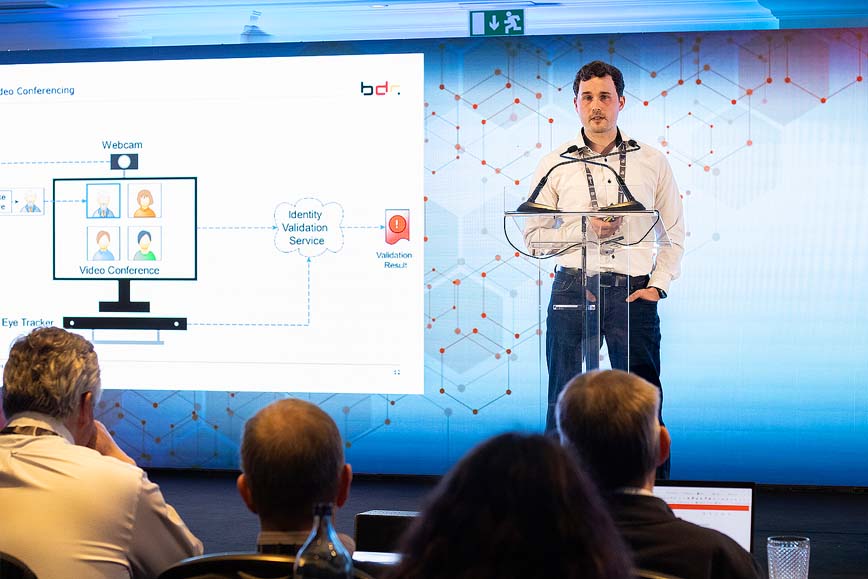
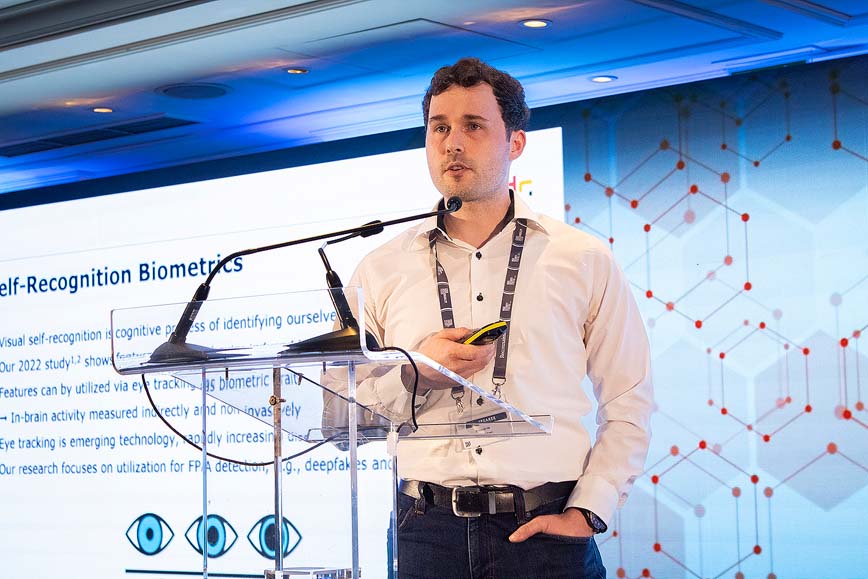
The topic of ‘Secure and Trusted Identification Interactions in the Digital Sphere’ was tackled by Jérémy Chmiela (IDEMIA, France), drawing on key learnings from digital ID programmes deployed in the US, Colombia and Morocco. Hendrik Graupner (Bundesdruckerei) presented a novel biometric trait which measures visual self-recognition as an in-brain identity validation mechanism.
Jorge Carvalho (Austrian State Printing House, OeSD) gave some insights into the benefits and challenges of implementing ID wallet applications in his paper ‘Enabling Citizen Protection with Seamless and Secure Digital Identity Wallets’.
Optical security
The editor of Reconnaissance publication ID & Secure Document News™, Francis Tuffy, used historical and current news sources to review the development of optically variable devices (OVDs) and consider their future as a means of protecting documents. His paper paid particular attention to the diminishing market for physical visas and the growing opportunities from smartphone authentication.
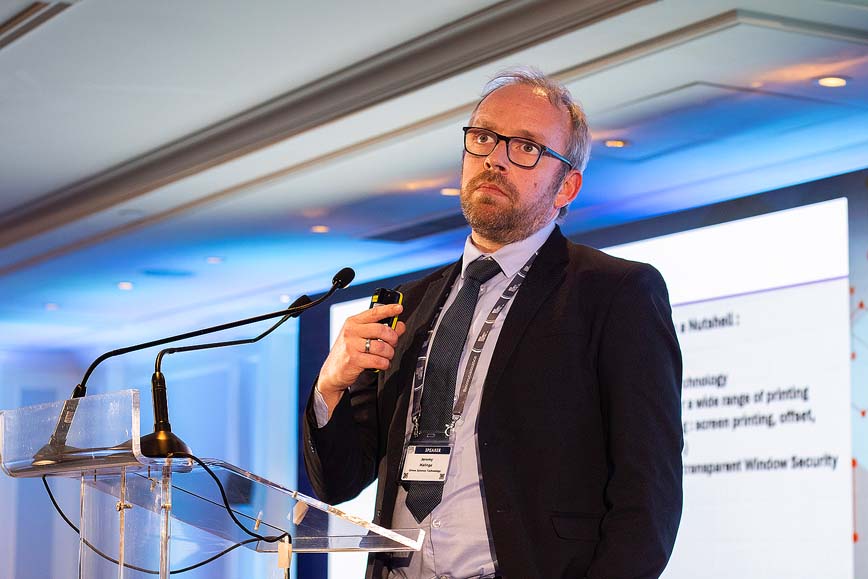
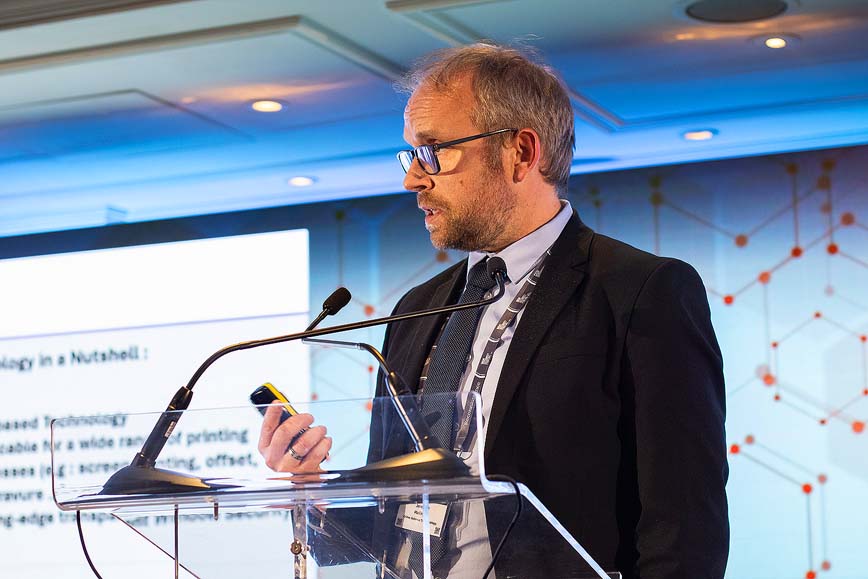
Sajan Ambadiyil (Centre for Development of Imaging Technology, India) conveyed the story of the implementation of hologram-embedded security tax labels over the previous 20 years and their current transition to taggant-based holographic track and trace labels. Jérémy Malinge (Crime Science Technology, France), in his paper ‘An OVD Secured by Design’, gave details of a security feature viewable with the naked eye, classical UV light and a simple LED light of a smartphone, to gather all the verification modes traditionally used in the field of document security.
With so many types of optical features currently available for document protection, Yit-Sun Leung Ki’s (Security Identity Alliance) paper ‘Modern Optical Features for ID Documents – a Review’ was a timely reminder that there are actually only a very small number of light-matter phenomena and that from these you can make a succinct but complete review of Level 1 features for ID documentation.
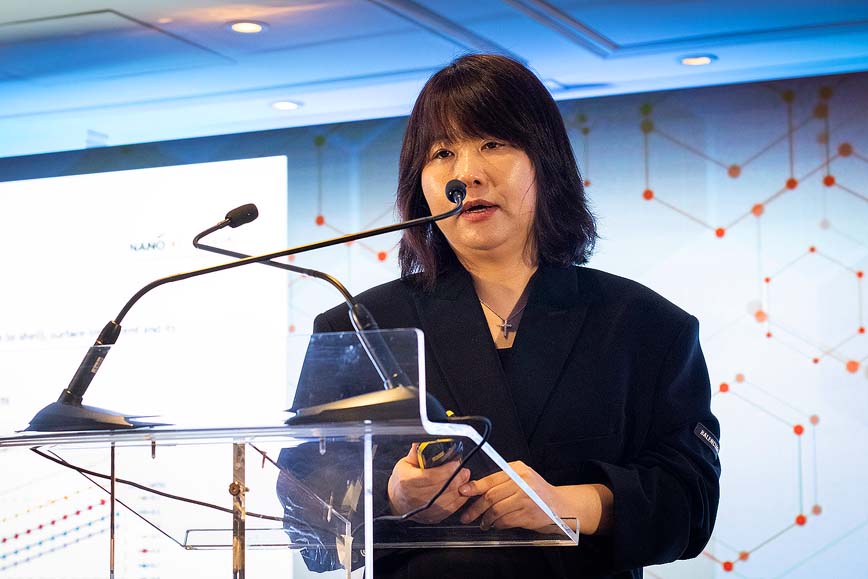
‘Colour-Tuneable Photonic Crystals’ was the subject of Keeyeon Kim’s (NanoBrick, South Korea) presentation demonstrating the application of advanced nano-security technologies capable of dynamically altering reflective colours by adjusting the photonic crystal structure in response to an external magnetic or electric field.
Steve Sun (Wuhan Huagong Image Technology, China) took a 180-degree view of OVD design in his paper ‘Special Information Encryption for Optical Lithography Technology’. Steve and his team have established a model based on the intended optical effect from which an optical microstructure is simulated and engraved onto photosensitive material.
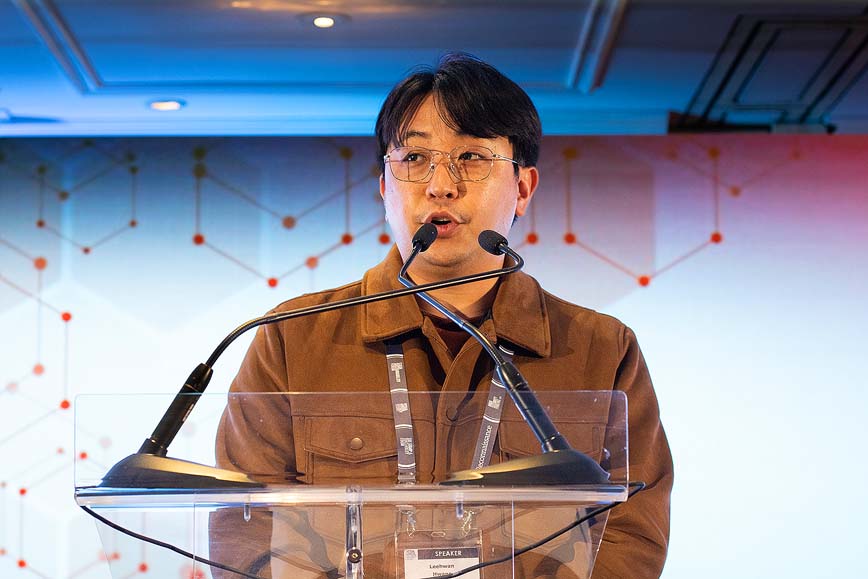
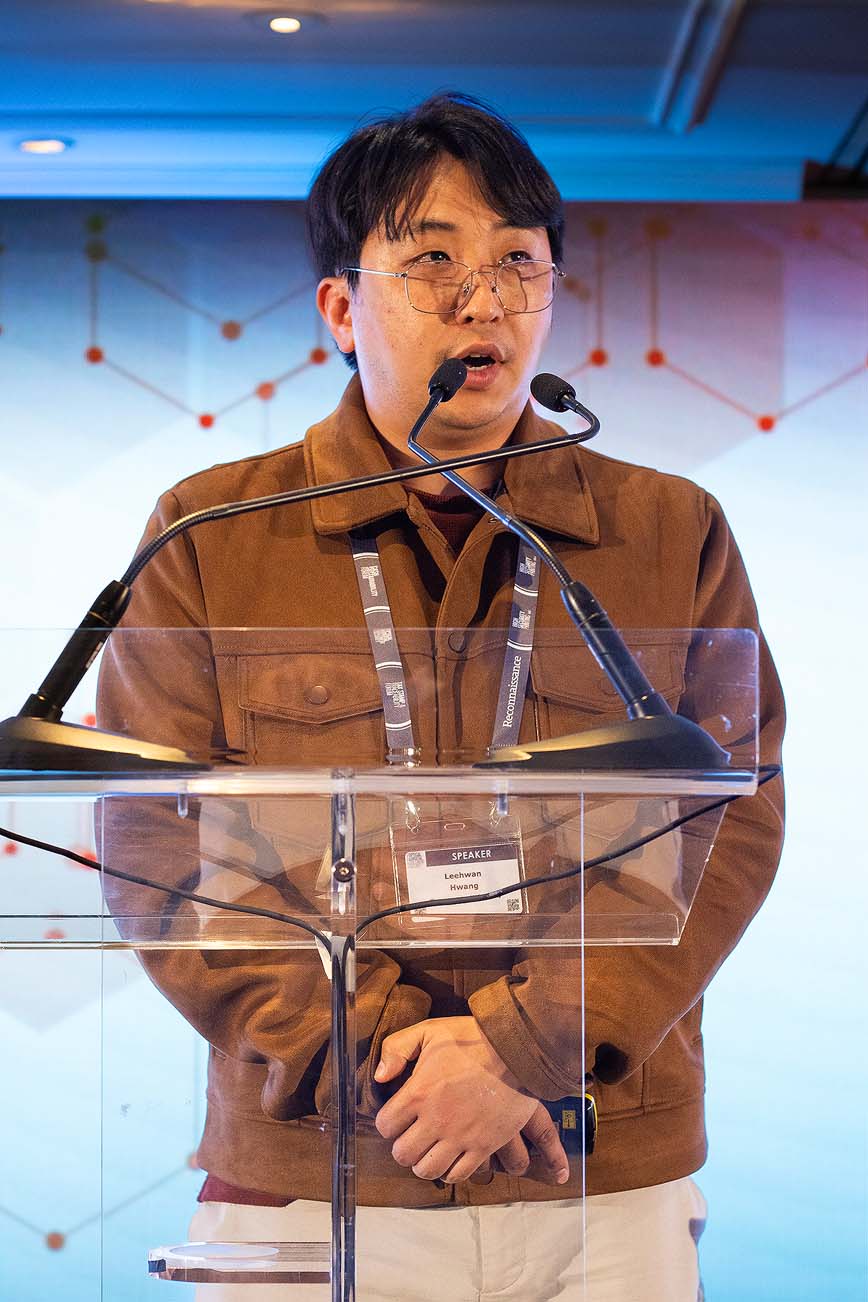
To round off the optical security part of the conference, Daniel Parrat and Erik Egemalm (Rolling Optics, Sweden) explored micro-optics in the 4th dimension, Dr Dong Yang (ZSST – CBPM, China) presented security features based on light-field shaping using freeform microstructures and Leehwan Hwang (Kwangwoon University, South Korea) explored a computer-generated holography solution to print document protection.
The place to innovate
ODDS has gained a reputation as THE technical conference for physical, digital and virtual document security, and is proud of its status as the birthplace of nascent techniques that go on to reach commercial maturity.
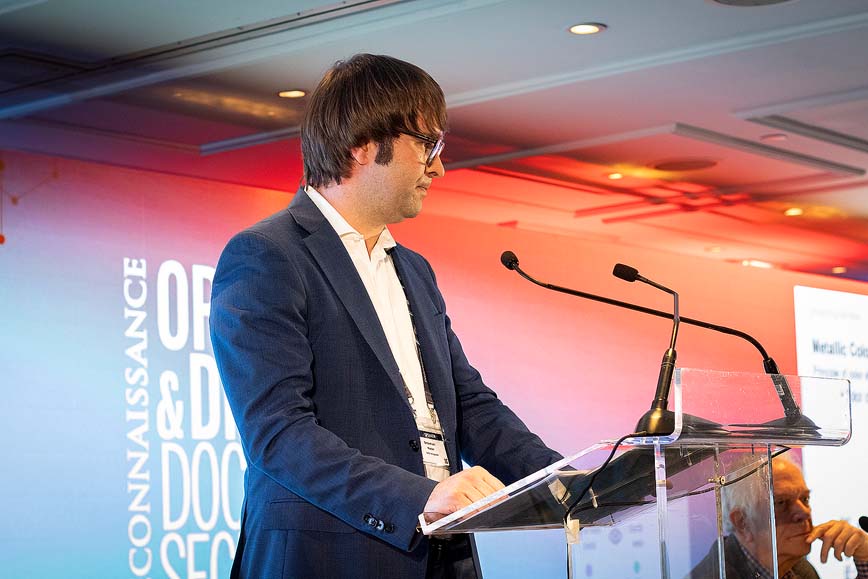
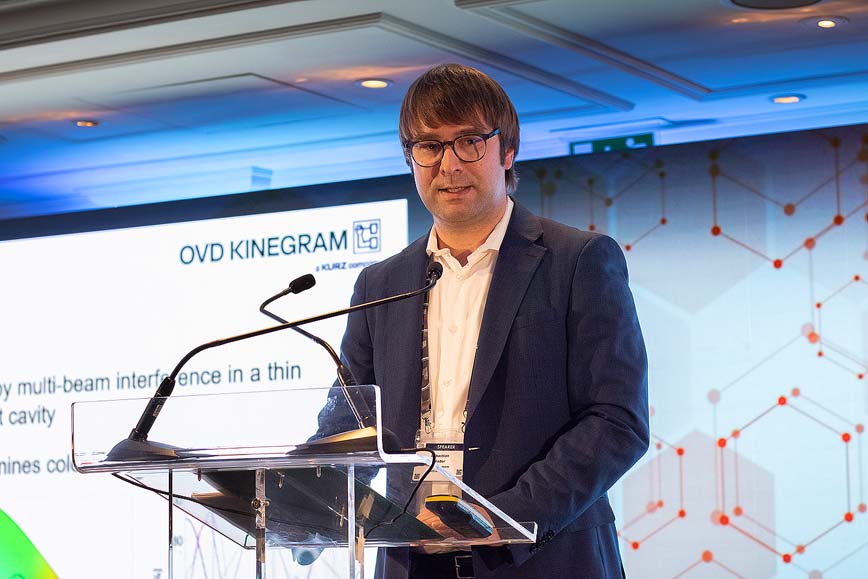
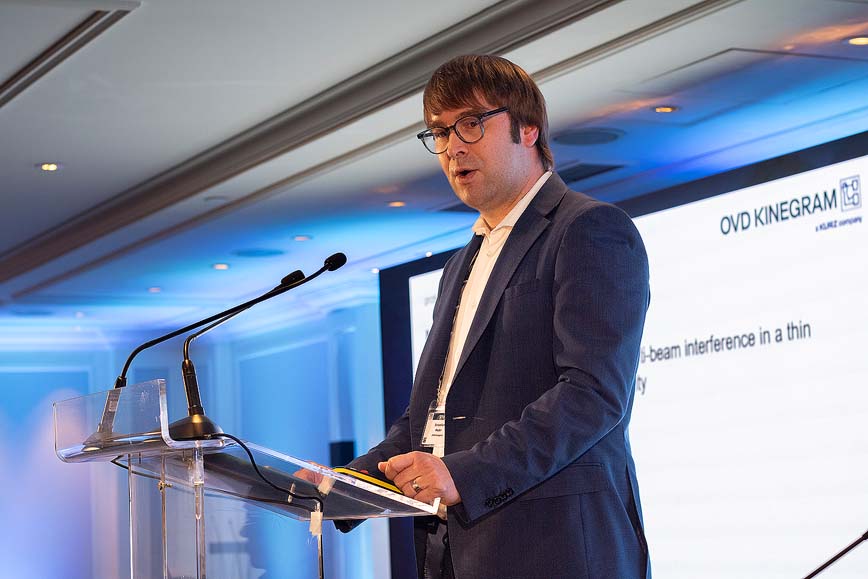
As if to endorse this, Sebastian Mader (OVD Kinegram, Switzerland) started his paper ‘Utilising Two-Colour Colourshifts for Highest Security’ by cataloguing the various colourshift innovations that had been launched at ODDS, before leading into an exploration of his own work on foil-based features possessing a two-colour colourshift effect.
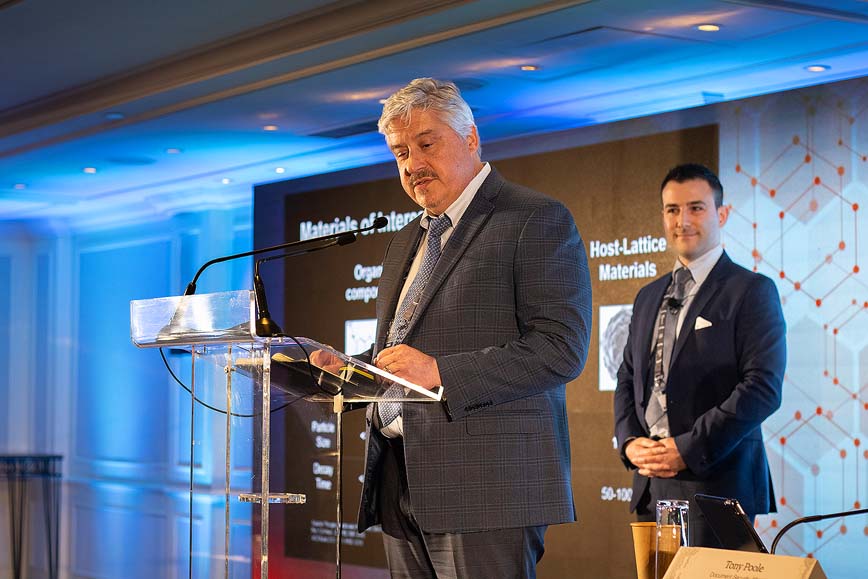
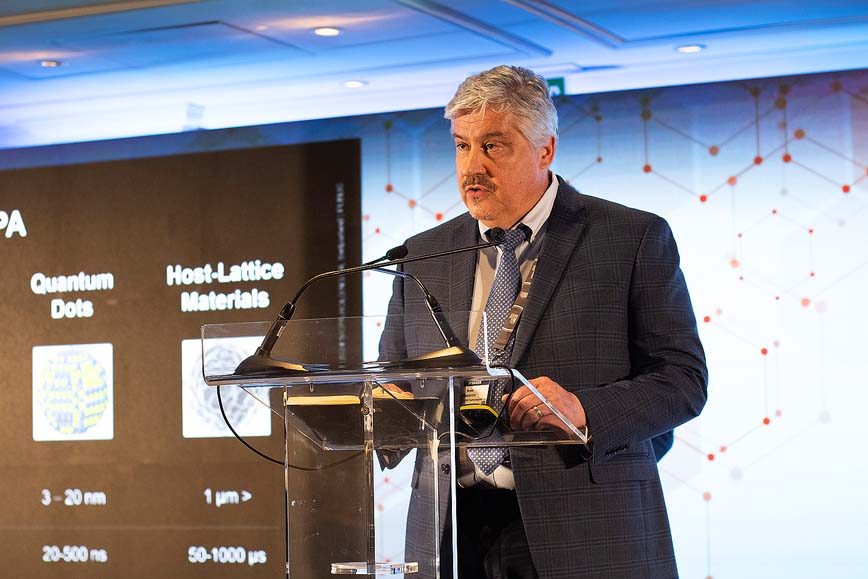
Scott Haubrich and Aldric Molina (SICPA, Switzerland), in their paper ‘Development of Innovative Machine-Readable Luminescent Features’, presented the next chapter in SICPA’s luminescent technologies. He laid out a set of innovative machine-readable security features using new emerging materials such as quantum dots, metal-clusters, and halide perovskites that exhibit highly tuneable spectral properties.
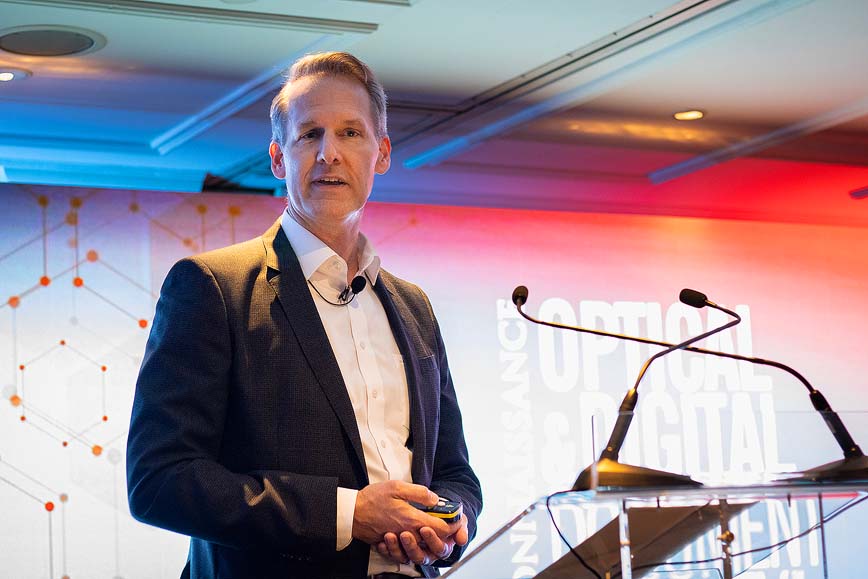
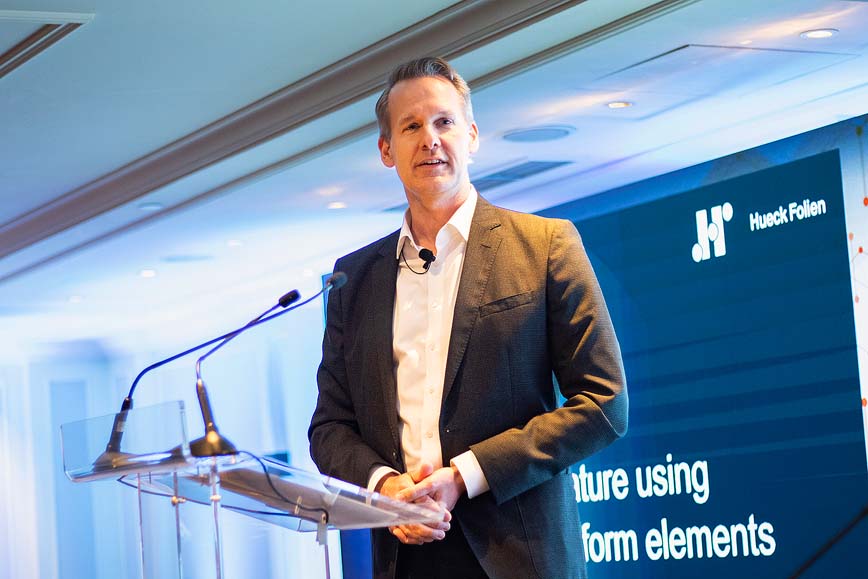
With a title like ‘Brilliantly Innovative: a New Security Feature Using Micro-Optical Freeform Elements’, you had better have something impressive to present. And Dr Martin Egginger (Hueck Folien, Austria) didn’t disappoint. His paper described a new security feature based on freeform micromirrors that enable high visibility in any lighting and from any angle which, when combined with thin film coatings, provide colourful moving effects.
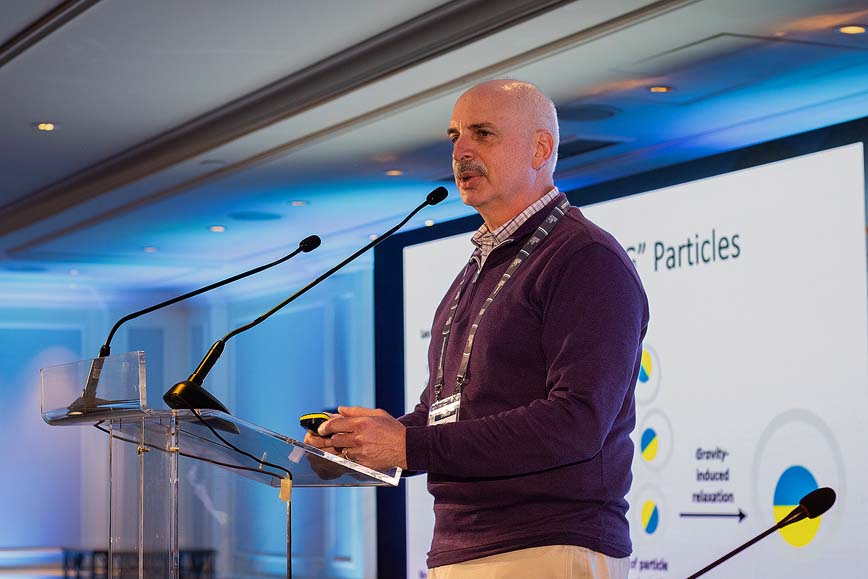
To shake things up a bit, Michael Natan (Diametryx, US) presented a series of novel, ink-based security features comprising micron-scale particles that change colour in response to shaking, tilting, or magnetic fields. The features can create all known colours and enable rapid simple unambiguous readout by the general public.
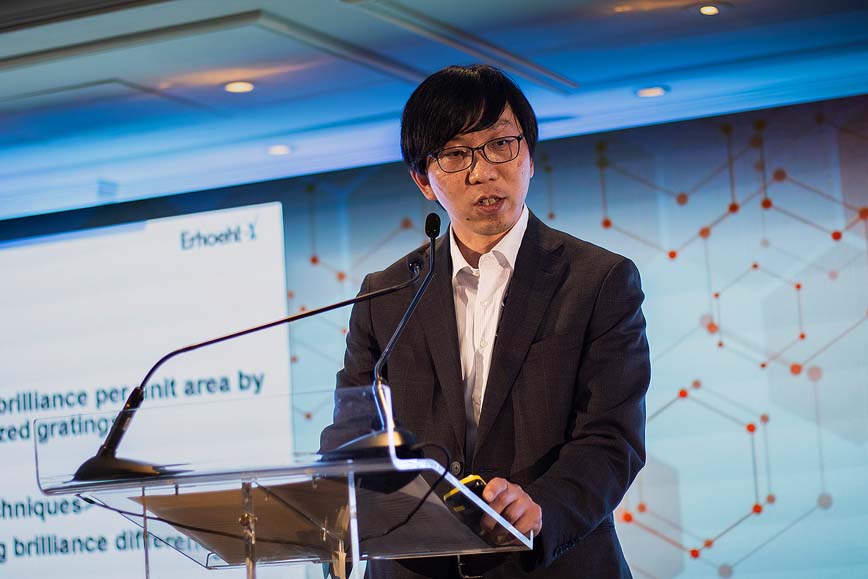
Toppan (Japan) colleagues Keitaro Sugihara and Yoshiyuki Mizuguchi presented a new optical design that generates achromatic effects at specific angles through a combination of periodic and non-periodic structures.
Protecting ID and secure documents
This round-up of other papers from the conference, demonstrates the breadth of technologies for ID and document protection that got an airing at ODDS 2024.
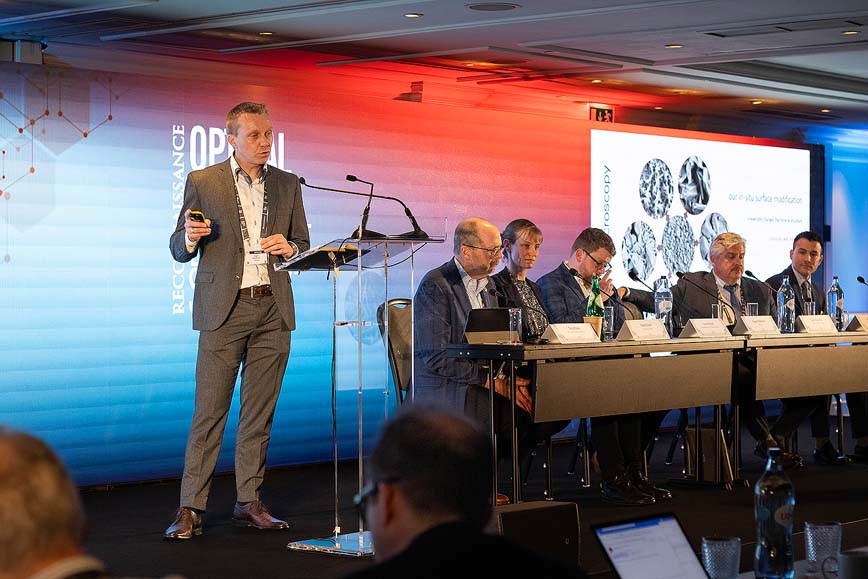
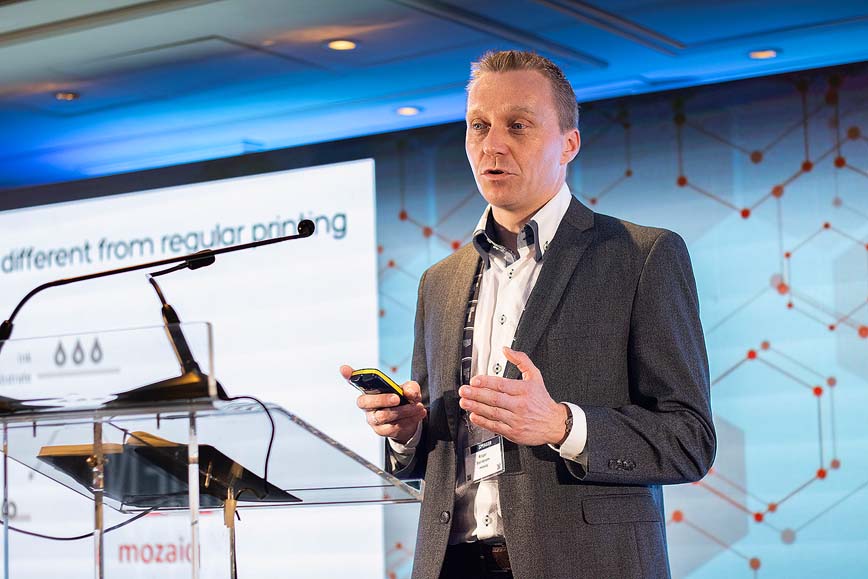
Cryptographic security as used in mobile IDs was the subject of Frank Schmalz’s (Veridos) paper ‘Security Challenges of Mobile IDs’, in which he looked at how some smartphone apps with ‘Mobile-ID’ functionality attempt to address this with ‘special effects’. Tom Mitchell (Luminescence Sun Chemical Security, UK) took us behind the scenes to look at multilayered functional barcodes for security documents, and Roger Bollström (MOZAIQ, Switzerland) discussed how protection can be achieved through personalised ‘watermark-like’ features.
On behalf of the team, I would like to show our appreciation about how the successful event was organised and we really enjoyed every presentation.
Changing of the guard
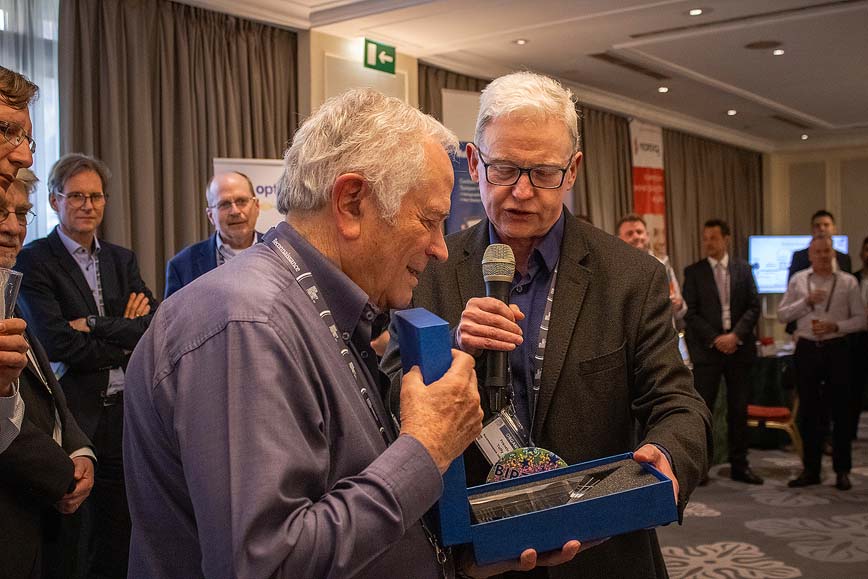
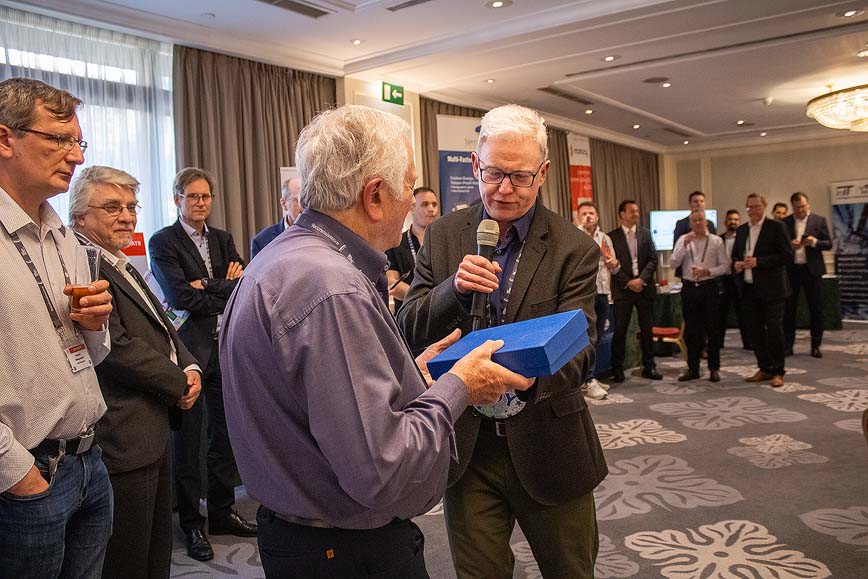
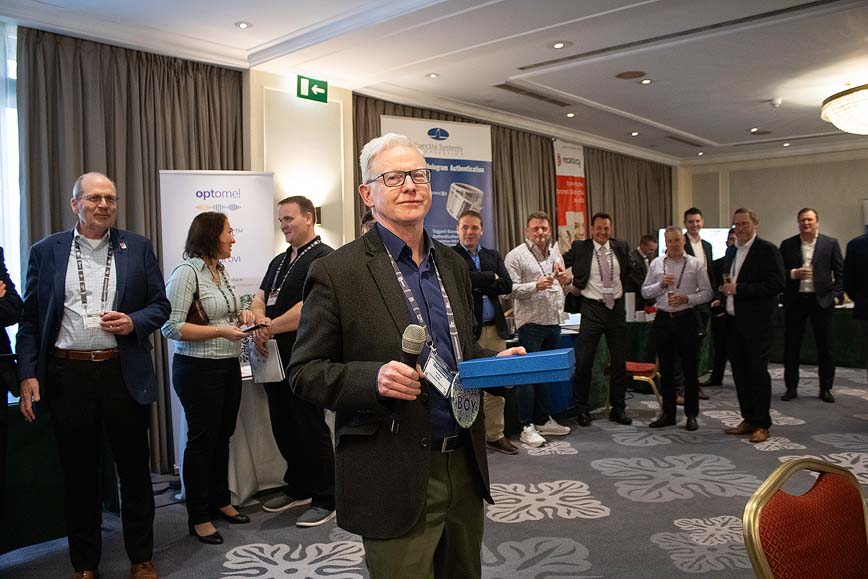
In his closing remarks, Ian Lancaster went to great lengths to thank the sponsors, tabletop exhibitors, conference organisers and, of course, participants. He also acknowledged the work of the members of the conference committee in ensuring the high quality of the papers and the authors for making them so.
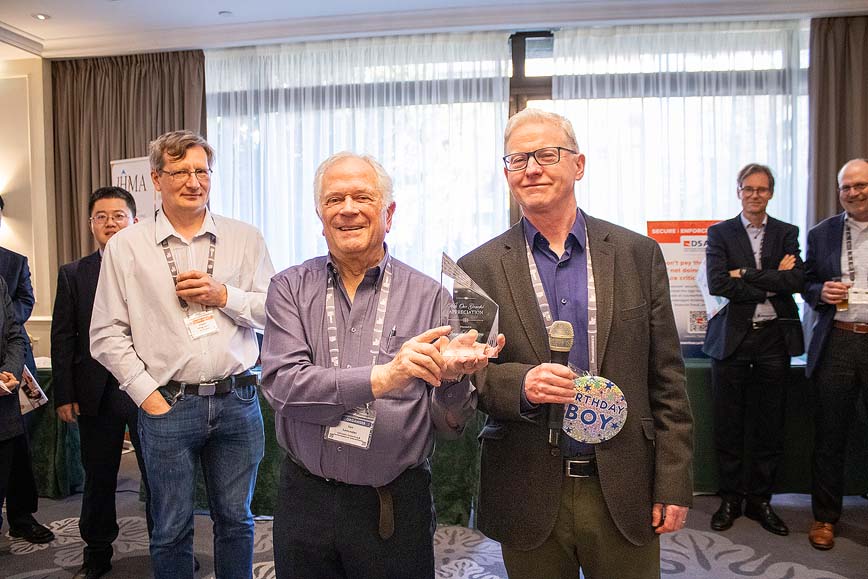
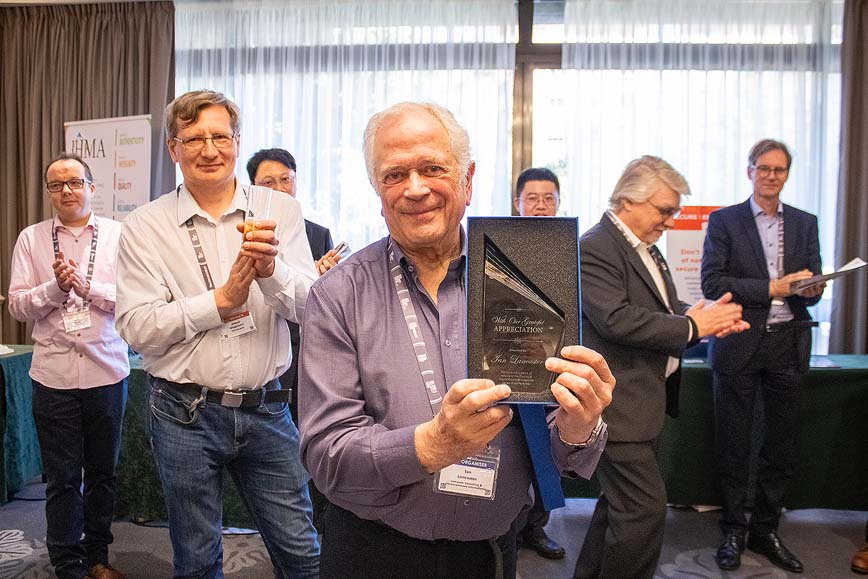
This was the last ODDS conference that Ian Lancaster will lead. He has been involved with this conference series from the first van Renesse event in 1996, leading the evolution of the conference through several iterations to its current format.
Ian, who has been granted the title of Chairman Emeritus, closed the conference by introducing Francis Tuffy as the new Programme Director and wishing him all the best for the next ODDS, to be held in Warsaw, Poland in autumn 2025.
inIT-Institute Industrial IT
Bundesdruckerei
ANY Security Printing
Gallery
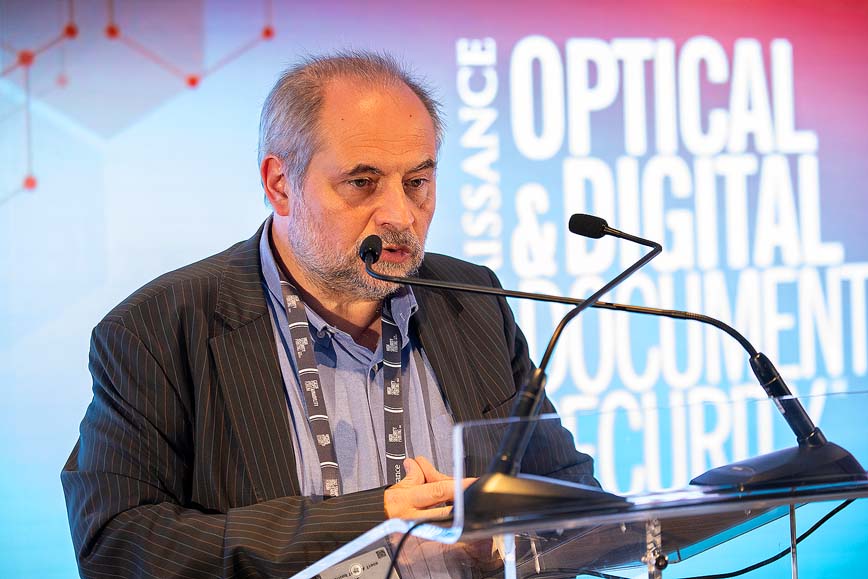
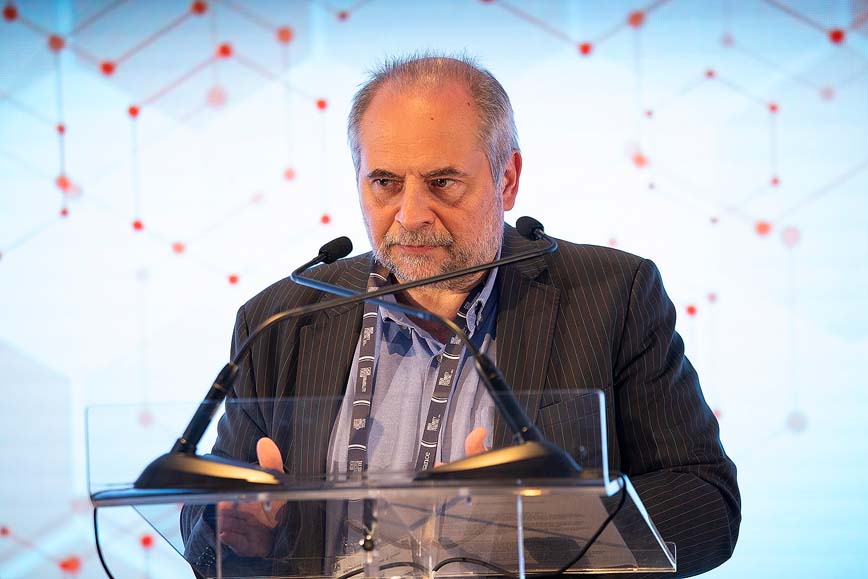
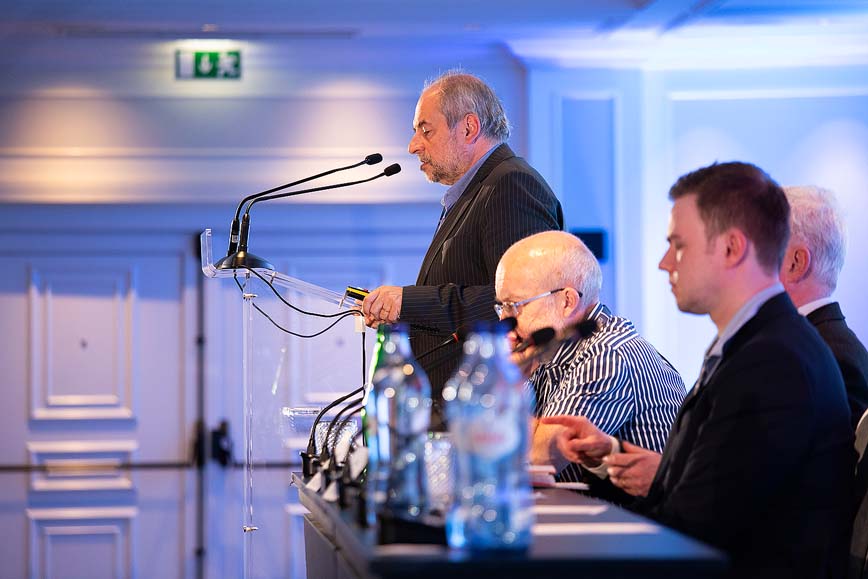
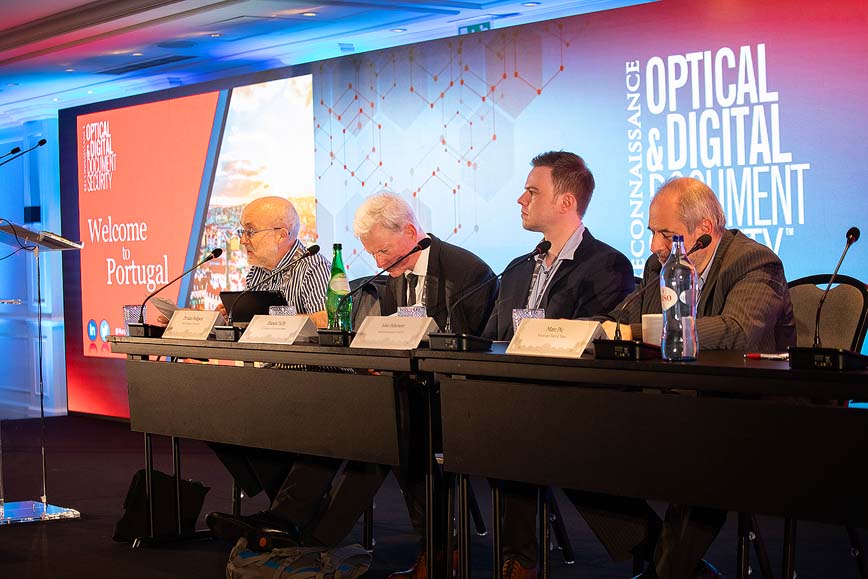
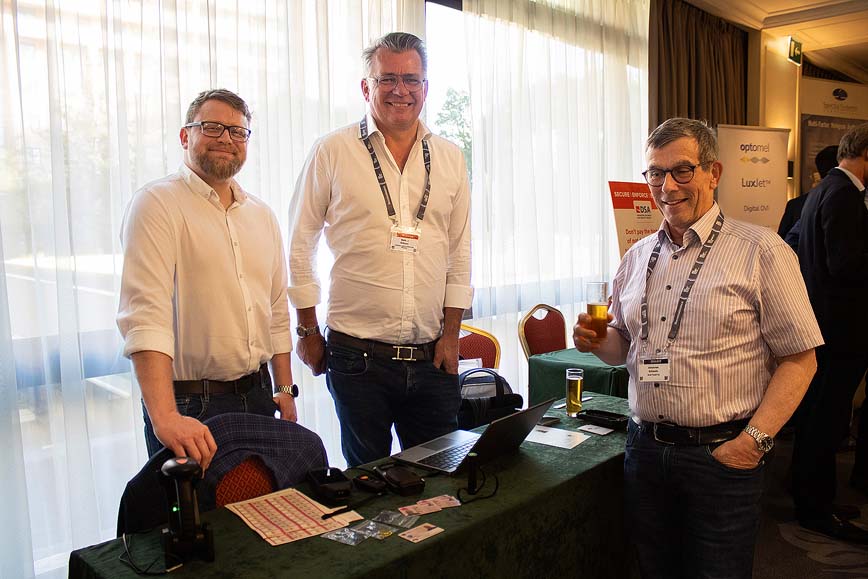
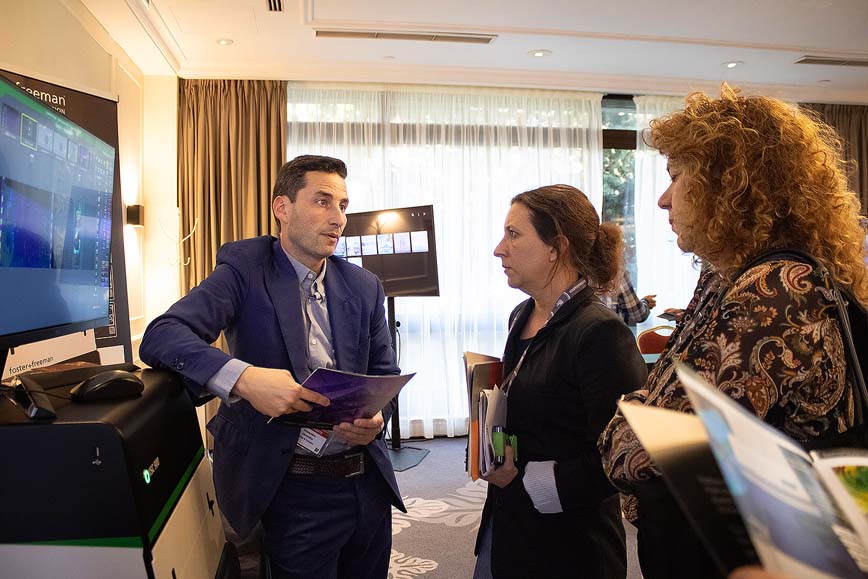
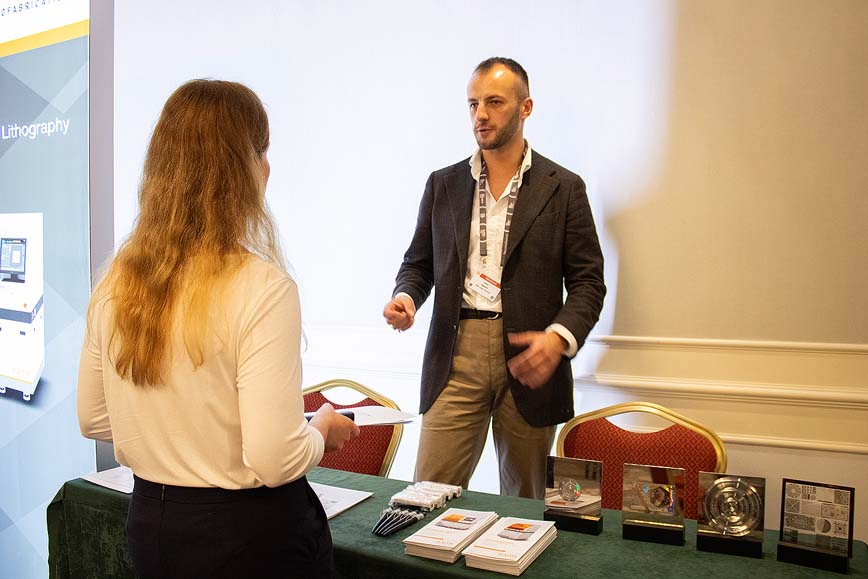
Click on any picture to see the full gallery.
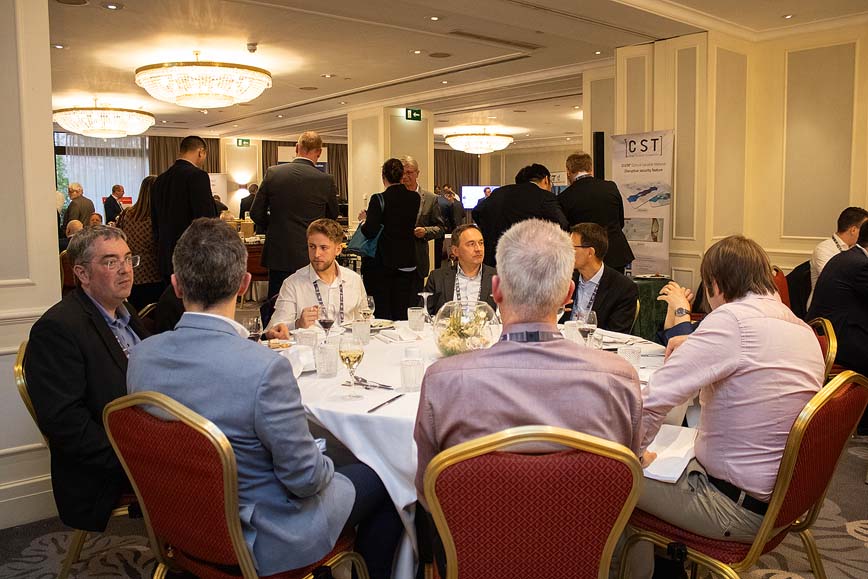
Conference




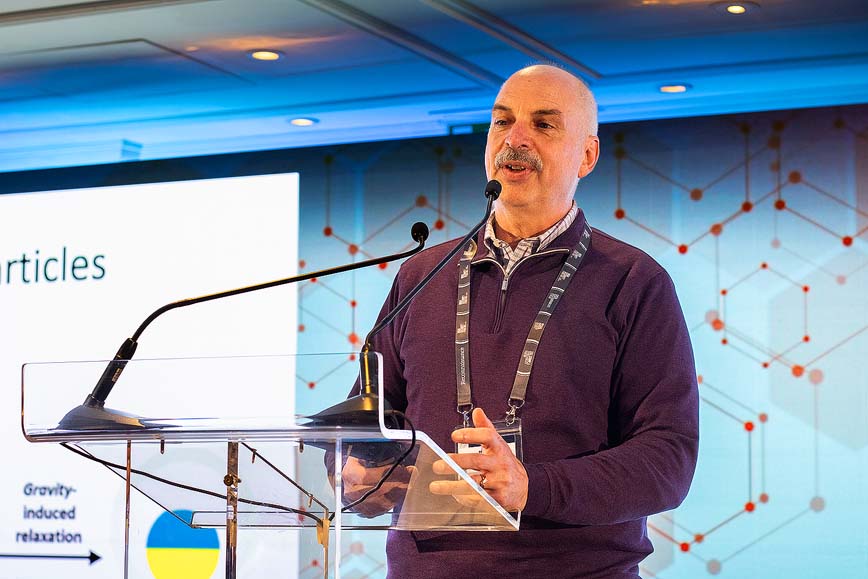
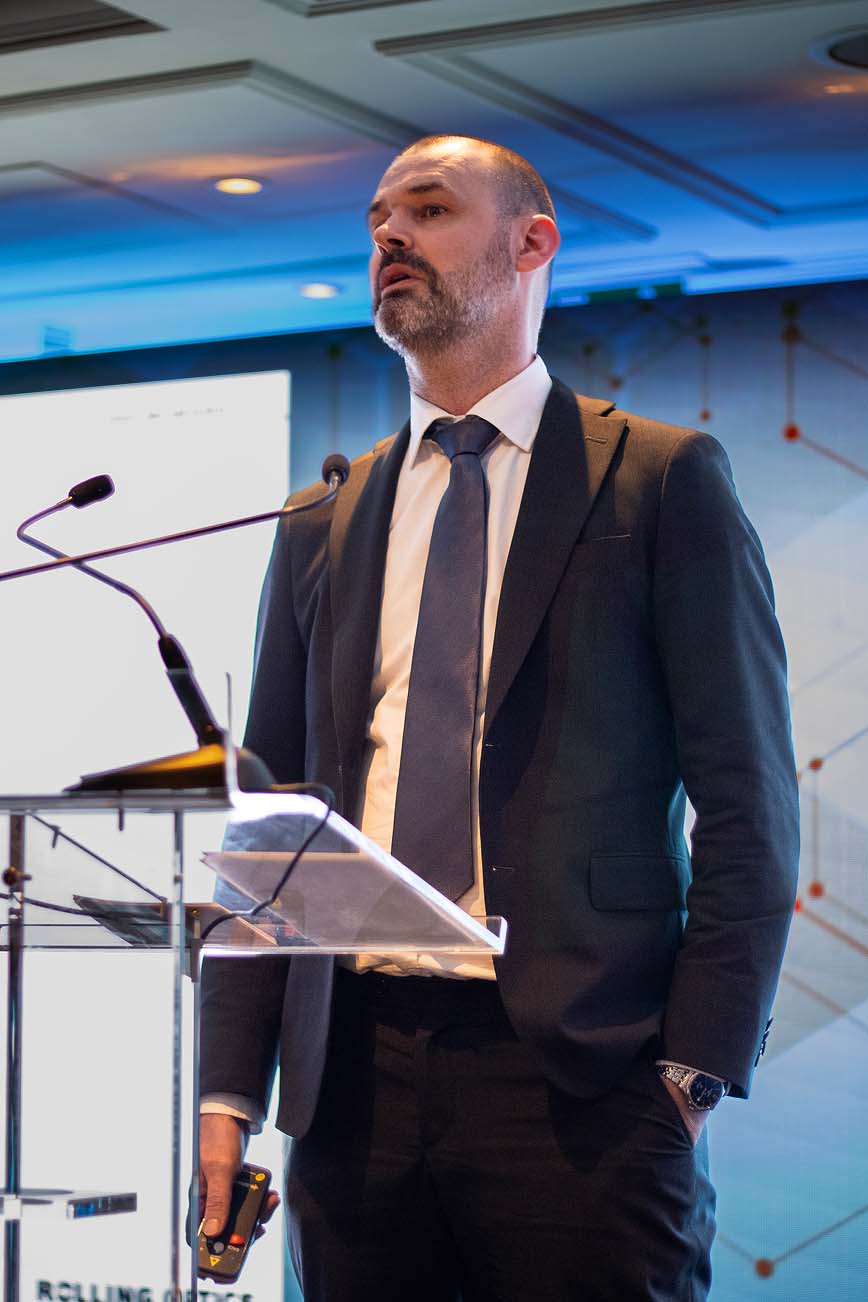
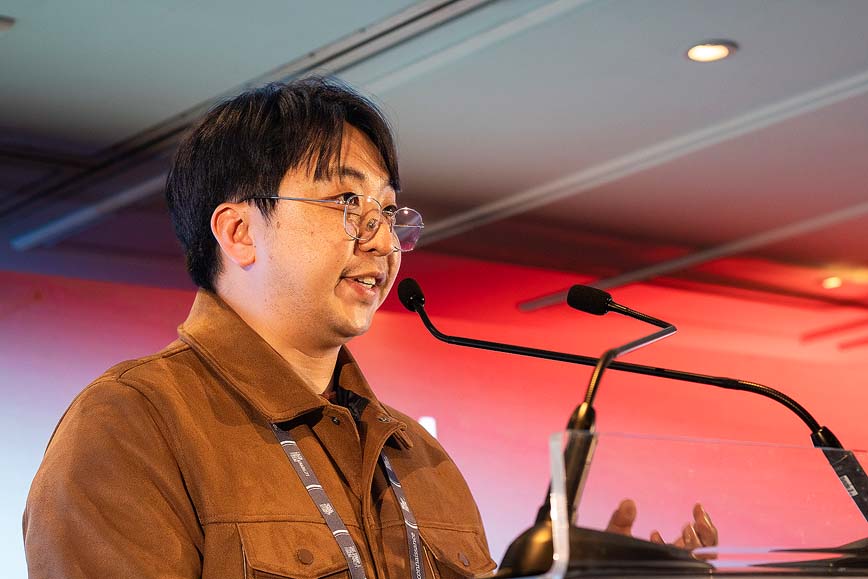
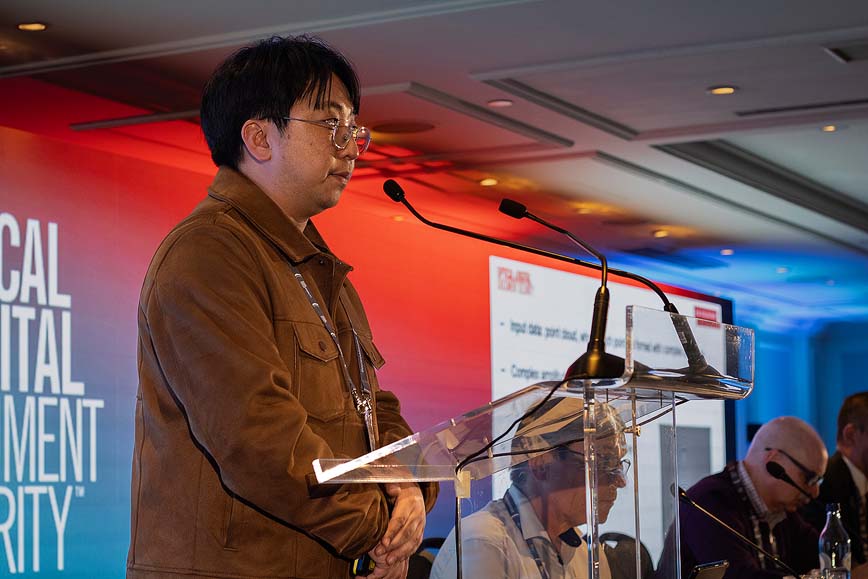
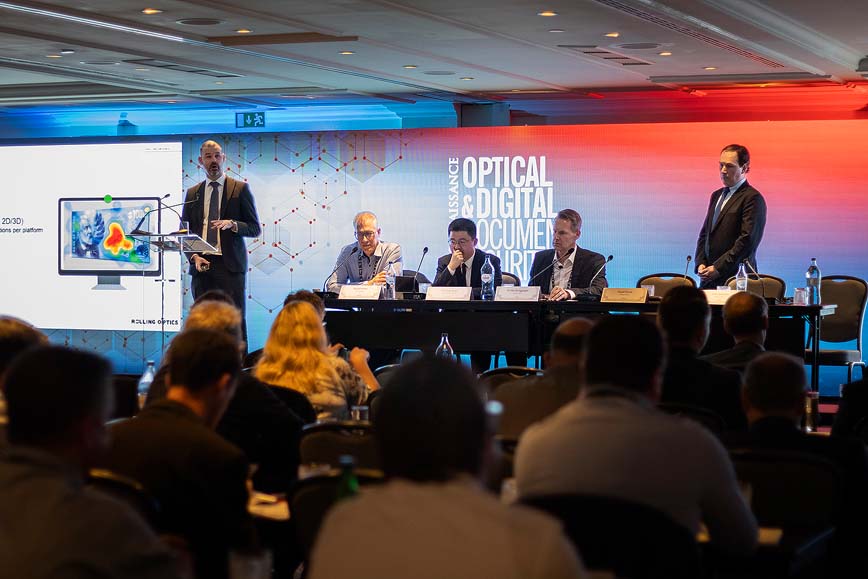
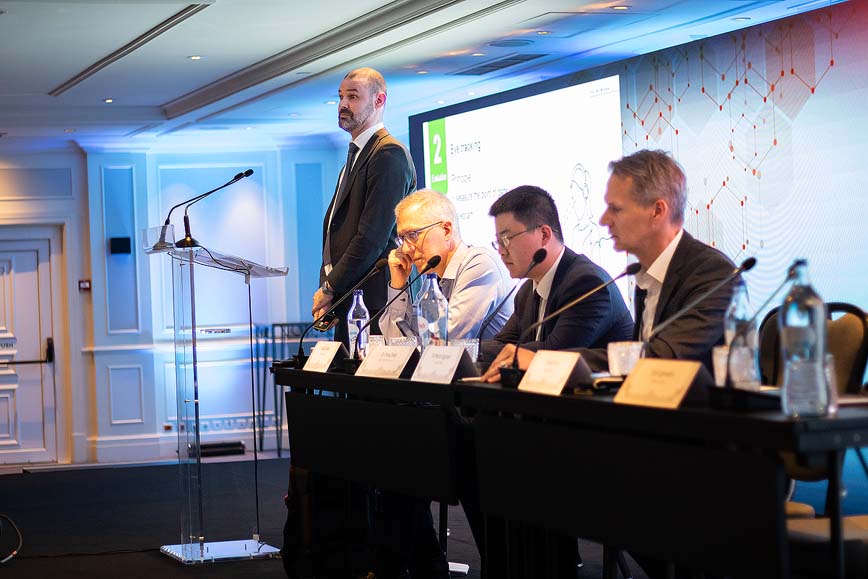
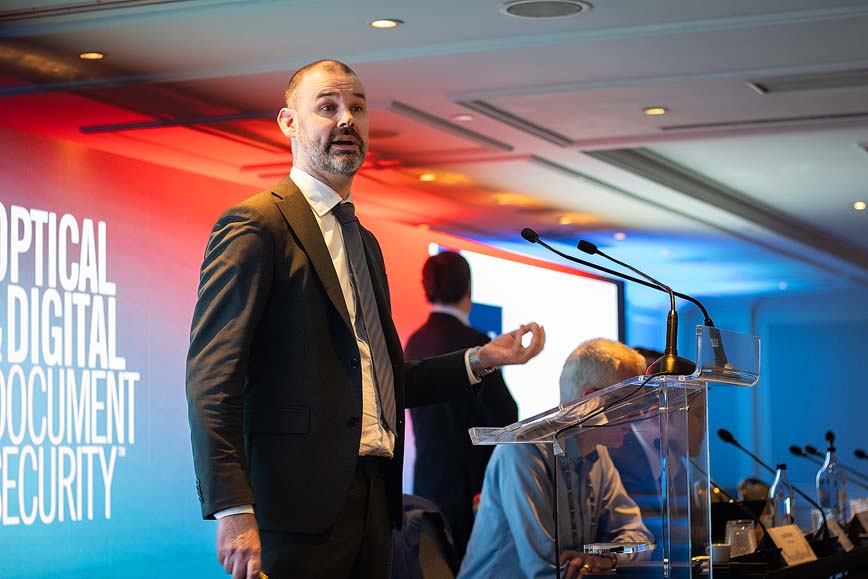
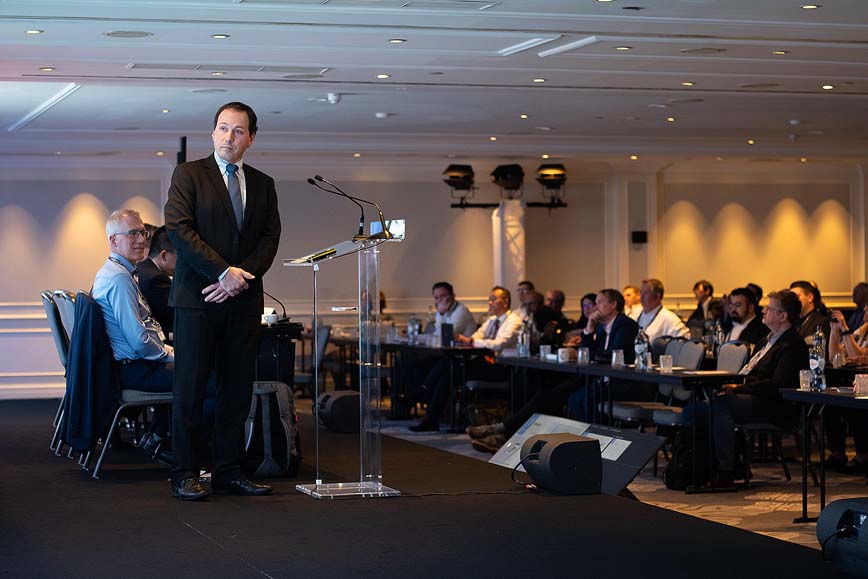


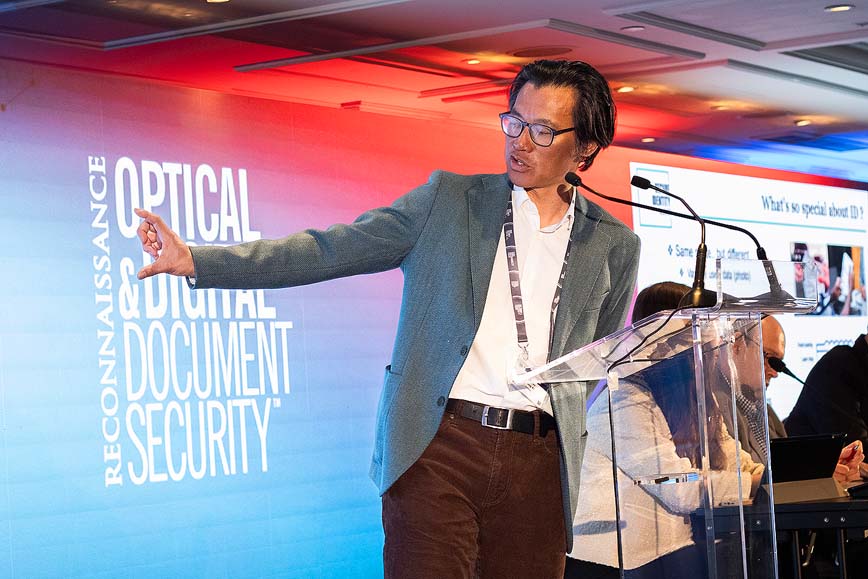
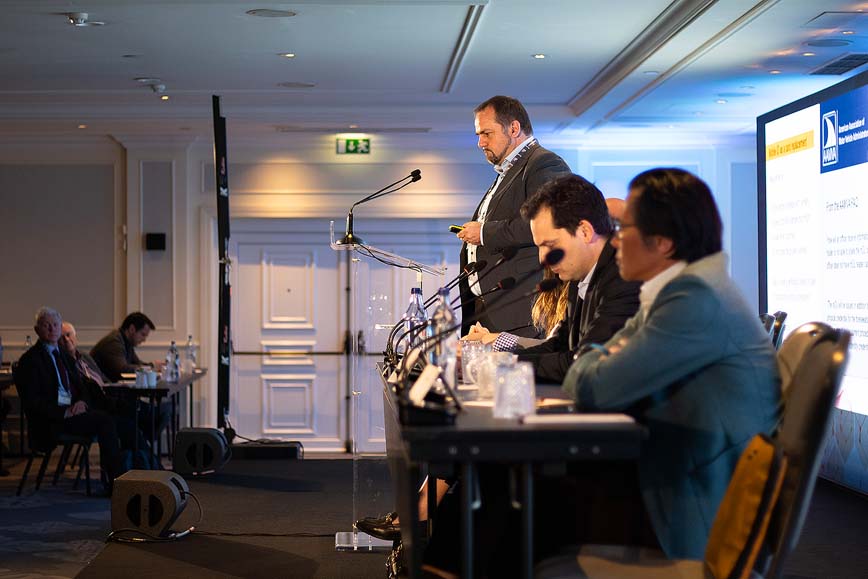
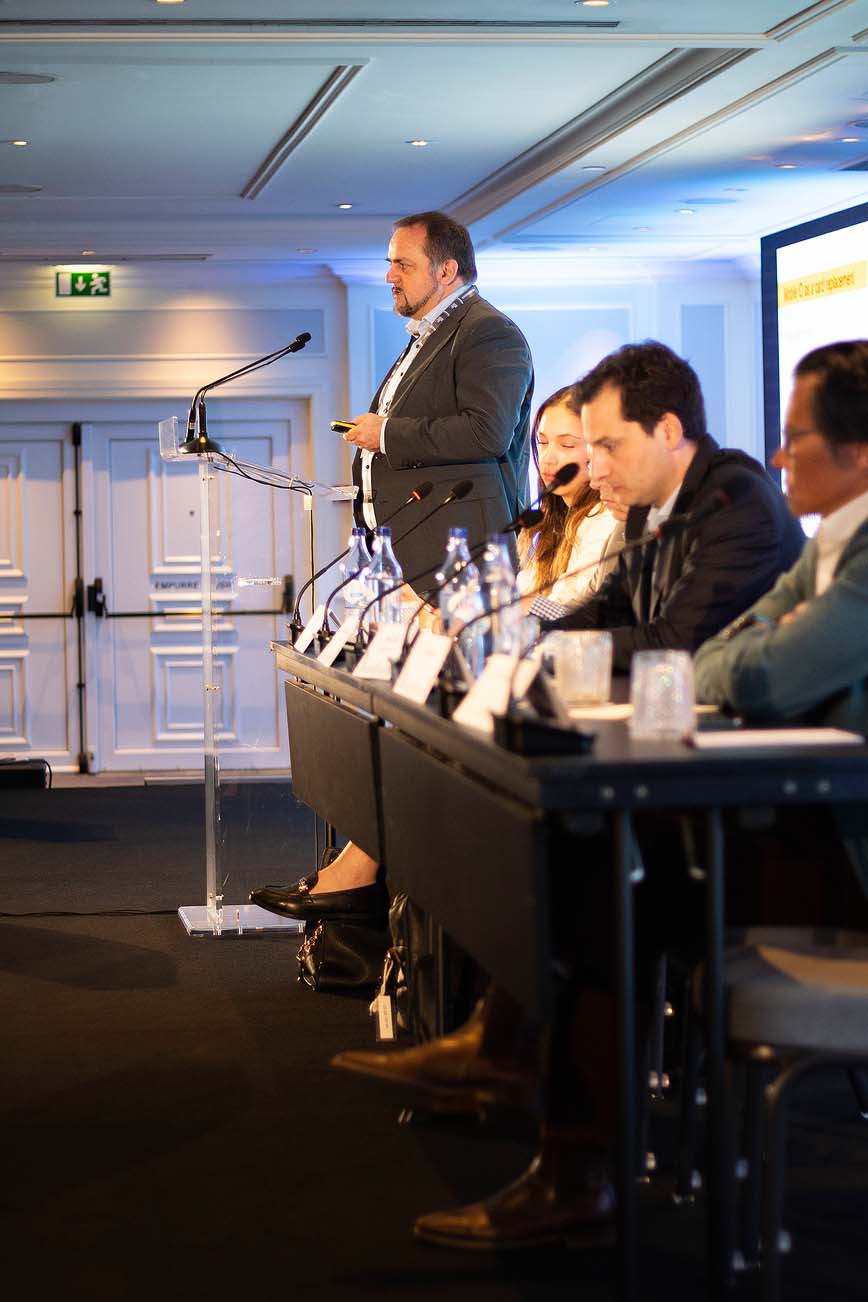
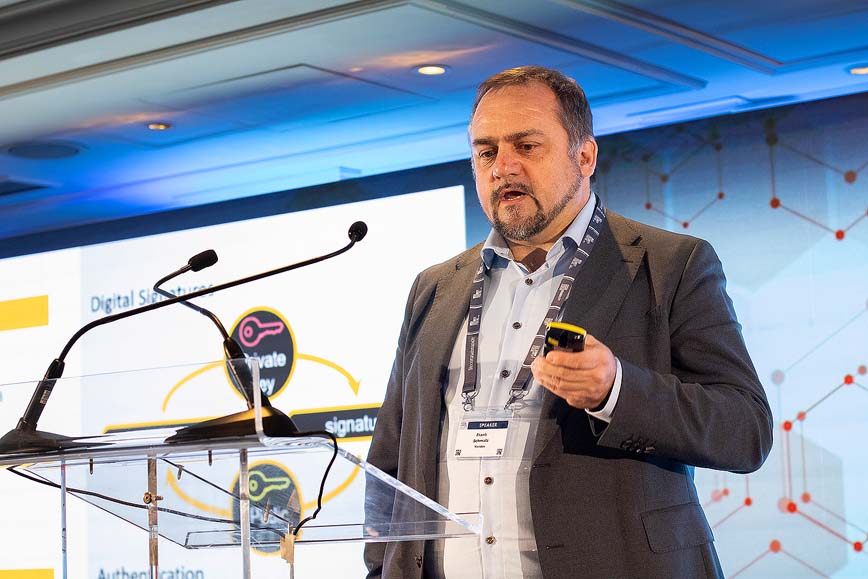
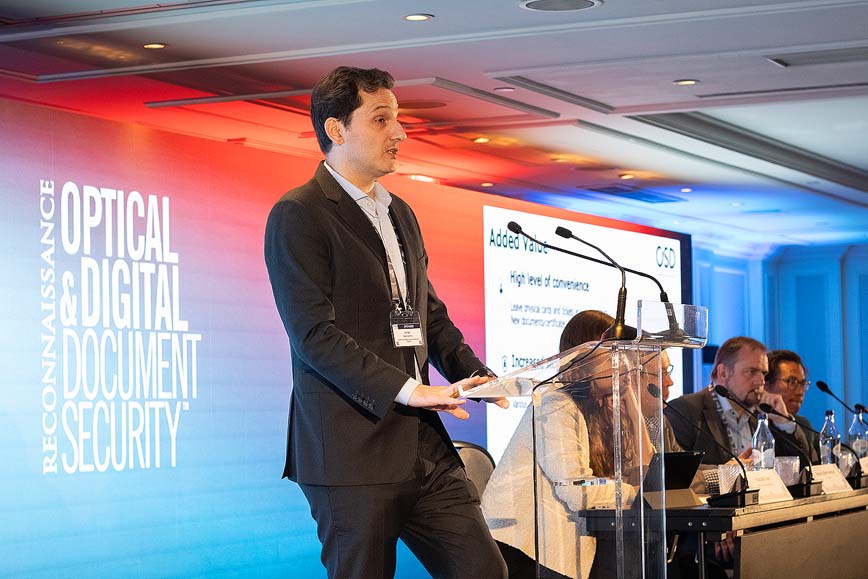
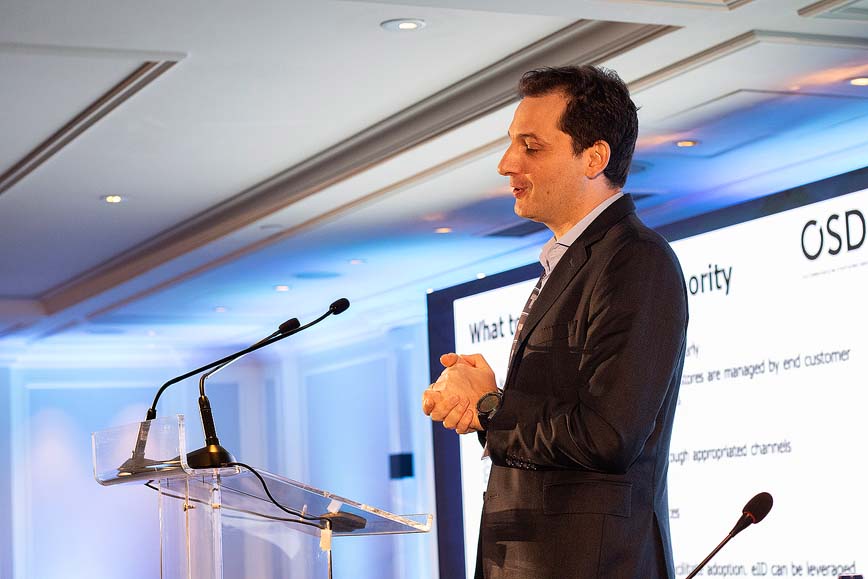
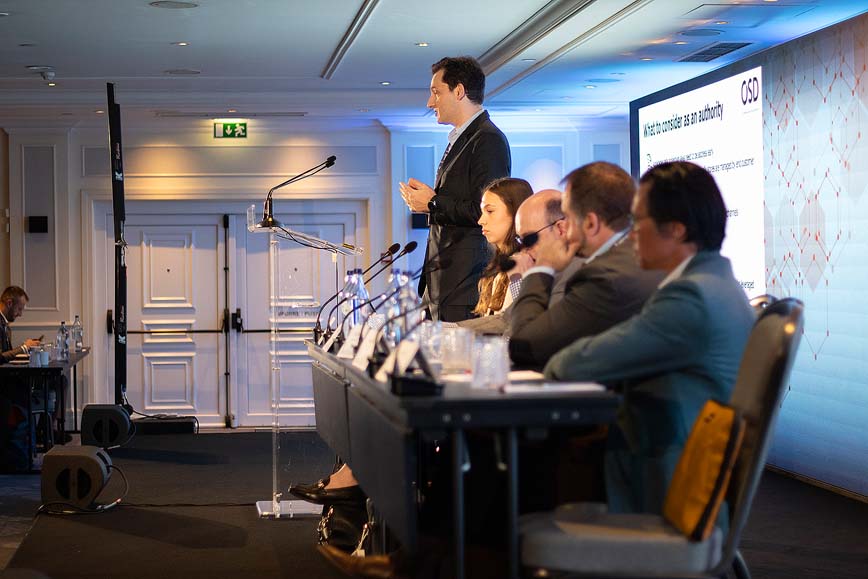
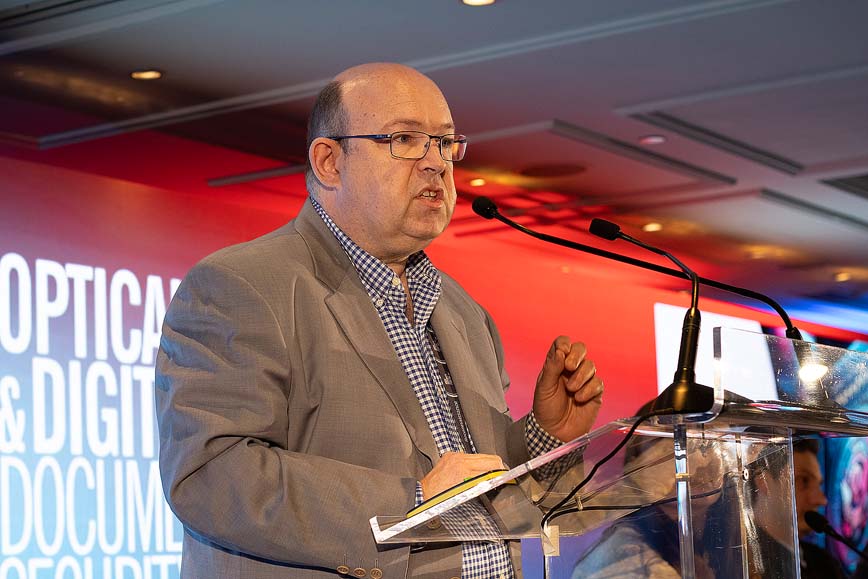
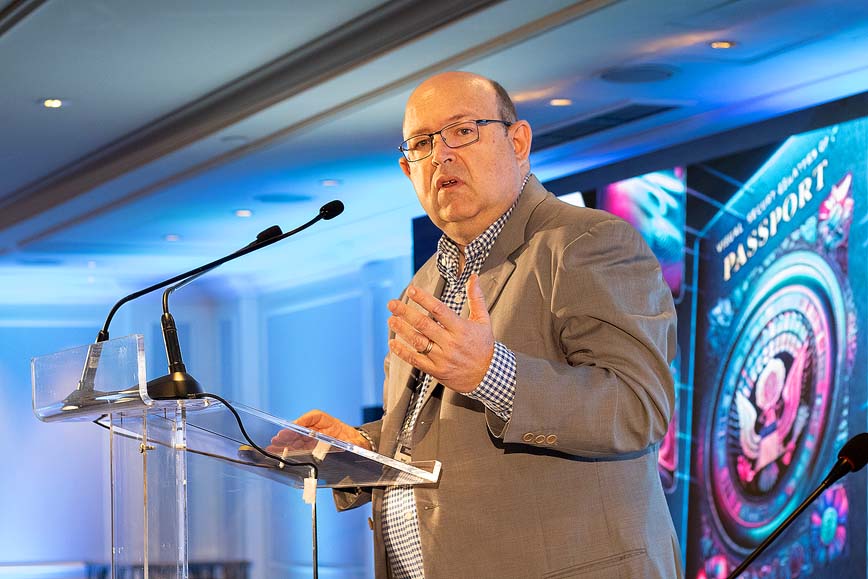
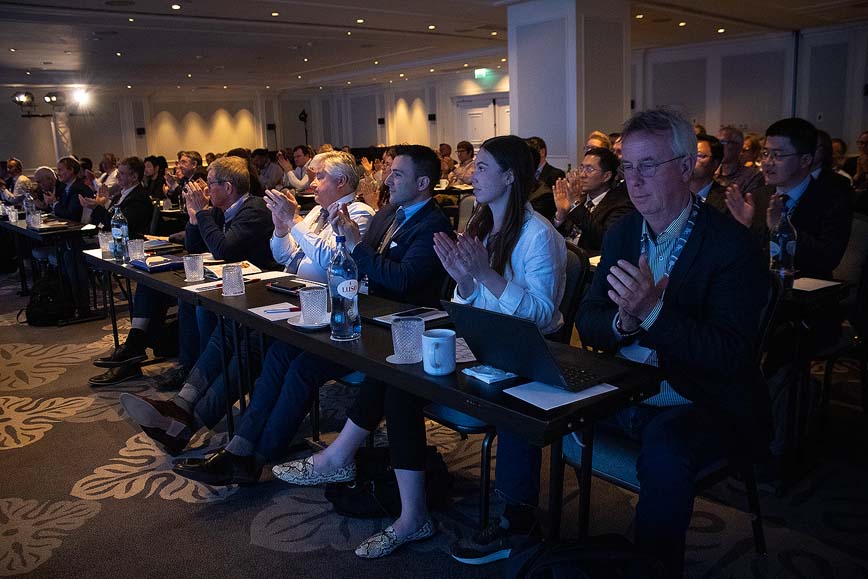
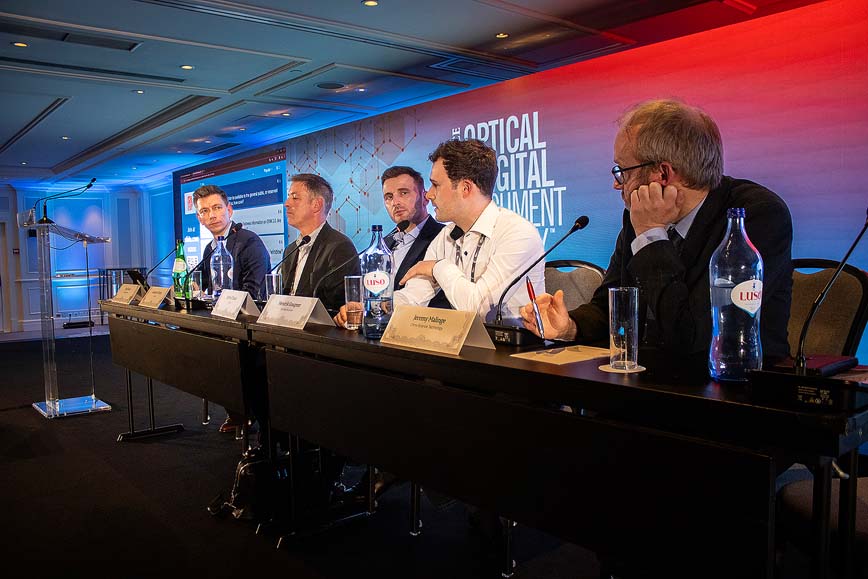
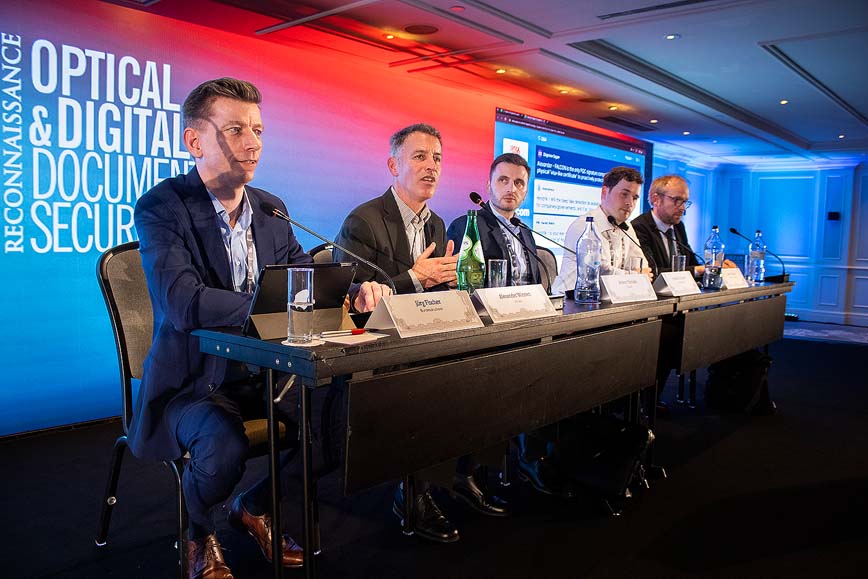






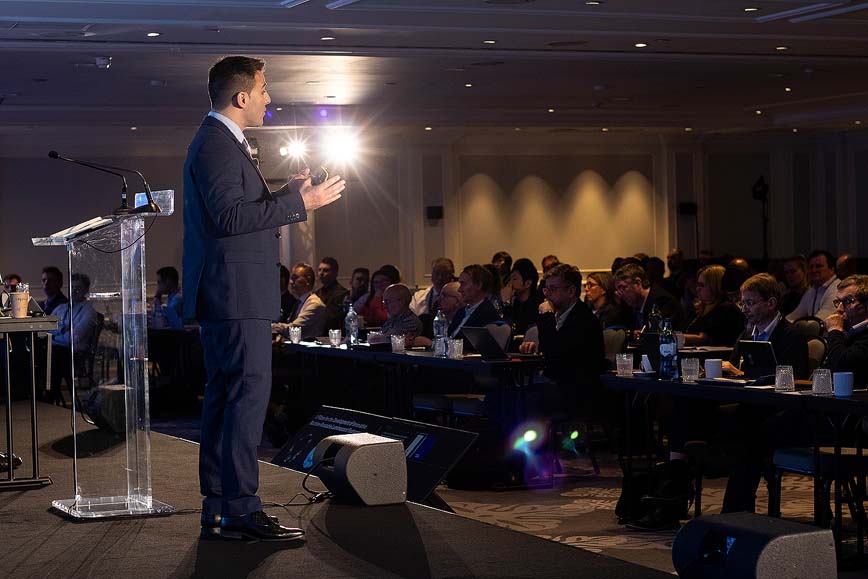
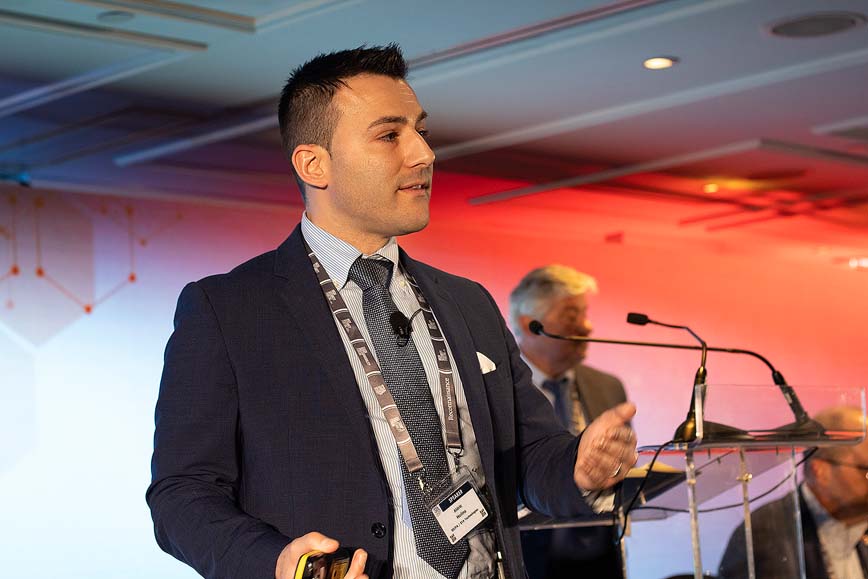
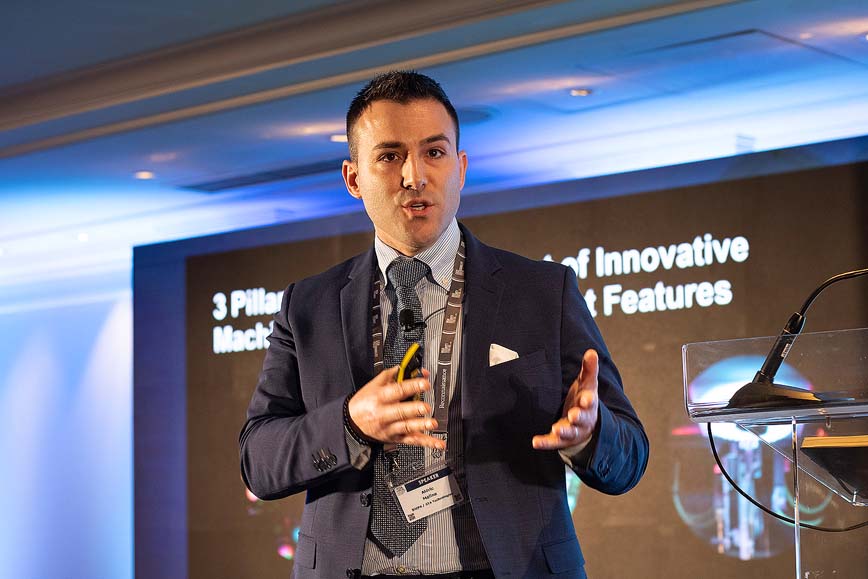
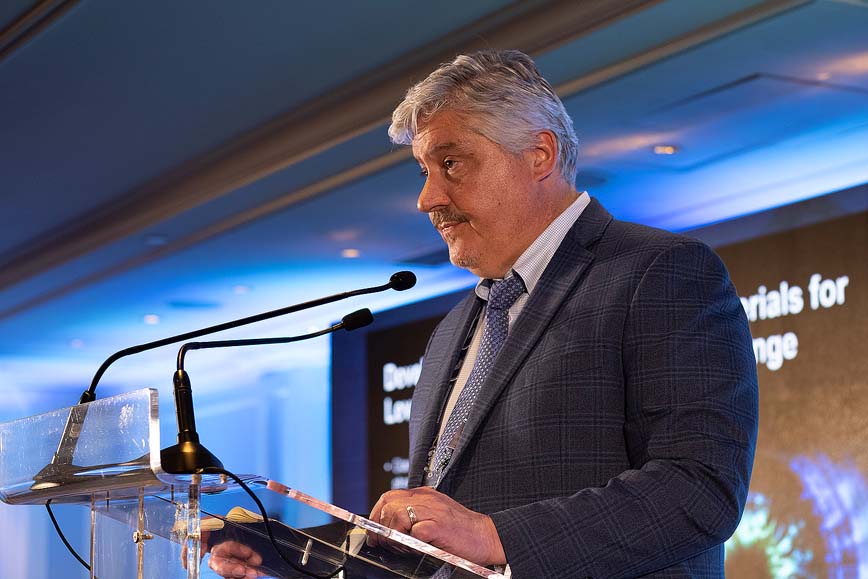


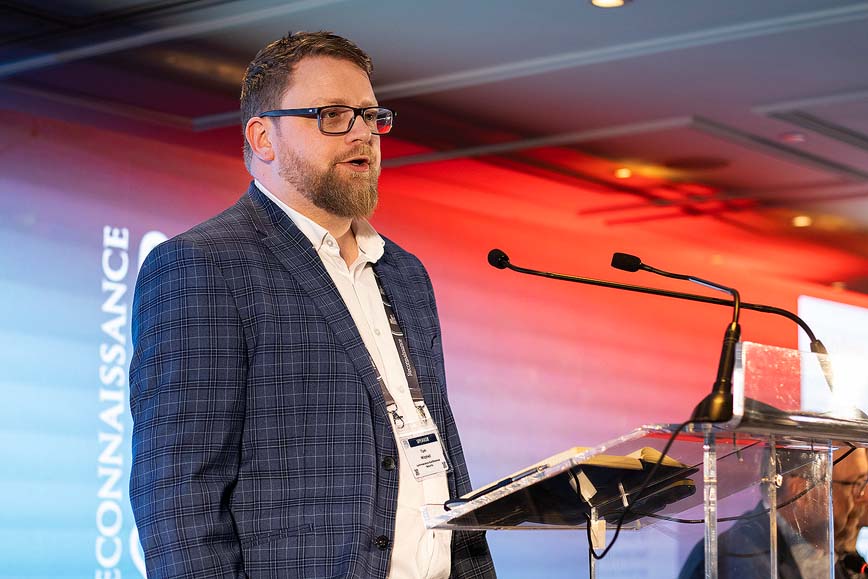
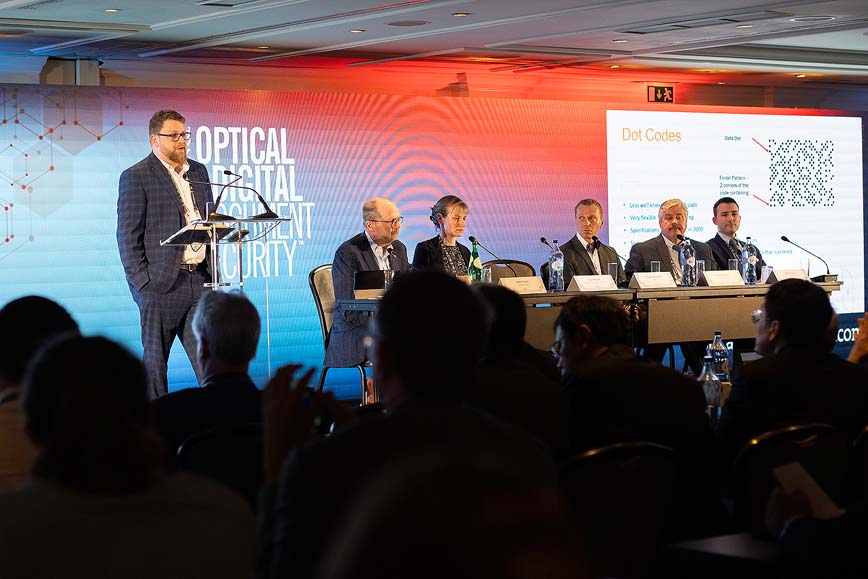





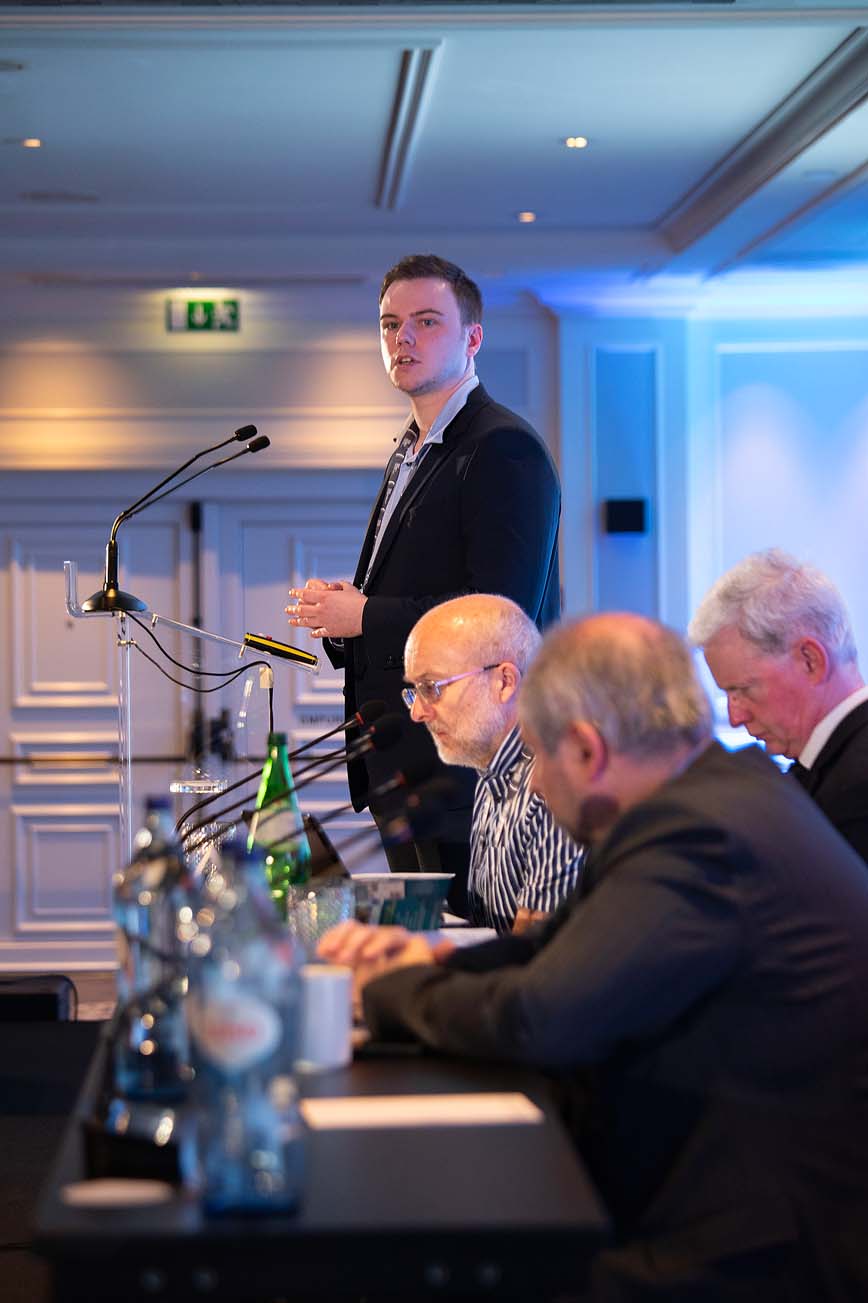

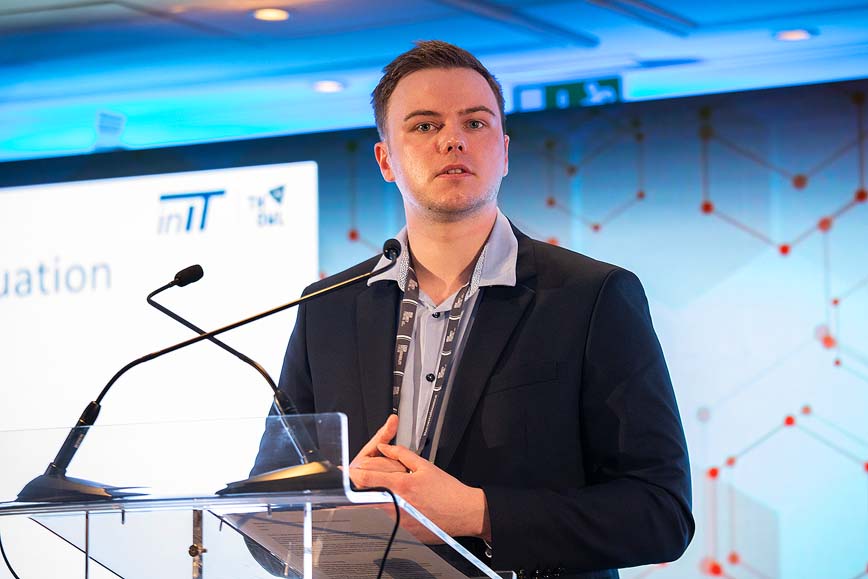






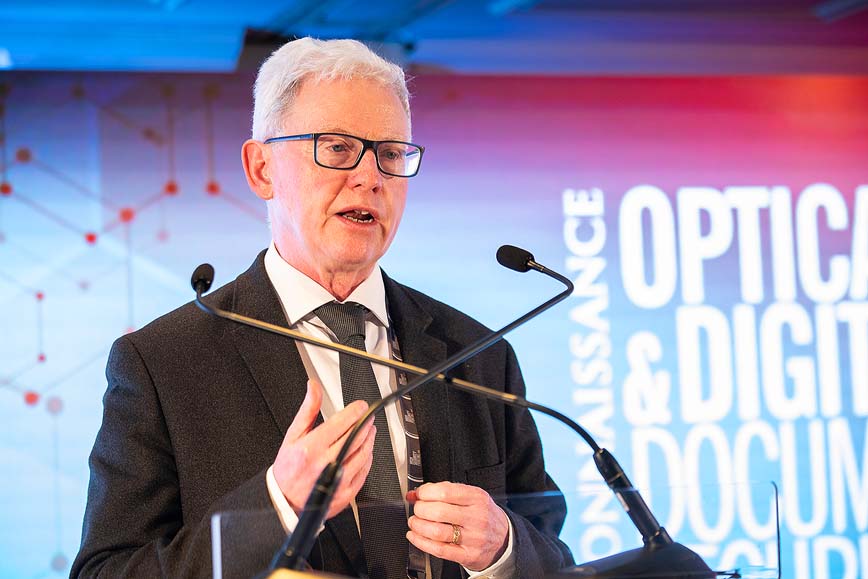

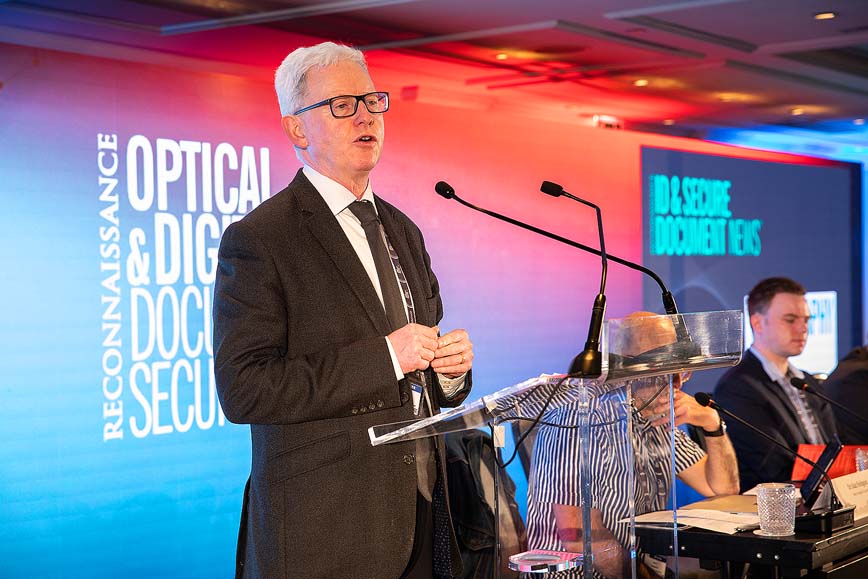

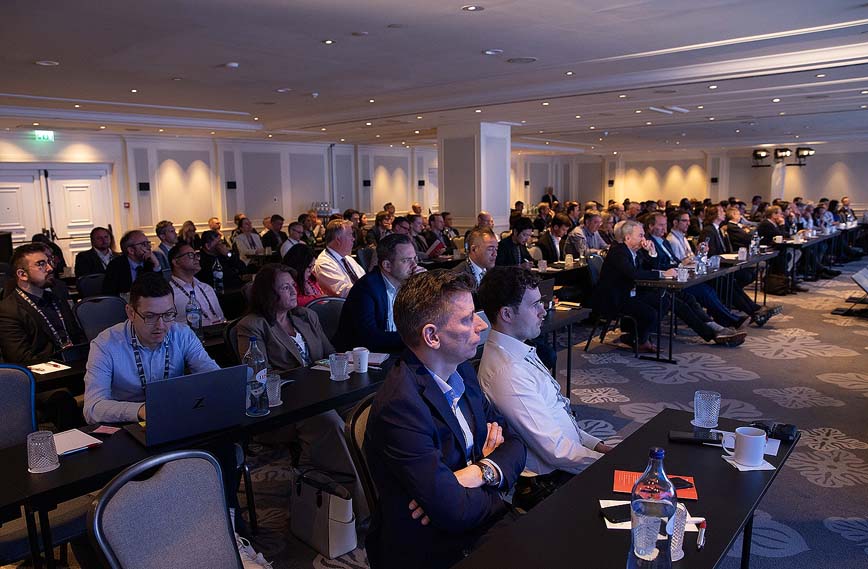
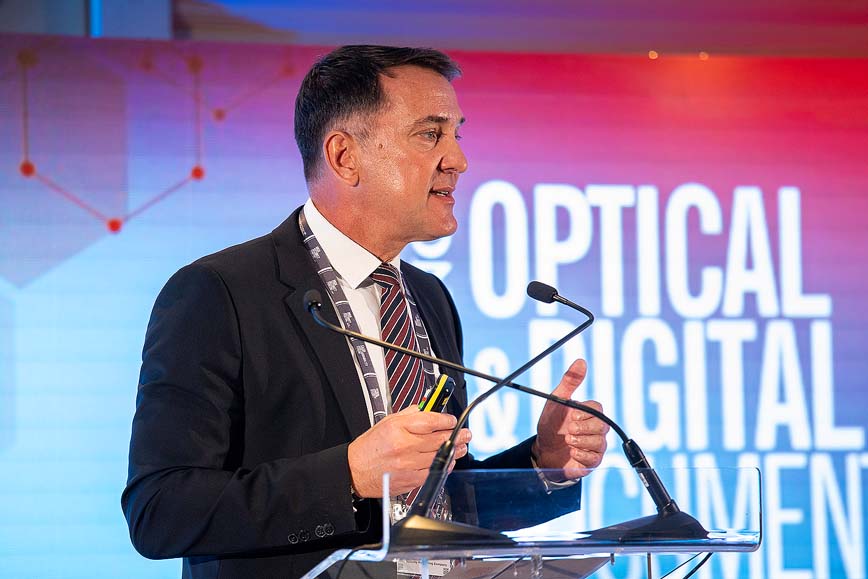


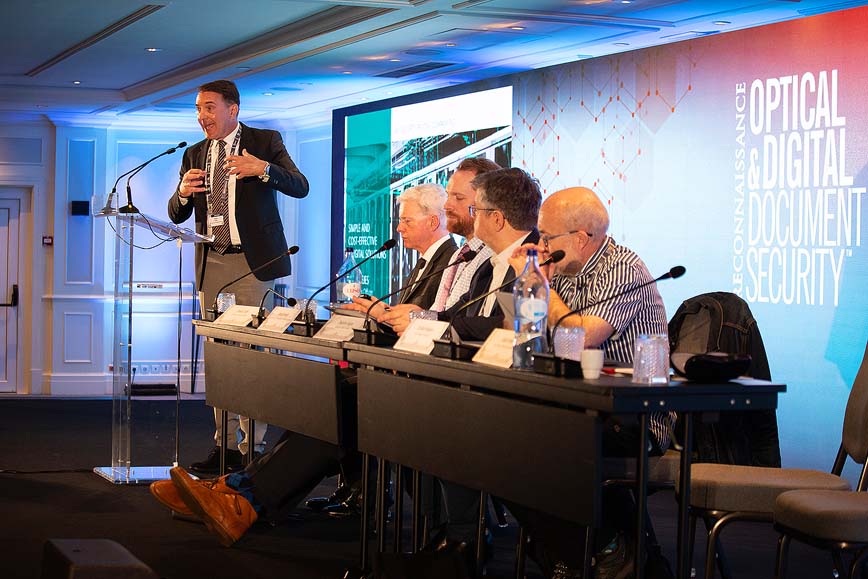

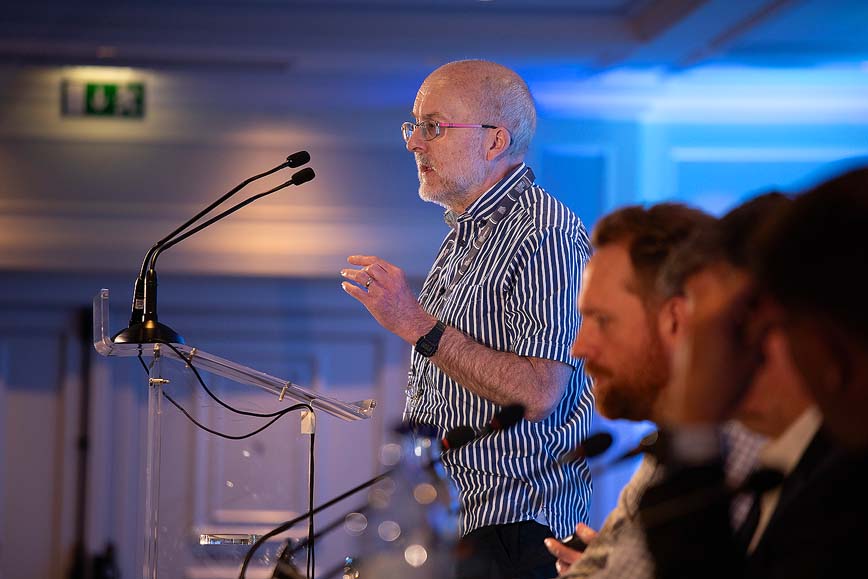








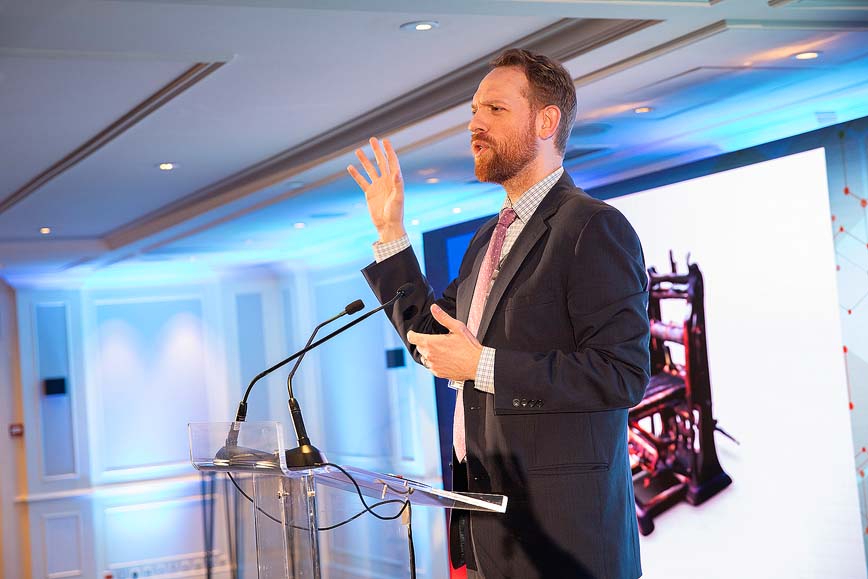
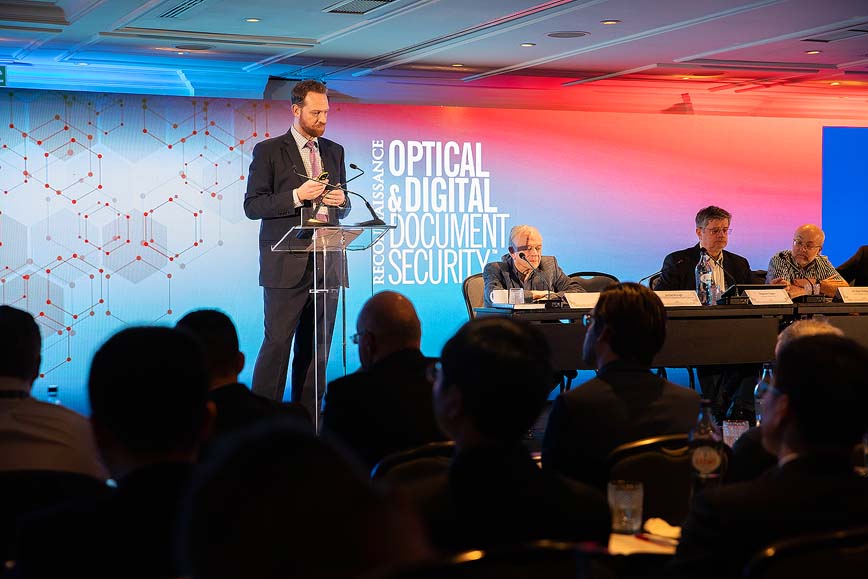
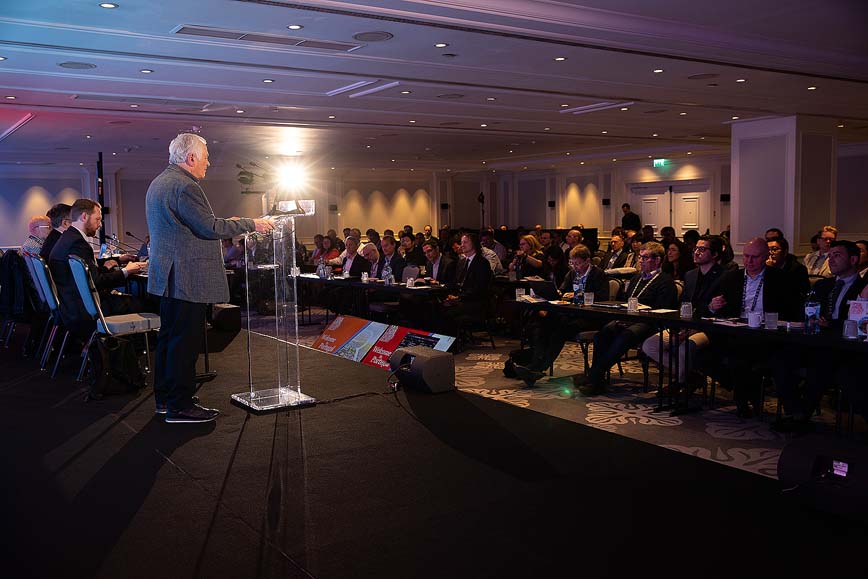
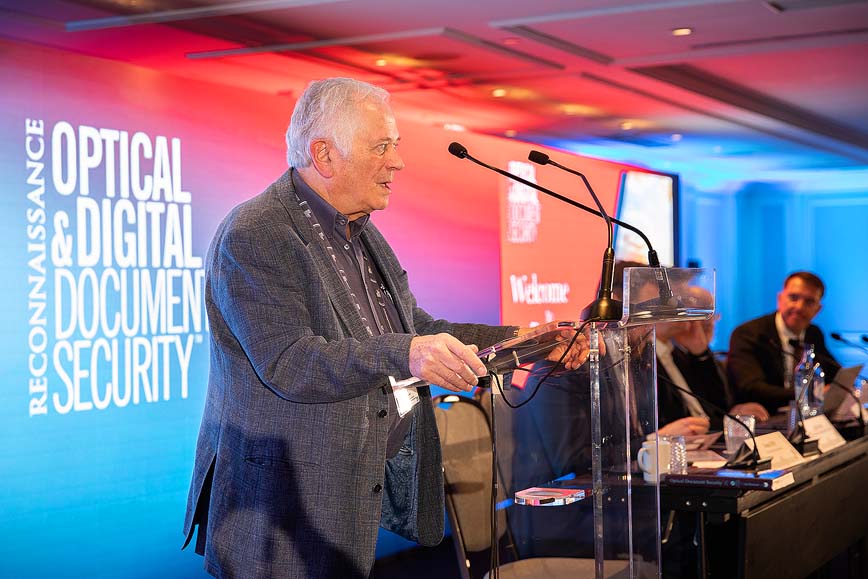

Seminar
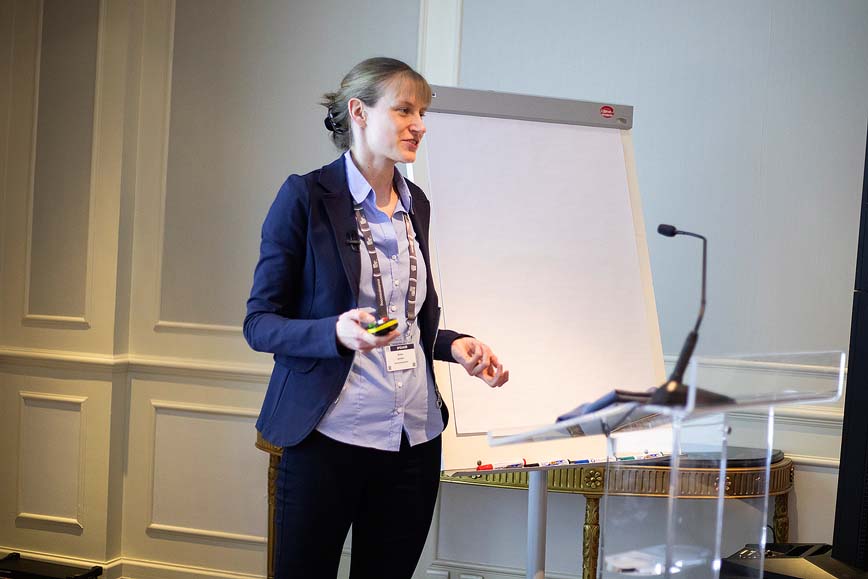


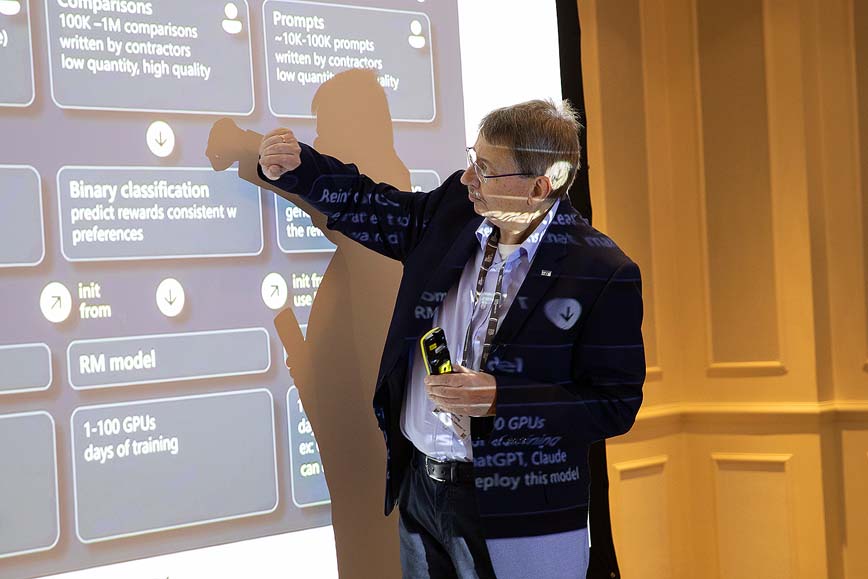
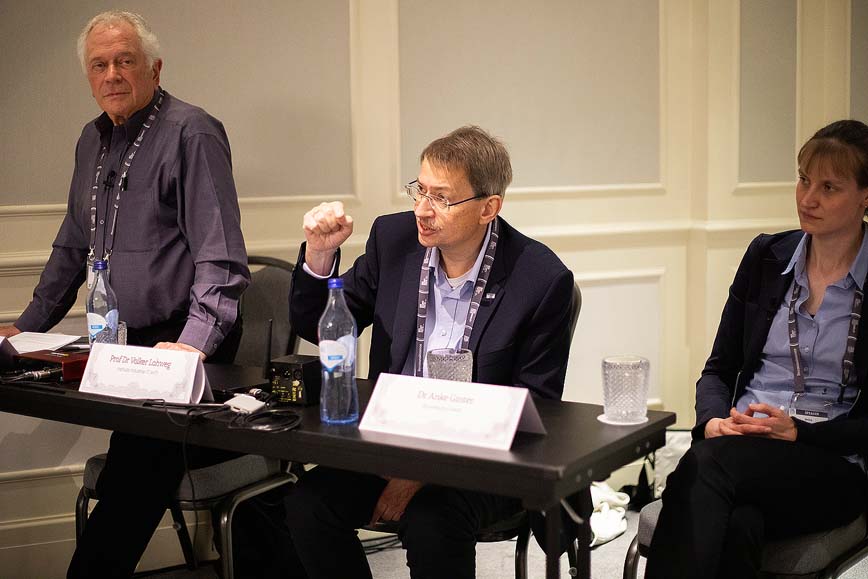
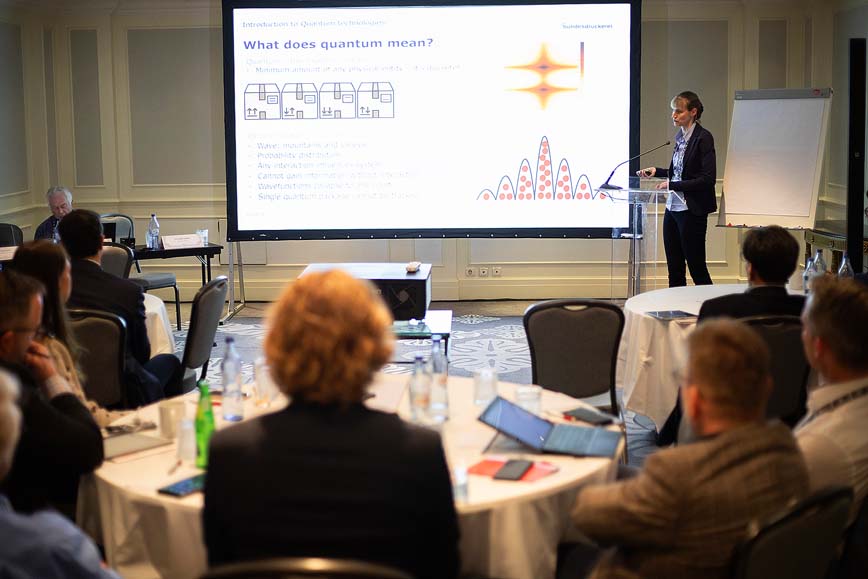
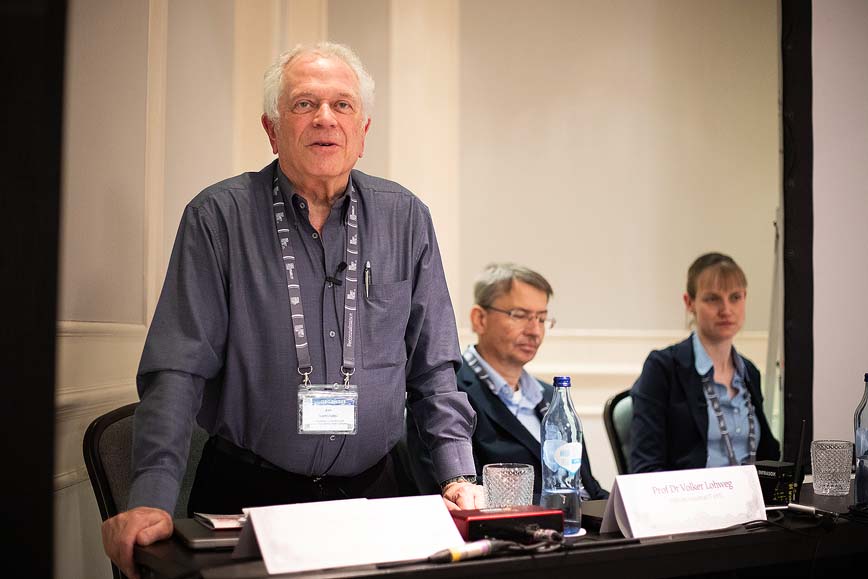
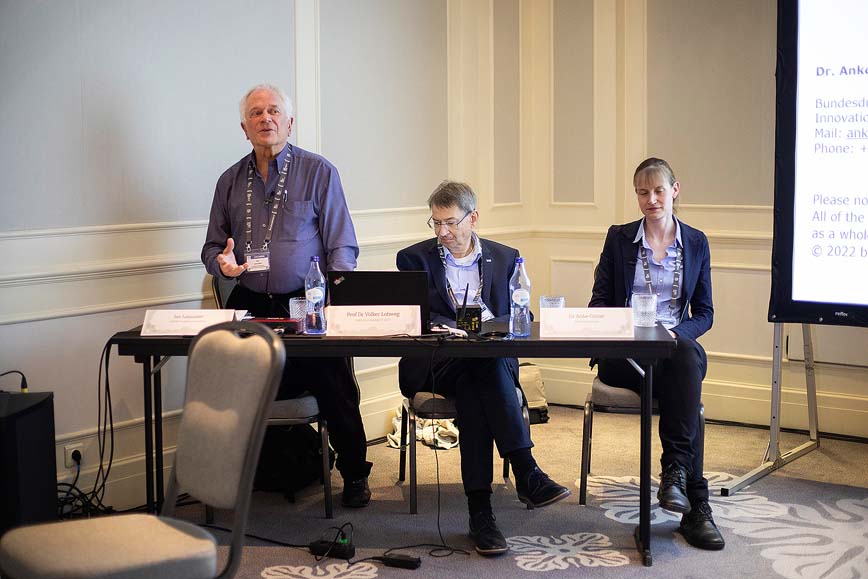
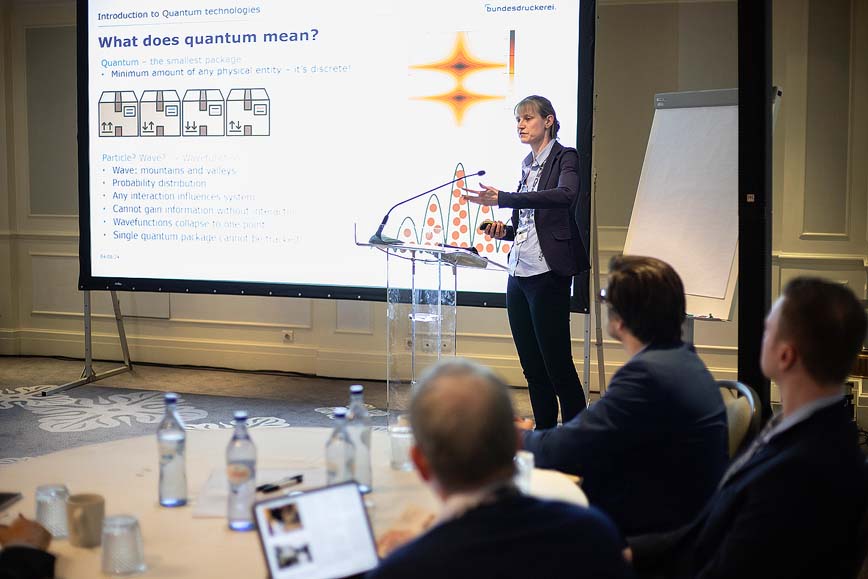
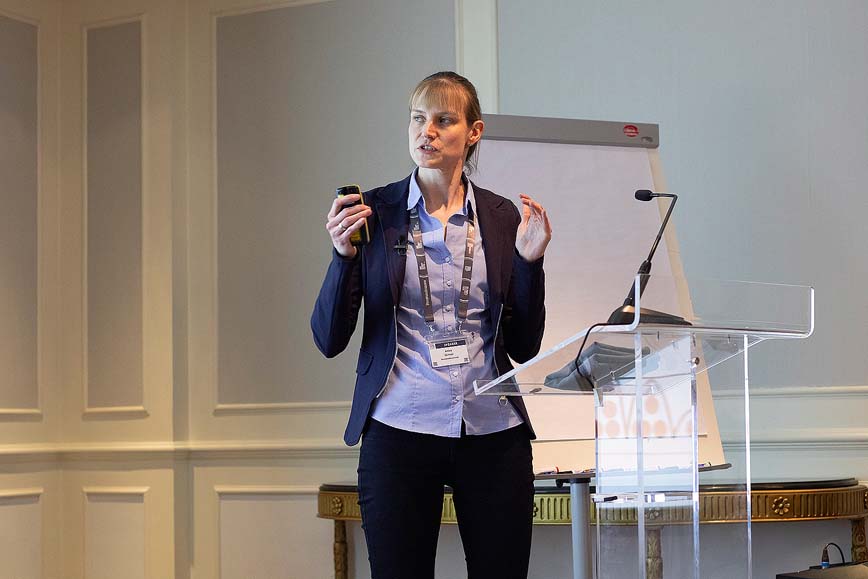
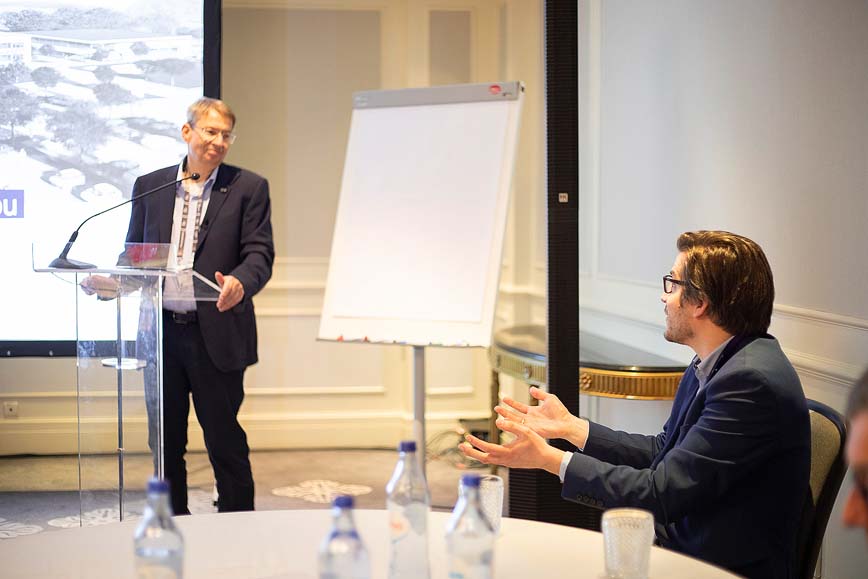


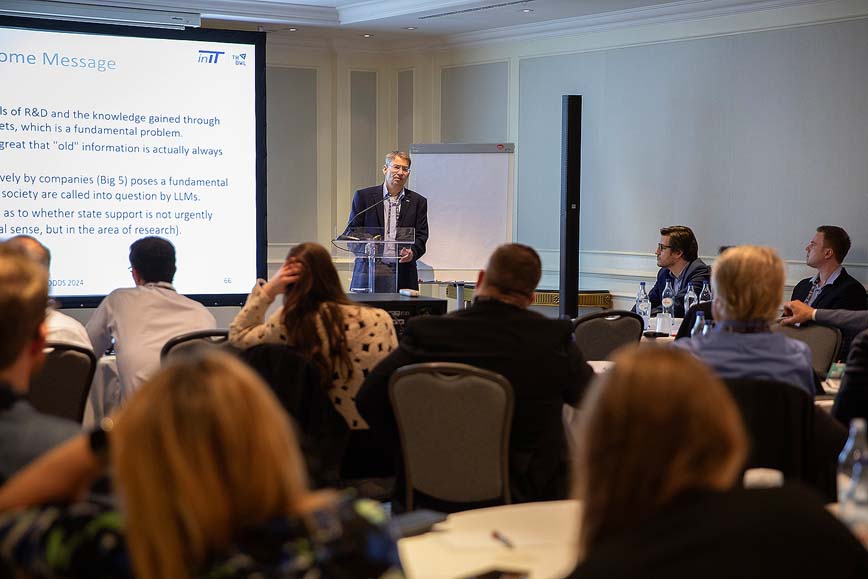
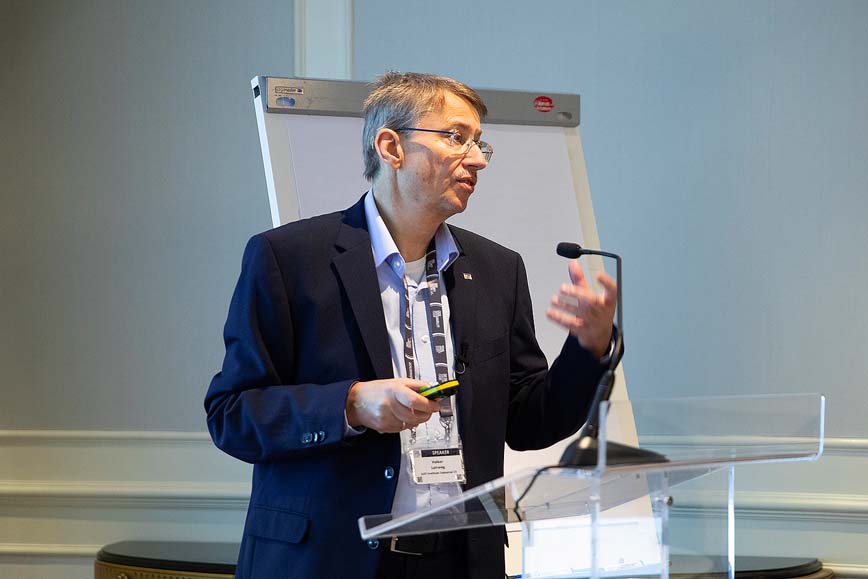
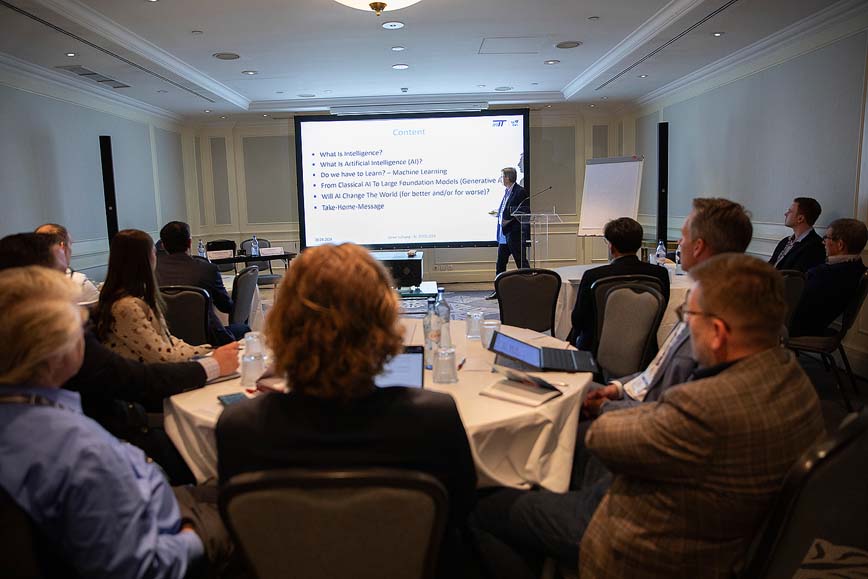
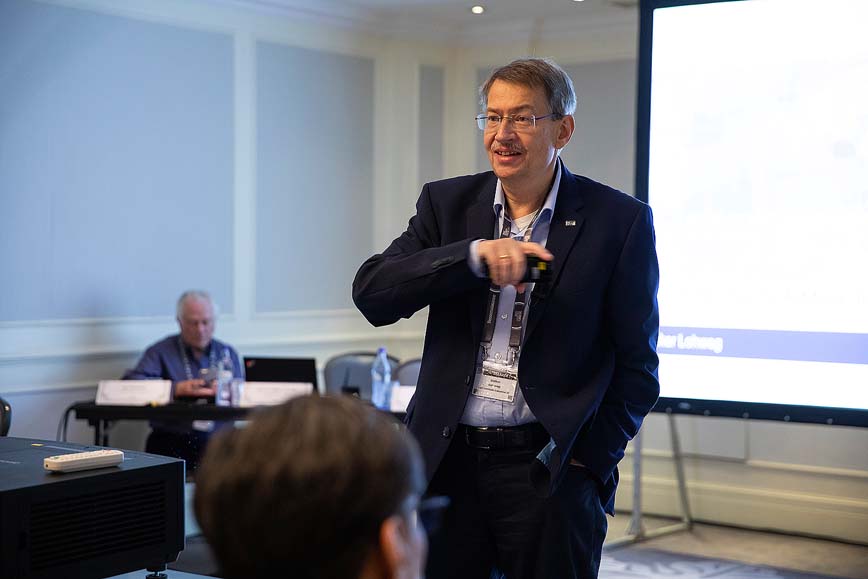
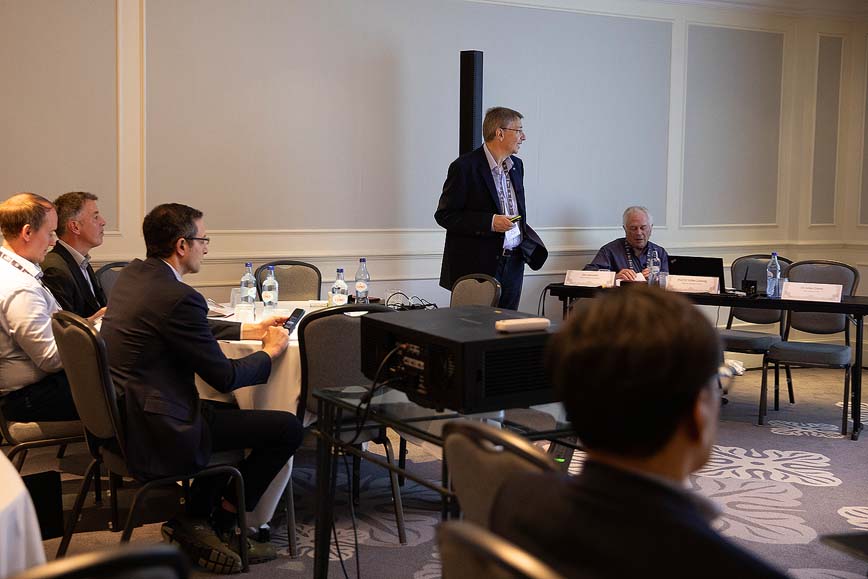

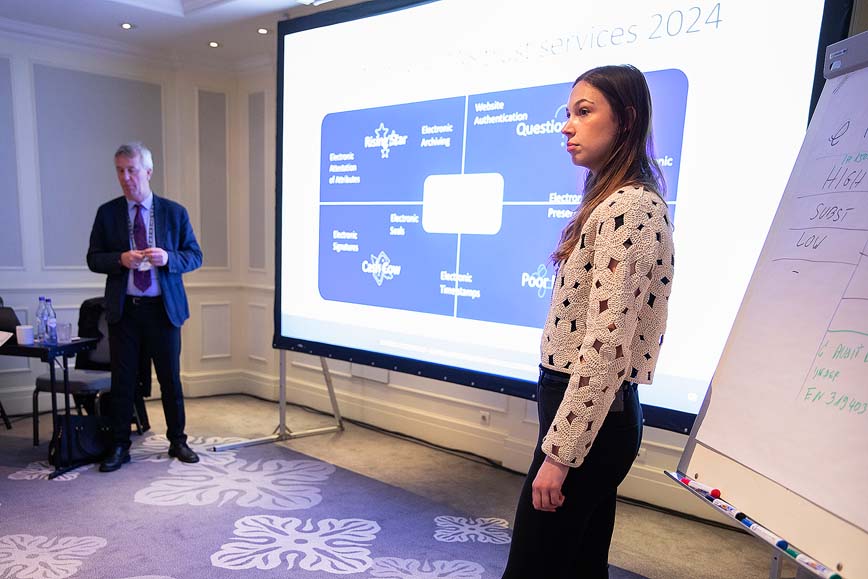
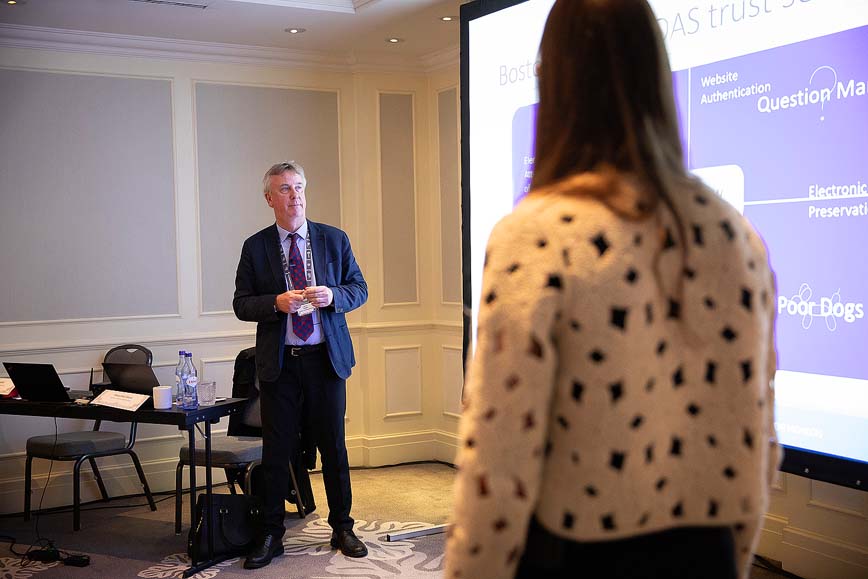
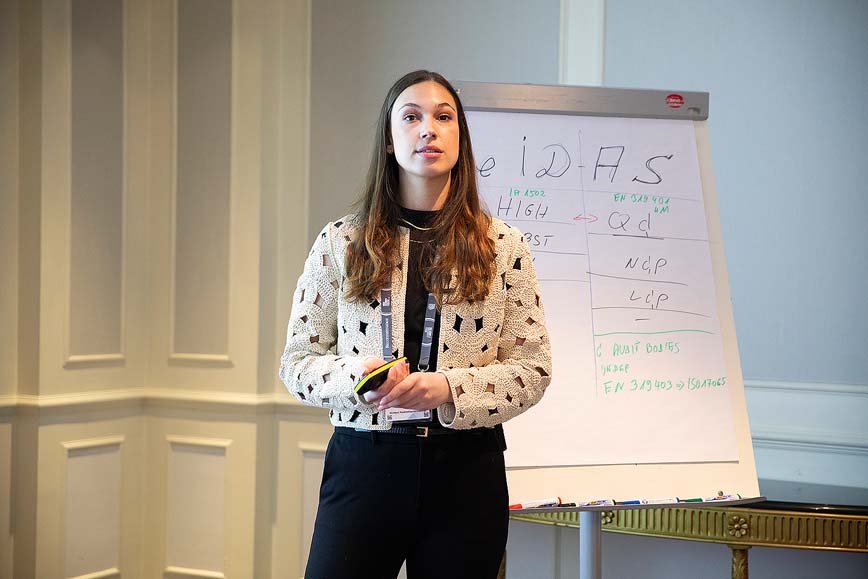

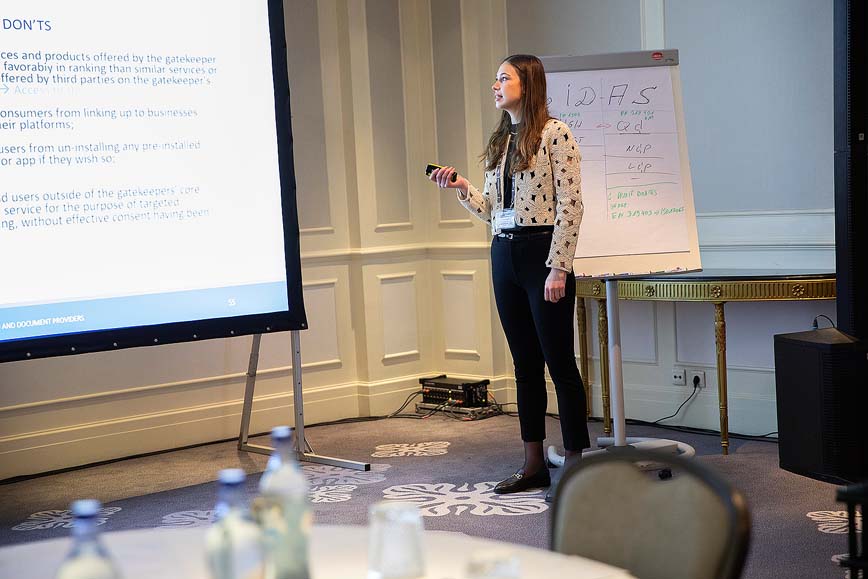

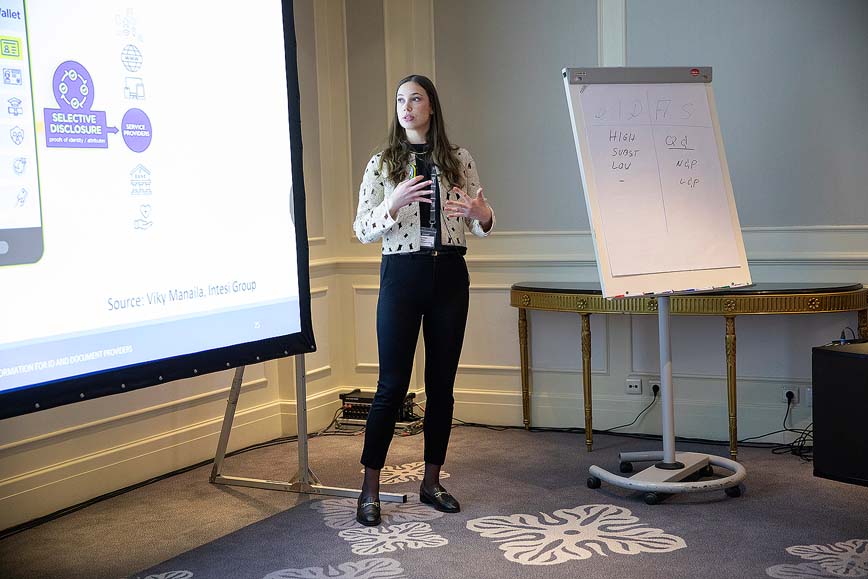
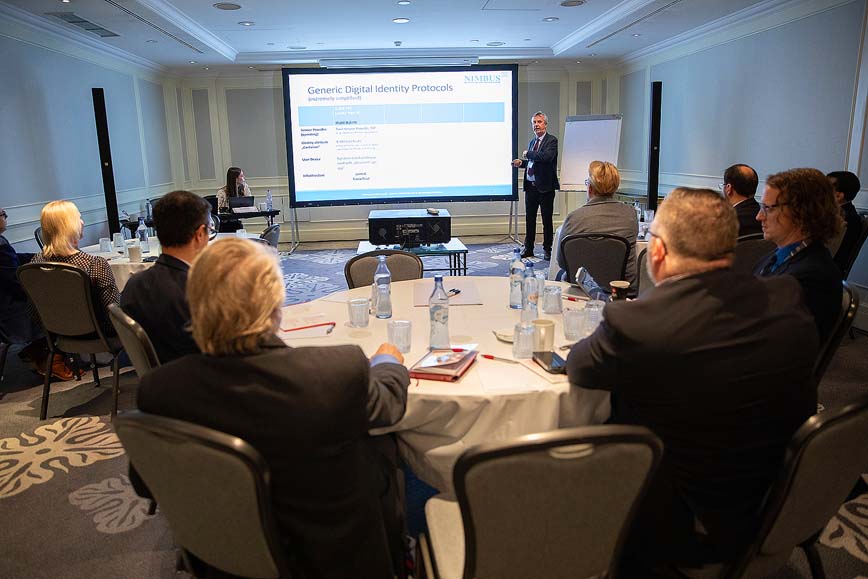
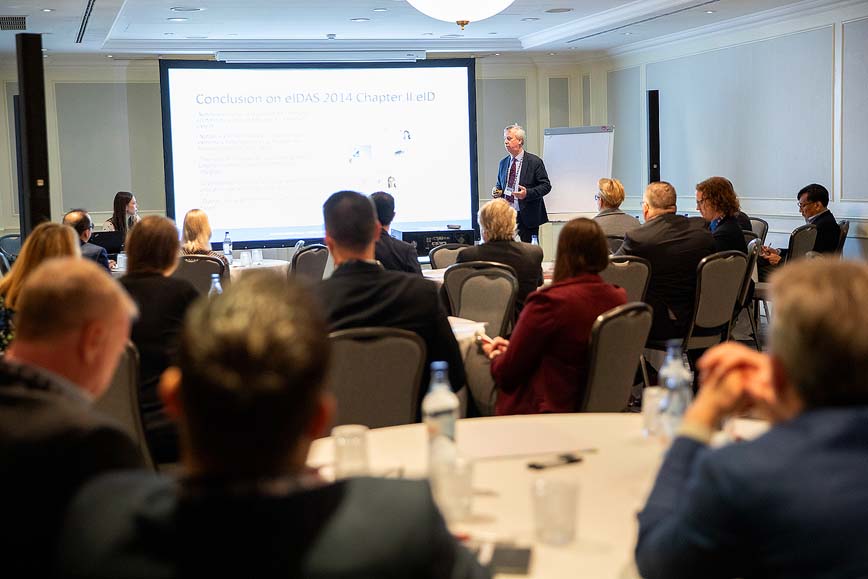


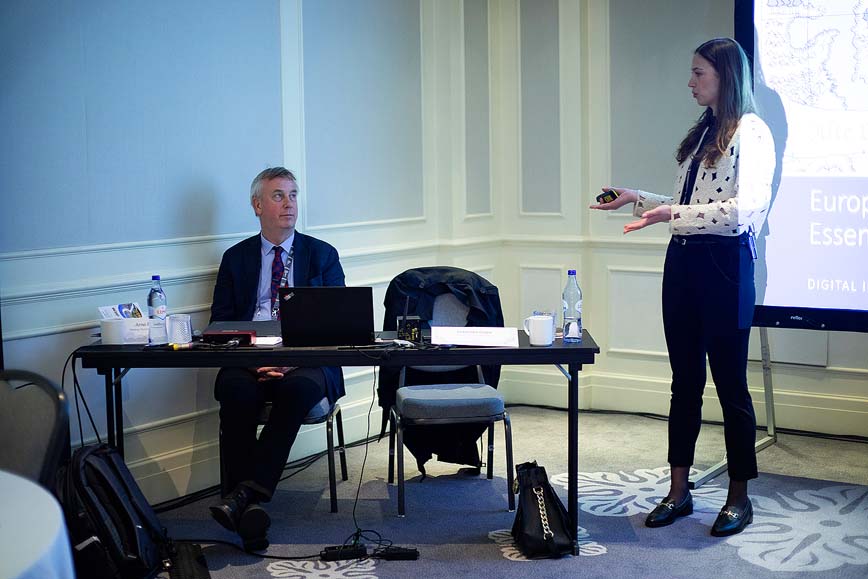


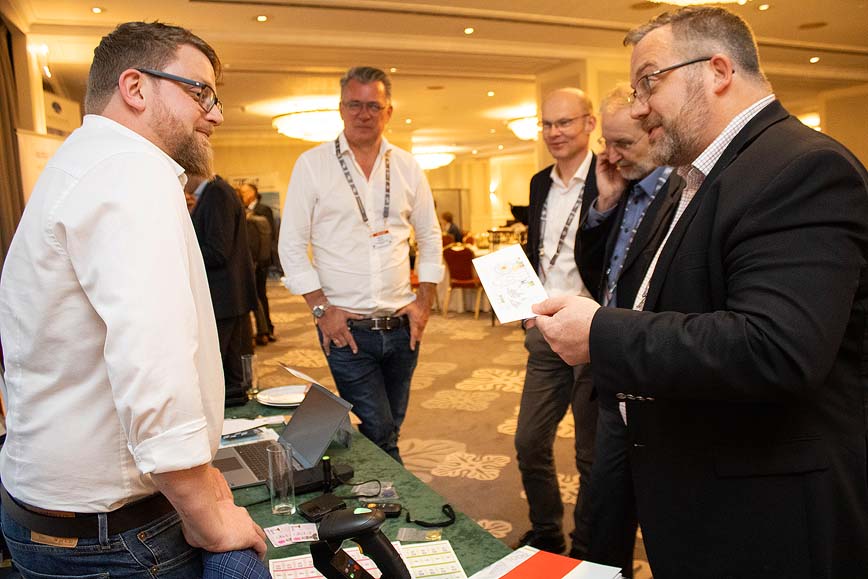
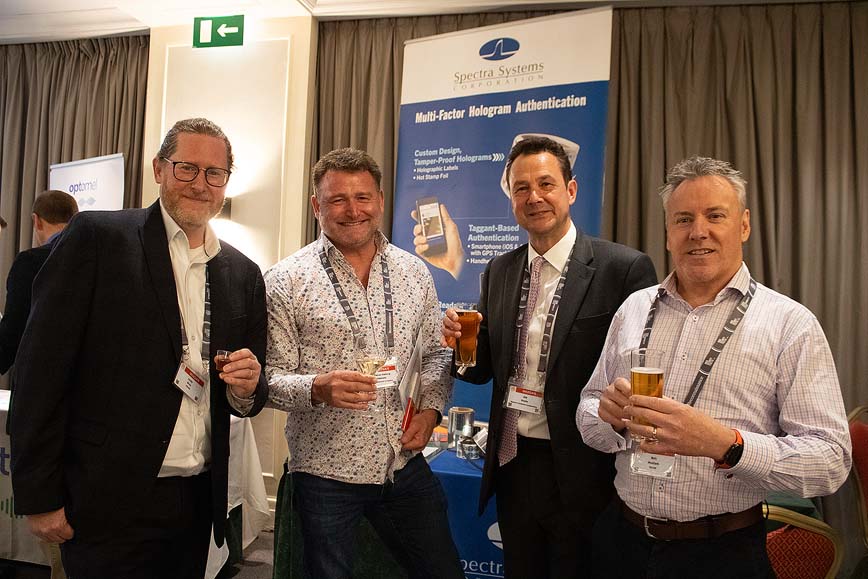
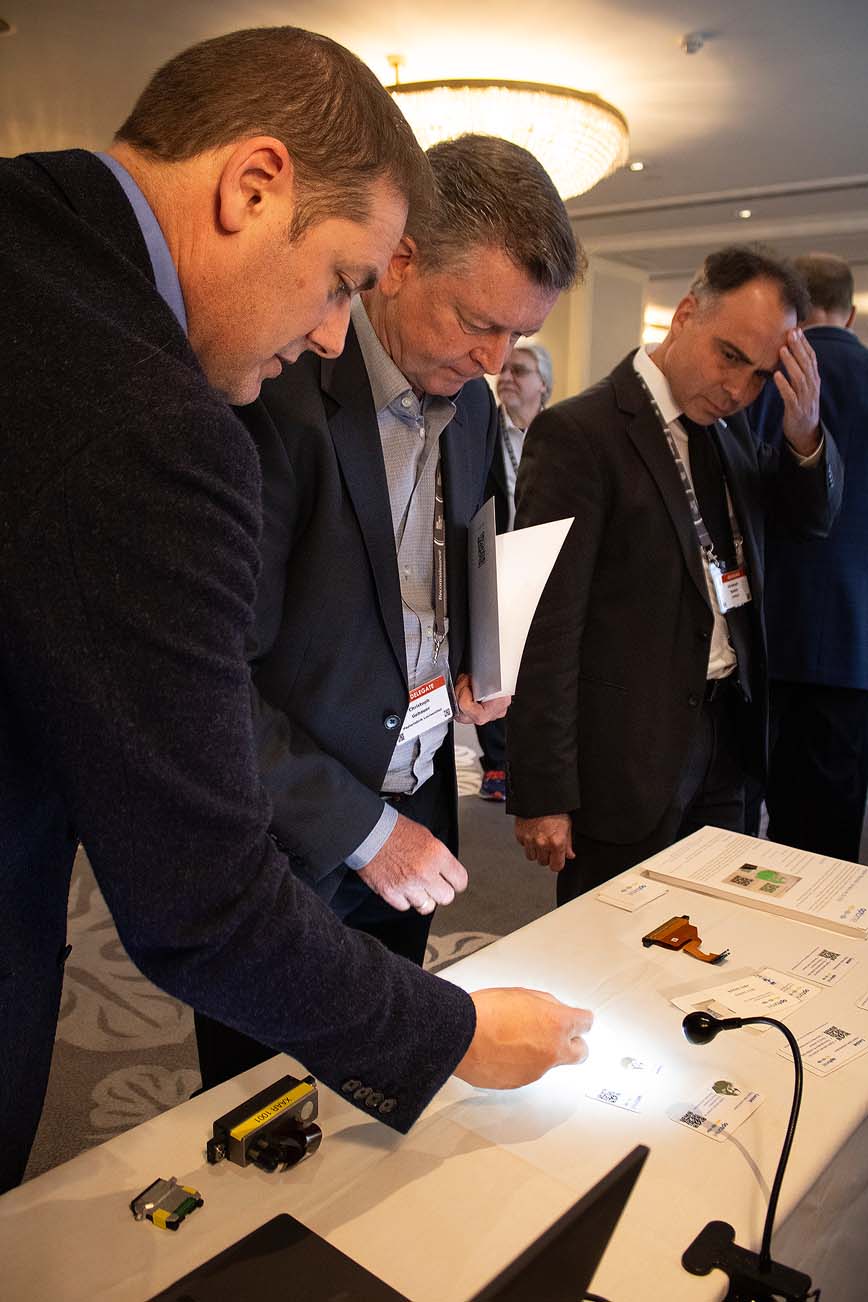
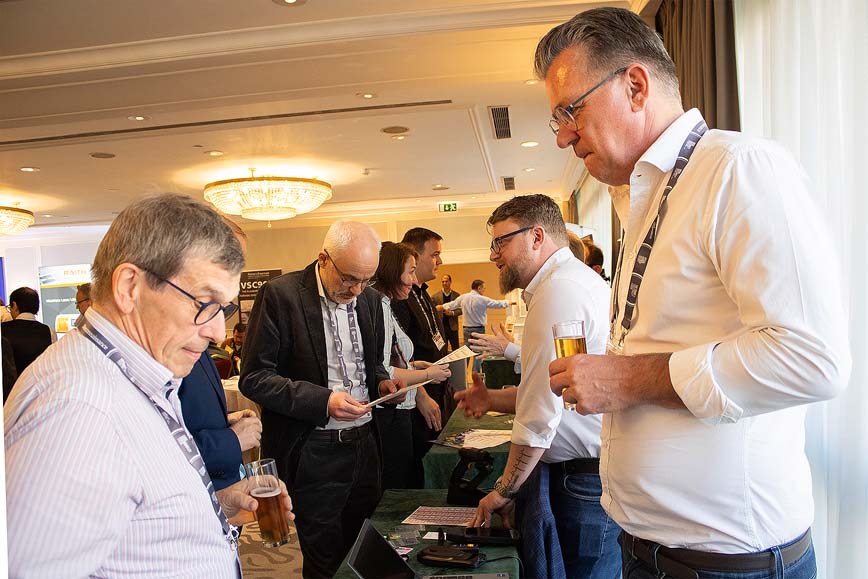
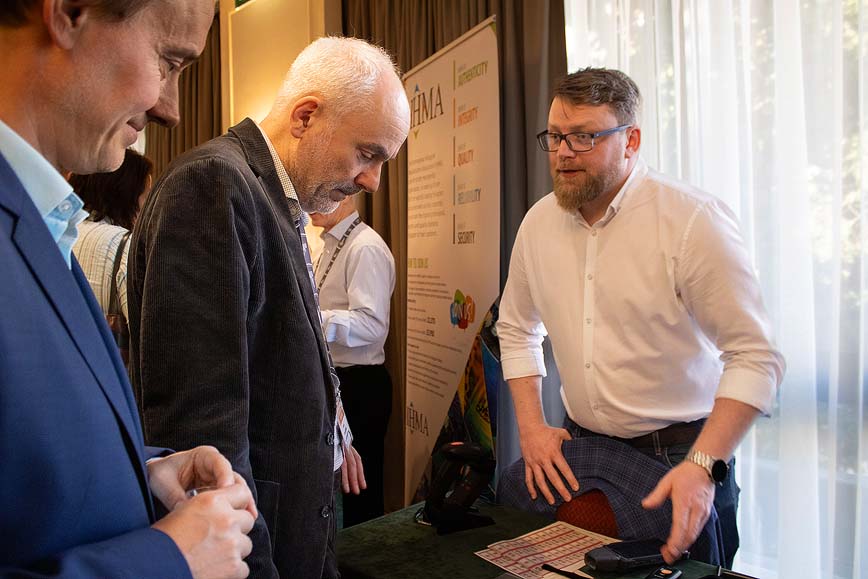
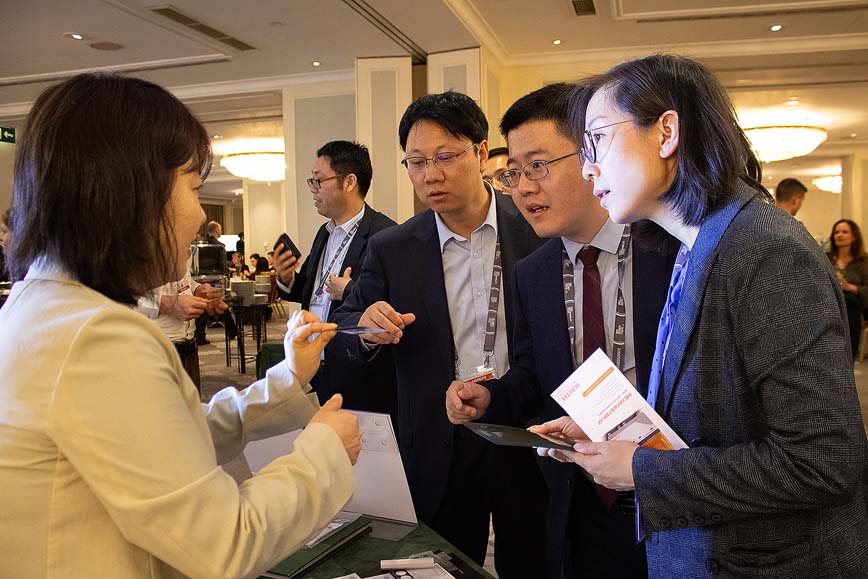
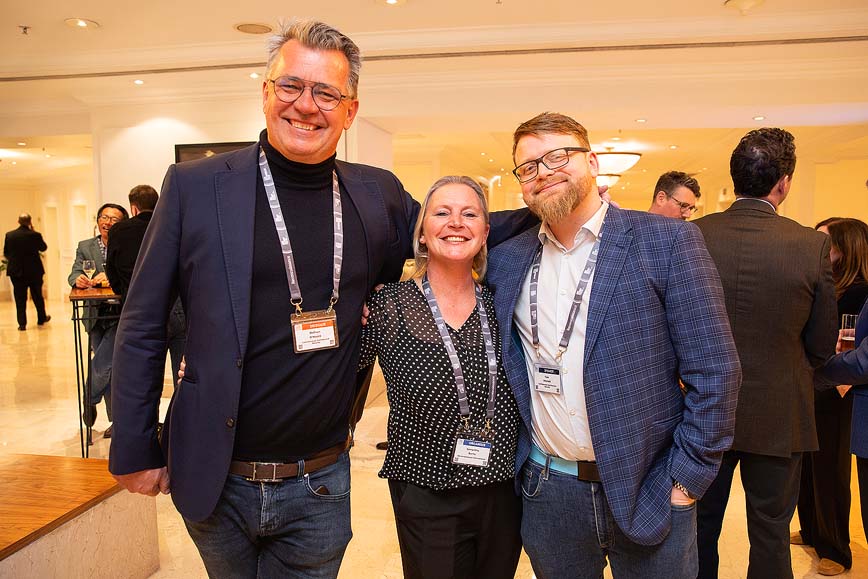
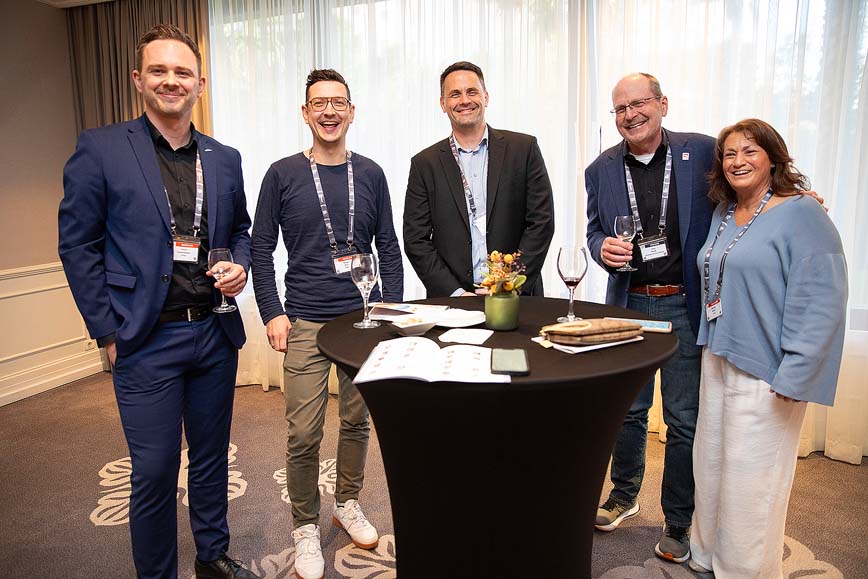
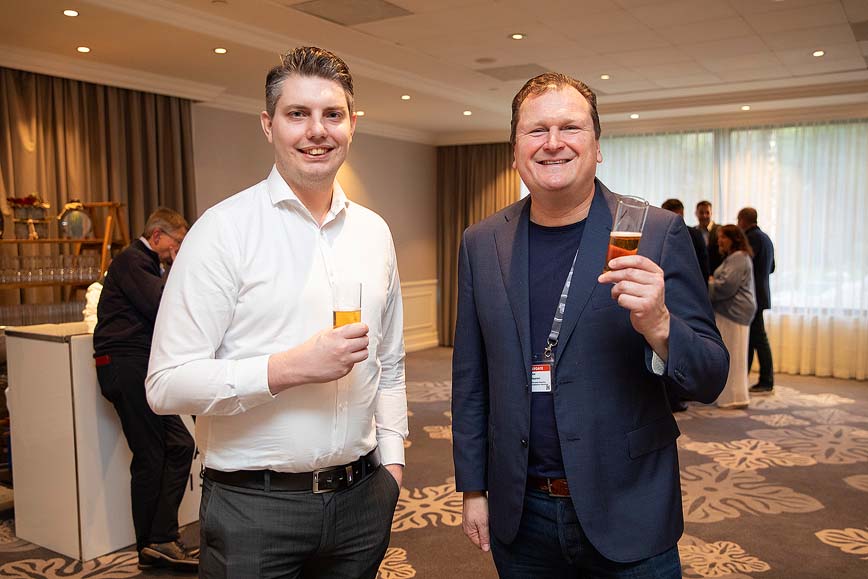
Table Top Exhibition & Social Events








Luminescence SunChemical Security
M.J.M. International
Lebanese American University
Attendees
4 Plate
Germany
Advanced Track & Trace (ATT)
France
Alan Hodgson Consulting
UK
Angstrom Technologies
USA
ANY Security Printing Company PLC
Hungary
APO Production Unit
Philippines
Austrian State Printing House (OeSD)
Austria
Authentix Inc
USA
Bank of England
England
BASF Coatings
Germany
Bundesdruckerei GmbH
Germany
CASNOS
Algeria
CCL Secure
United Kingdom
Centre for Development of Imaging Technology
India
China Banknote Printing and Minting Corporation (CBPM)
China
Collano
Switzerland
Crane Currency
USA
Crane Payment Innovations
USA
Crime Science Technology
France
CSEM SA
Switzerland
Danish National ID Centre
Denmark
Diametryx Inc.
USA
DNP Imagingcomm Europe B.V.
Netherlands
Document Security Alliance
USA
Federal Board of Revenue – Pakistan
Pakistan
Foster + Freeman
UK
GET Group
USA
Giesecke+Devrient Currency Technology
Germany
HID Global
UK
Homeland Security Investigations Forensic Laboratory
USA
Honeywell
Germany
Hueck Folien GmbH
Austria
IAI Industrial Systems B.V.
Netherlands
IDEMIA
France
IHMA
UK
Imprensa Nacional Casa da Moeda (INCM)
Portugal
Industrial Innovation Group
Ukraine
Institute Industrial IT (inIT)
Germany
IQ Structures
Czech Republic
ITW
USA
Koenig & Bauer AG
Switzerland
Korea Security Printing & Minting Corp (KOMSCO)
South Korea
Kwangoon University
South Korea
Lake Image Systems
UK
Lancaster Consulting and Reconnaissance International
UK
Landqart AG
Switzerland
Leonhard Kurz
Germany
Luminescence Sun Chemical Security
UK
Ministry of Defense, Royal Dutch Marechaussee,
Netherlands
Ministry of Justice and Security, Immigration Naturalisation Services
Netherlands
MIT University
USA
MOZAIQ Switzerland
NanoBrick
South Korea
Nimbus Technologieberatung GmbH
Germany
NMCox Consulting
USA
Oberthur Fiduciaire
France
OeBS
Austria
Optomel
UK
Orell Füssli Security Printing
Switzerland
Österreichische Staatsdruckerei
Austria
OVD Kinegram
Switzerland
Papierfabrik Louisenthal GmbH
Germany
Polish Security Printing Works (PWPW)
Poland
RAITH GMBH
Germany
Rolling Optics
Sweden
Royal Netherlands Marechaussee
Netherlands
SCRIBOS
Germany
Seculysis Research Institute
Japan
Security Identity Alliance
Security Identity Union
China
SICPA SA
Switzerland
Spectra Systems Corporation
USA
SSNS, Institute for Expert Services
Hungary
STATNI TISKARNA CENIN, s. p.
Czech Republic
TECH5
Switzerland
Thales
France
Toppan Digital
Japan
U.S. Department of State
USA
US Government Publishing Office
USA
Veridos
Germany
VSB – Technical University of Ostrava
Czech Republic
Wuhan Huagong Image Technology
China
Zeiser
Germany
Zhongchao Special Security Technology CBPM
China
Programme
Programme Committee Members
Ian Lancaster
Programme Director
Reconnaissance International (UK)
Francis Tuffy
Conference Director
Reconnaissance International (UK)
Alan Hodgson
Alan Hodgson Consulting (UK)
Franziska Granc
Nimbus Technologieberatung (Germany)
Harald Walter
OVD Kinegram (Switzerland)
Jean-Baptiste Milan
HID Global (USA)
Johannes Schaede
Orell Füssli SA (Switzerland)
Jörg Fischer
Bundesdruckerei (Germany)
Josh Marmol
G.E.T Secure (USA)
Marc Pic
Advanced Track & Trace (France)
Mikihiko Sakakibara
Seculysis (Japan)
Paul Dunn
Optical Security Consultant (UK)
Renaud Laffont-Leenhardt
Thales (France)
Sun Kai
China Banknote Printing & Minting Corp (China)
Tony Poole
AJW & DSA (USA)
Volker Lohweg
InIT (Germany)
Yaohua Wang
Security Identity Union (China)
Monday 8 April 2024
09:00 – 12:30 Seminar – European Wonder Wallet: Essential Information for ID and Document Providers
Seminar Leader, Franziska Granc – Senior Project Manager at Nimbus Technologieberatung GmbH and Arno Fiedler – Managing Director of Nimbus – and member of the European Technical Committee (TC) for Electronic Signatures and Infrastructures (ESI)
While technological means are developing rapidly and new technologies can already create solutions for all sorts of document and credentials issuing, storing and presenting, regulation need to catch up to it. A steady regulatory framework is needed to secure data protection and privacy and to avoid fraud and manipulation. Accordingly, the EU is working towards a framework which is the first of its kind, setting out rules and structures for a European Digital Identity Wallet. The provision of the wallet will be mandatory for all member states and its acceptance as a means of identification, authentication, and authorisation obligatory for all Large Online Platforms (Google, Amazon, Meta). Backed-up by other European regulations such as the Digital Services Act and the Digital Market Acts, as well as upcoming stricter rules for organisations in the critical infrastructure defined by the Network and Information Security Directive (NIS II), Europe is facing big changes that will fundamentally transform the digital sphere.
As the EU thus leads the way towards a solution for secure digital identities and identity-related documents, this seminar will explain the main goals, potential and challenges of the revised eIDAS regulation and how this relates to the Digital Wallet. We will give an overview of these inter-related regulations that support eIDAS and strengthen Europe’s digital sovereignty but which might also raise conflicts between EU and national law.
Join us to learn more about these far-reaching developments that, if implemented correctly, could be a worldwide pioneering solution for secure digital identities and identity-related documents. If you are involved in issuing, storing, and verifying identity information you need to understand these EU moves and how they will affect your organisation.
Seminar Leaders:
Franziska Granc is a senior project manager at Nimbus Technologieberatung GmbH and specialises in eIDAS, self-sovereign identity, identity wallets and trust services. She is co-author of various ENISA studies and professional articles. Another focus of her work is the market analysis of qualified trust service providers and identity service providers. She is part of the accompanying research of the showcase programme “Secure Digital Identities”, initiated by the German Ministry of Economy and Climate. Her aim is to actively contribute to the development of a secure and interoperable European ID ecosystem. To this end, she regularly appears as an expert at international conferences or moderates on these topics.
Arno had a leading sales and marketing position at Bundesdruckerei in the area of trusted digitisation of services. In 2000, he founded Nimbus Technologieberatung, which advises numerous organisations on the design of identity infrastructures and the implementation of legal and technical requirements for trust service providers in accordance with eIDAS, PSD2, DSGVO, VDG and the CA/B Forum. Clients include the European Commission, Bundesdruckerei, ETSI and ENISA. Arno has published numerous specialist publications on trust infrastructures and is involved in committees such as ETSI ESI, CA/B Forum, Bitkom, TeleTrusT, ENISA forums and on the board of the “Secure Digital Identity” association.
13:30 – 17:00 Seminar – AI and Quantum: Where Now for Document Security?
Seminar Leader, Prof. Dr. Volker Lohweg – inIT-Institute Industrial IT, Dr Anke Ginter – Bundesdruckerei GmbH & Ian Lancaster – ODDS Programme Director
This seminar explains the current developments in two areas of computing which could have a significant impact on identity and transaction security: artificial intelligence and quantum computing.
The seminar is in three parts: Dr Volker Lohweg will give an overview of AI; Dr Anke Ginter will then explain quantum computing, and Ian Lancaster will pull this together and consider the implications for optical and digital document security.
An Introduction to Artificial Intelligence
Artificial intelligence is much talked about and read about, but what is actually behind it? What types of AI are there and what applications are possible?
Apart from ethical and cultural considerations, there are numerous challenges and hurdles in the use of AI. It is necessary to integrate AI methods into existing systems and structures and, in some cases, to reorganise responsibilities and processes.
In this short survey of AI, Volker will explain the differences between human intelligence and artificial intelligence, then take a look at the history and consider what AI can do today. He will also explain how such systems are trained and what impact this has on us in the application. He will conclude with a discussion of examples from image processing and the design of documents, pointing out the possibilities for use, but also explain the current dangers, such as deep fakes, before glancing at the future prospects for AI
Quantum computing and its impact on Security
Increasing performance and algorithmic realizations of Quantum computing devices bring the quantum threat closer to current ID systems and documents. Even if experts disagree when and how this will be manifested, the effects of such threat are far-reaching. Moreover, the development of quantum computing demonstrated how fast disruptive technologies can come up and question security considerations. This is the reason why reactions and adaptions should be done as soon as possible. Post-quantum security and crypto agility can be viewed as the first step on the way to a secure quantum era.
In this seminar, we will give an overview of the current state of quantum computing devices to get a deeper understanding of the technology. Furthermore, we illustrate how quantum computing, quantum communication and security stick together and should be regarded as a unit to see the whole picture and react appropriately.
The Implications…
So what does this mean for our field of document security? What are the implications for our digital or virtual identities and our online transactions, whether checking our bank account or buying from Amazon? How does this impact the physical documents we carry: our IDs and banknotes? Do they need to change, adapt, interact more with the online world?
Ian Lancaster will lead this part of the seminar, pulling together what we have learned and facilitating a discussion of what it means for this field.
Seminar Leaders:
Prof. Dr. Volker Lohweg is the head of the research group “Discrete Systems” and Director of the inIT-Institute Industrial IT. The research group’s working area is dedicated to Cognitive Systems in automation especially Information Fusion and Optical Document Security, including banknote inspection and authentication. He is active in SPIE and IEEE as a reviewer in the field of image processing and data analysis. His interests are sensory conflict modeling and Multi-Scale signal analysis in the context of optical and digital document security.
Anke Ginter is a Senior Innovations Developer at Bundesdruckerei GmbH in Germany. She works on quantum computing and quantum communication systems with special focus on usability and security. Anke Ginter studied physics and made her dissertation in quantum optics analysing interaction processes between movable colloidal quantum dots.
Ian Lancaster – ODDS Programme Director
18:30 – Welcome Reception
Tuesday 9 April 2024
Hover on the presentation title or speaker to see if more information is available.
08:30 – Welcome & Introduction
Ian Lancaster, ODDS Programme Director
08:40 KEYNOTE – AI-Driven Counterfeits: The Possibilities and How to Fight Them
Jordan Brough, Homeland Security Investigations Forensic Laboratory (USA)
Has Artificial Intelligence provided counterfeiters with the necessary tools to cause unprecedented damage to document security? Or, can the power of AI be harnessed by law enforcement to strengthen document inspection and counterfeit detection? Jordan Brough explores how AI could be used to create convincing fakes and describes strategies government issuers should be using to fortify their credentials against AI-enabled fraud.
09:10 Session 1 – Phygital: The Link Between the Physical and Digital Worlds

Artefactometry by Artificial Intelligence For Marked Objects
Zbigniew Sagan
Advanced Track & Trace (ATT) (France)

Digital Product Passports – Unintended Consequences for Digital ID?
Dr Alan Hodgson
Alan Hodgson Consulting (UK)

Simple and Cost-Effective Phygital Solutions
Zoltán Fejes
ANY Security Printing Company PLC (Hungary)
10:10 Session Q&A
10:25 Break – Refreshments
10:55 Session 2 – Phygital Approaches to Document Security

Optically Variable Devices on Secure Documents – Where Next?
Francis Tuffy
ID & Secure Document News (UK)

Strategies for a Standardisation of PPE Certificates
Prof. Dr. Volker Lohweg
Institute Industrial IT (inIT) (Germany)

Taggant-Based Holographic Track and Trace Labels for Liquor
Sajan Ambadiyil
Centre for Development of Imaging Technology (India)

Stealth Spectral Landmarks for Complex Objects’ Authentication
Marc Pic
Advanced Track & Trace (ATT) (France)
12:15 Session Q&A
12:30 Lunch
13:30 Session 3 – New Approaches to Document Security


Behind the Barcode – Multi-Layered Functional Barcodes for Security Documents
Tom Mitchell
Luminescence Sun Chemical Security (UK)


Development of Innovative Machine-Readable Luminescent Features
Scott Haubrich
SICPA SA (Switzerland)
Aldric Molina
SICPA SA (Switzerland)
14:50 Session Q&A
15:10 Break – Refreshments
15:40 Session 4 – Protecting Identity in the Digital Age I


Leveraging In-Brain Identity Validation Mechanisms for Detection of Live Video Deepfake Attacks
Hendrik Graupner
Bundesdruckerei GmbH (Germany)

17:10 Session Q&A
17:25 Close of Day One
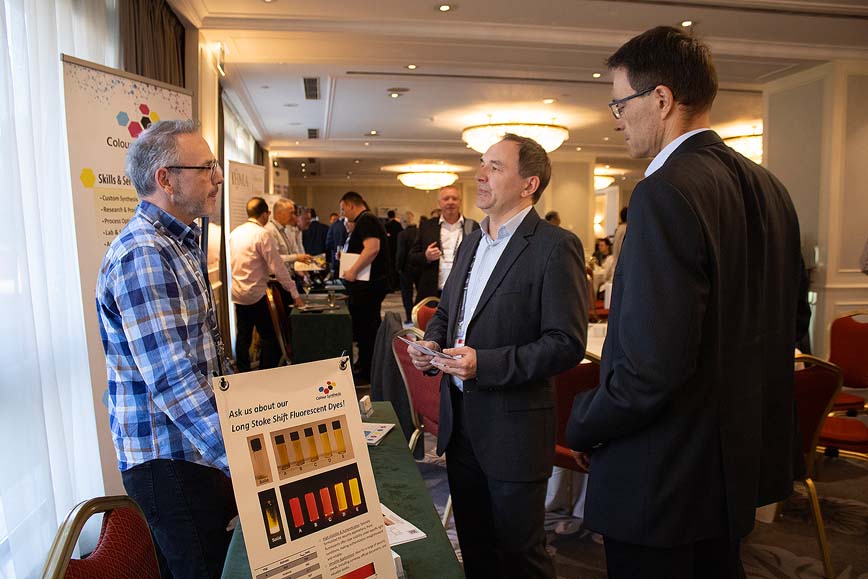
18:30 Conference Dinner and Table Top Exhibition
Wednesday 10 April 2024
09:00 Session 5 – Protecting Identity in the Digital Age II


Enabling Citizen Protection With Seamless and Secure Digital Identity Wallets
Jorge Carvalho
Austrian State Printing House (OeSD) (Austria)


10:25 Session Q&A
10.40 Break – Refreshments
11:10 Session 6 – New Optical Techniques for Security I

Color-Tunable Photonic Crystals: Dynamic or Serial Coded? You Decide!
Heeyeon Kim
NanoBrick (South Korea)


Special Information Encryption for Optical Lithography Technology
Steve Sun
Wuhan Huagong Image Technology (China)
12:10 Session Q&A
12:25 Panel Discussion – ID and Document Security in the Face of AI and Quantum Computing
Chair – Ian Lancaster
13:00 Lunch
14:00 Session 7 – New Optical Techniques for Security II

Security Features Based on Light Field Shaping with Freeform Micro-Structure
Dr Dong Yang
ZSST (CBPM Group) (China)

Brilliantly Innovative: A New Security Feature Using Micro-Optical Free-Form Elements
Dr. Martin Egginger
Hueck Folien GmbH (Austria)


Micro-Optics in the Fourth Dimension
Daniel Parrat
Rolling Optics (Sweden)
Erik Egemalm
Rolling Optics (Sweden)
15:00 Session Q&A
15:15 Break – Refreshments
15:30 Session 7 – New Optical Techniques for Security II – continued

Print Document Protection: A Computer-Generated Holography Solution
Leehwan Hwang
Kwangwoon University (South Korea)


Development of Novel Overt Security Feature for ID Documents
Keitaro Sugihara
Toppan Digital (Japan)
Yoshiyuki Mizuguchi
Toppan Digital (Japan)
16:30 Session Q&A
16:45 Review of the Conference Topics
17:00 Close of Conference and Farewell Drinks
Table Top Exhibitors
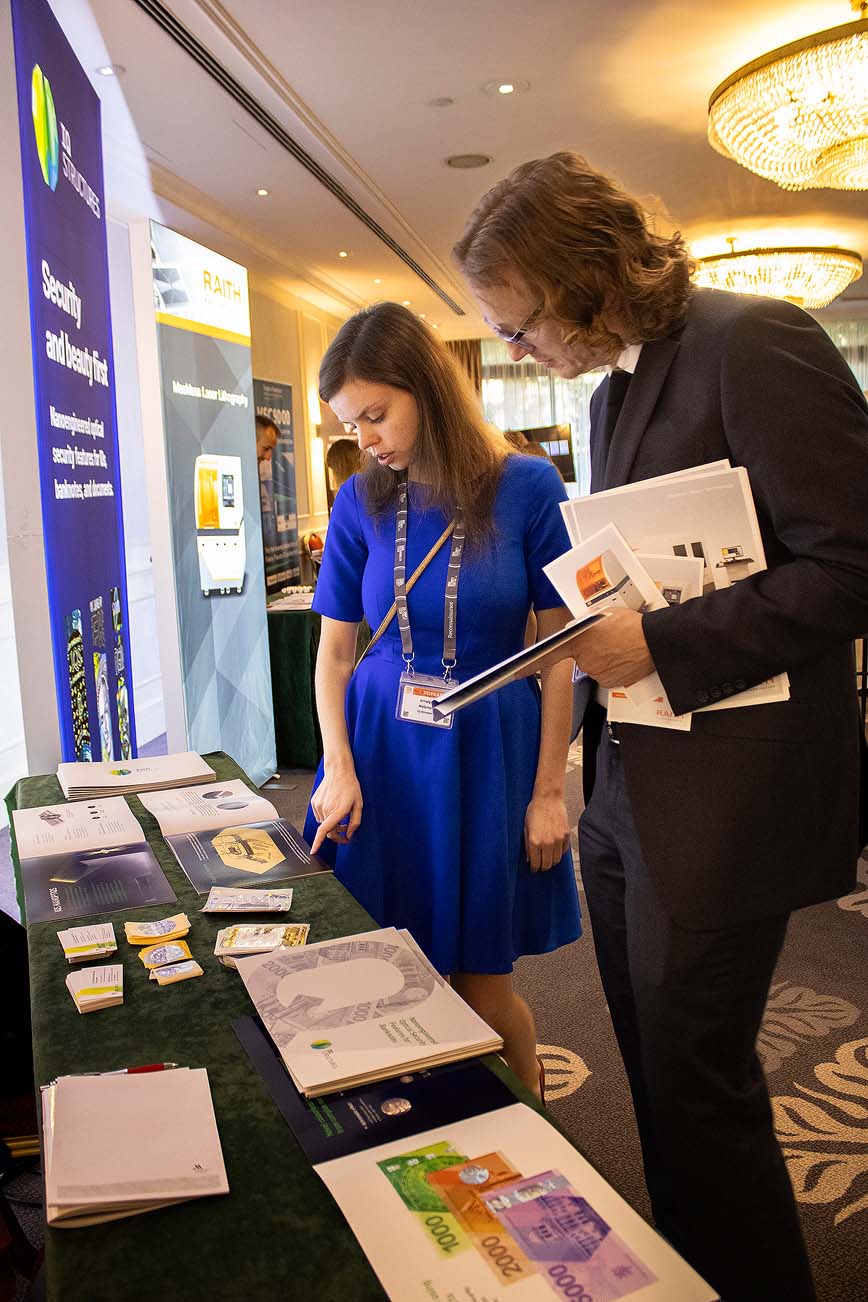
Many thanks to the following exhibitors for taking part in our table top exhibition on Tuesday evening.